



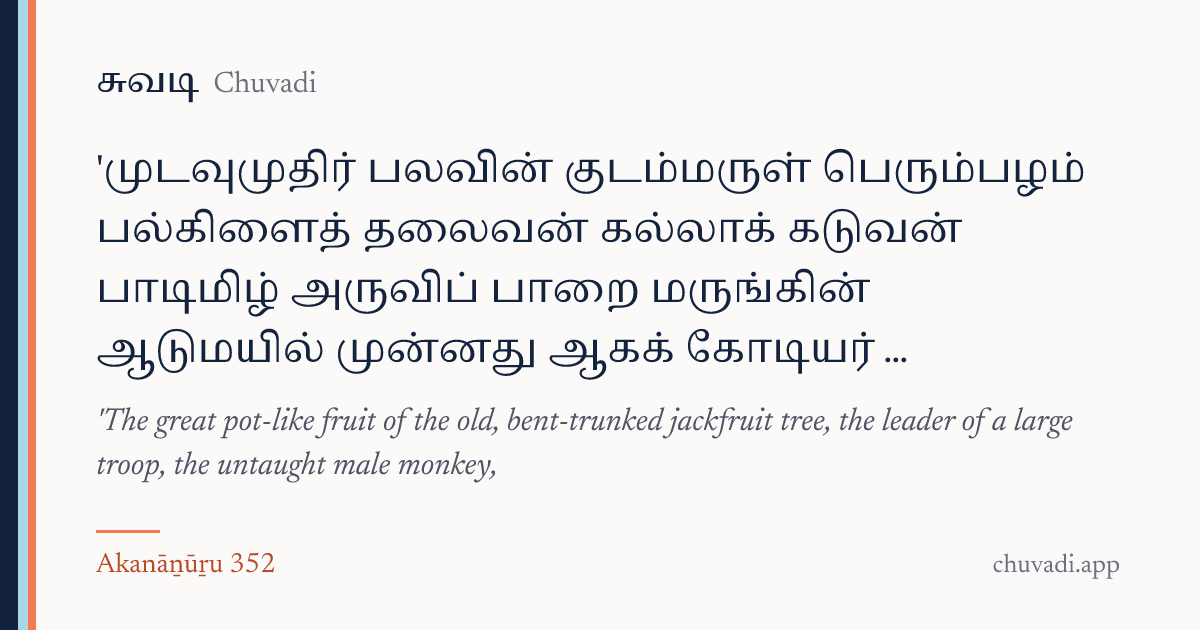

அகநானூறு 352
பாடல் · The poem
Tap a word to see where else it occurs.
பொருள் · Meaning in TamilAI
'வளைந்த அடியுடைய முதிய பலாமரத்தின் குடம்போன்ற பெரிய பழத்தை, பெரிய கூட்டத்தின் தலைவனான, பயிற்சி பெறாத ஆண்குரங்கு, ஒலிக்கும் அருவியையுடைய பாறையின் அருகே, ஆடும் மயில் முன்னே செல்ல, கோடியர் விழா நடத்தும் பழைய ஊரில் விறலியின் பின்னால் செல்லும் முழவுக்காரனைப் போல, மார்போடு அணைத்துக்கொண்டு தன் இனிய துணையை அழைக்கும். அத்தகைய குன்றநாட்டுத் தலைவன் நல்ல குடிப்பிறப்பு உடையவன்; சேர்ந்தவரைப் பிரியாதவன்; கெடுதல் தரும் சொற்களைப் பேசாதவன்; அன்புடையவன்' என்று நீ திறமையாகச் சொல்லி, உண்மையாகவே எங்களைச் சேர்த்து வைத்தாய். அன்புத் தோழியே, இப்போது பார், நீ நல்லவள்! விரைந்த குதிரைகளும் நெடிய தேரும் உடைய அஞ்சியின் நல்ல புகழை இனிய பாடலால் நிலைநிறுத்தி, அவனுடைய பழம்புகழை நிலைநாட்டிய புகழ்மிக்க பாணன், முறைப்படி அமைந்த பண்களுக்குள்ளும் புதிதாக அமைத்த இசைவகையைவிடவும், எங்கள் திருமண நாளைவிடவும், அவர் எங்களுக்கு இனியவர்!
குறிஞ்சித் திணை. மணம் முடிந்தபின் தலைவி தோழிக்கு நன்றி கூறுவதாகத் தோன்றுகிறது. பழத்தை அணைத்துத் துணையை அழைக்கும் குரங்கு, தலைவனின் அன்புடைமைக்குச் சான்றாக நிற்கிறது. அஞ்சியைப் பாடிய புலவரின் பெயரைப் பாடல் சொல்லவில்லை.
ஆங்கிலம் · English translationAI
Translation
- 'The great pot-like fruit of the old, bent-trunked jackfruit tree,
- the leader of a large troop, the untaught male monkey,
- by the rock where the waterfall roars,
- with the dancing peacock going ahead of him, as, among the koṭiyar,
- in an old town holding its festival, behind the dancing-woman
- goes the drummer, he clasps it close to him
- and calls to his sweet mate: the man of that hill country
- is of good family; he does not leave those he joins;
- he speaks no ruinous words; he is loving' — so you
- said, skilfully, and truly brought us together:
- you are good, now, see — my dear, loving friend! —
- Añci of the swift horses and tall chariot —
- the delightful song that set down his good fame,
- the bard of renown who established that ancient fame —
- even among the melodies set in their ordered count,
- more than the new mode he composed,
- and more than our wedding day, he is sweet to us!
What the poem says
The heroine thanks her friend. Before the marriage the friend spoke for the man: he came of a good family, would never leave a woman he had joined, never spoke harmful words, and was loving. Her words were true, and they brought the two together. Now, apparently after the wedding, the heroine says he is sweeter to her than the finest song and sweeter even than their wedding day.
The opening picture belongs to the friend's speech and shows the man's country. A male monkey carries a huge jackfruit in his arms, with a peacock dancing ahead of him, and calls to his mate. The comparison is to a village festival, where the drummer follows the dancing-woman (viṟali) clutching his drum. The monkey that 'has not been taught' still knows how to share his find with his mate, and so the scene supports the friend's praise of the man's loving nature.
The comparison at the end mentions Añci, a chieftain of swift horses and tall chariots. A famous bard made his name lasting in song, and composed a 'new mode' (putuvatu puṉainta tiṟam) among the well-ordered tunes. The poem does not name the bard. A well-known tradition links Añci with the poet Auvaiyār, but the poem itself says nothing of this. The last line, 'more than our wedding day', is a rare moment of happiness within marriage in a kuṟiñci poem.