



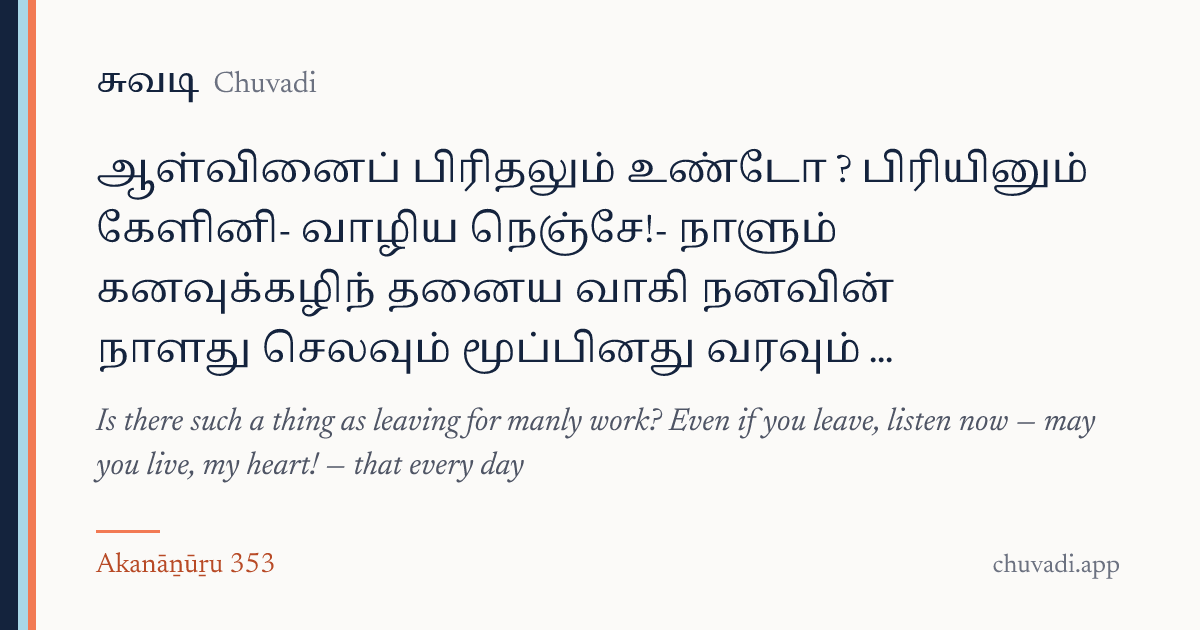

அகநானூறு 353
பாடல் · The poem
Tap a word to see where else it occurs.
பொருள் · Meaning in TamilAI
பொருள் தேடும் முயற்சிக்காகப் பிரிதலும் உண்டோ? பிரிவதானாலும், என் நெஞ்சே, வாழ்க, இப்போது கேள்! ஒவ்வொரு நாளும் கனவு போலக் கழிகிறது; விழித்திருக்கும் வாழ்விலும் நாள் போவதும், முதுமை வருவதும், அரிதாகப் பெறும் சிறப்புடைய காதலின் இயல்பும் உண்டு. இந்த நிலையை நீ அறியாவிட்டாலும் கேள்: செம்மண் நிலத்தில் அசையும் அழகிய மூங்கில்கள் உரசிக் கலகலக்க, ஞெமை மரத்தின் இலைகளை உதிர்த்த தீப்போன்ற கோடைக்காற்று, நீண்ட வெண்மையான களர் நிலத்தின் புழுதியை அள்ளிச் சுழற்றுகிறது. கடுவெயில் முறுக்கும் வேனில்காலக் கொடிய காட்டில், களைத்த நடையுடைய தன் இளம் பெண்மானைத் தழுவிய, ஒளிரும் புள்ளிகளும் கிளைத்த கொம்புகளும் உடைய அழகிய ஆண்மான், வற்றிய குளத்தைப் பார்த்து, விரும்பிய தெளிந்த நீர் சிறிதும் இல்லாததால் தழையை உண்ணவும் மறந்து, குடிக்க நீர் இல்லாமல் இரண்டும் துவண்டு தளர்கின்றன. மர நிழலே இல்லாத அத்தகைய வழிகளில் பாலையைக் கடந்தபின், நீ நினைக்க மாட்டாயோ? விருந்தினர் ஓயாமல் வரும் பெரிய குளிர்ந்த பந்தலில், வருந்தி வருபவர்களைப் பேணுபவள் அவள்; மகரந்தத் தூள் உதிரும் தாழைமணம் கமழும் அழகிய கூந்தலின் மென்மையான உள்ளே இதழ் உதிரும் அலரிப் பூவைச் செருகி, மகிழ்ச்சி தரும் புன்னகையோடு, அழகிய படுக்கையில் நம்மோடு இனிய சொற்களைப் பேசுவாள். அடர்ந்த கூந்தலும் அழகிய அணிகலனும் உடைய அவளுடைய நற்பண்பை நீ நினைக்க மாட்டாயோ?
பாலைத் திணை. பொருள் தேடப் பிரியத் தூண்டும் நெஞ்சுக்குத் தலைவன் கூறுகிறான். வறட்சியிலும் பெண்மானைத் தழுவி நிற்கும் ஆண்மான், துணையைப் பிரியாத அன்புக்குச் சான்றாக நிற்கிறது. விருந்தோம்பும் தலைவியின் காட்சி, அவளுடைய அழகோடு அவளுடைய குணத்தையும் போற்றுகிறது.
ஆங்கிலம் · English translationAI
Translation
- Is there such a thing as leaving for manly work? Even if you leave,
- listen now — may you live, my heart! — that every day
- passes away like a dream; that in waking life
- there is the going of the day and the coming of old age;
- and the nature of love, with its rare-won excellence —
- though you do not know how things stand: on the red ground,
- the swaying, lovely bamboo rubbing with a clatter,
- the fire-mouthed summer wind that has stripped the ñemai's leaves
- scoops up the dust of the long white saline land and whirls it;
- in the hot forest of summer, wrung by fierce sun,
- embracing his doe of weary gait, the bright-spotted,
- handsome stag with branching horns looks at the dried-up pool;
- for the clear water they longed for, so meagre, forgetting the leaves,
- for lack of water to drink they sway and falter:
- on such tracks without the shade of trees, when you have crossed the wasteland,
- will you not think of it then? — of what you long for —
- at the great cool pandal where guests never cease,
- caring for those who come in weariness, coolly,
- her lovely tāḻai-scented hair dropping its pollen-dust,
- with fallen-petalled alari placed in its soft depths,
- with a joyful, adorning smile, on the finely made bed,
- speaking good words to us —
- the goodness of her with thick tresses and fine jewels?
What the poem says
The hero argues with his heart, which is pushing him to leave home for work. He begins with a question: is it really necessary to go? Then he asks the heart to listen. Every day slips past like a dream, days go and old age comes, and love is a rare gift. The heart does not see this, he says. Can it really face the wasteland, and once there, will it not think of her?
The desert passage (lines 6–15) shows a stag and doe in a summer forest of whirling dust and burning wind. They stare at a dried-up pool and are too thirsty even to graze on leaves, and they stagger along together. Even here the stag 'embraces' his weary mate. The animal couple stays together through the drought, while the man is thinking of leaving his wife to go through it alone.
The ending is a full picture of what he would leave. His wife looks after the endless stream of guests under the great cool pandal, which shows her goodness as mistress of the household. Then she comes to him in the evening with flowers in her hair, smiling, and speaking gently. The poem ends on kuṇaṉ, 'her goodness, her nature'. This is the strongest argument against going, because what he would lose is her character as much as her beauty. The poem sits under pālai and is about a separation he is still considering.