




அகநானூறு 354
பாடல் · The poem
Tap a word to see where else it occurs.
பொருள் · Meaning in TamilAI
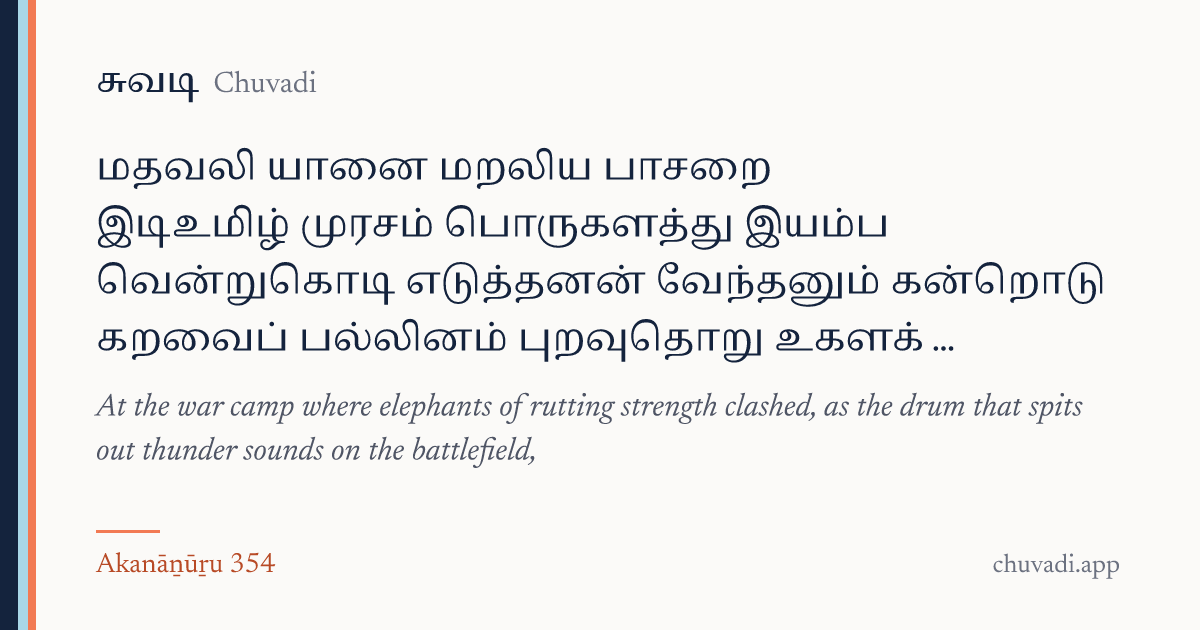
மதவலிமை மிக்க யானைகள் மோதிய பாசறையில், இடியை உமிழ்வது போன்ற முரசு போர்க்களத்தில் முழங்க, வேந்தனும் வெற்றி பெற்றுக் கொடியை உயர்த்திவிட்டான். கன்றுகளோடு பல கறவைப் பசுக்கூட்டங்கள் காடுகள் தோறும் துள்ளுகின்றன. இடையர்கள் குழலை வாயில் வைத்து ஊதுகிறார்கள். இளைய வீரர்கள் மிக விரைந்து செல்கிறார்கள். விரிந்த பிடரிமயிருடைய வேகமான நடையுடைய குதிரைகள் வழியில் ஓடுகின்றன. தேர்ப்பாகன் கடிவாளத்தை இறுக்கிப் பிடிக்கிறான். புலவர்கள் புகழ்வதற்குக் குறியாகக் கொண்ட, பொன்மாலை அணிந்த அகன்ற மார்பில், குளிர்ந்த நறுமணச் சந்தனத்தின் நுண்ணிய தூளை அணிந்து, வெற்றியின் மகிழ்ச்சியோடு அவன் வீட்டுக்குள் புக விரும்பினால், மலரைப் போன்ற அழகிய மையுண்ட கண்களையுடைய குற்றமற்றவளின் அழகிய நெற்றியில் படர்ந்த பசலை இனி எங்கே தங்கும்?
முல்லைத் திணை. போர் முடிந்து தலைவன் திரும்பும் காட்சி. பேசுபவர் யார் என்று பாடல் சொல்லவில்லை; தலைவியைத் தேற்றும் தோழியாகவோ, தலைவனோடு வருபவராகவோ கொள்ளலாம். அவன் வந்ததும் பசலை தானே நீங்கிவிடும் என்பதே முடிவுக் கேள்வியின் கருத்து.
ஆங்கிலம் · English translationAI
Translation
- At the war camp where elephants of rutting strength clashed,
- as the drum that spits out thunder sounds on the battlefield,
- the king too has won and raised his banner; with their calves
- the many milch herds are frisking in every woodland,
- and the cowherds have set their flutes to their lips; in great haste
- the young men go hurrying; with their spreading manes
- the fast-paced horses race along the road,
- as the charioteer pulls the reins tight; on the broad chest,
- praised by poets as their target, with its golden garland,
- wearing the fine powder of cool, fragrant sandal,
- if he means to enter with the joy of victory,
- where will it find a place to dwell? — the finely
- flower-rivalling, kohl-lined eyes
- of the faultless one: the pallor on her lovely brow?
What the poem says
The war is over and the king has raised his victory banner. The hero is coming home in his chariot, garlanded and dusted with sandal, with his young men around him and the horses racing. Then the question comes: if he enters the house in such joy, where can the pallor on her forehead go? It will have nowhere left to stay.
The poem gives no speaker. The cheerful question in the last lines suggests the heroine's friend reassuring her, or the hero's own companion, or possibly the hero thinking of her. The poem is equally clear whichever is chosen. Its light, confident tone is unusual for a poem about the pallor of separation.
The setting combines the end of a campaign with the mullai season. Cattle are back in the woodland with their calves, and cowherds play their flutes in the evening. This is the scene in which the waiting wife traditionally listens for her husband's chariot. The hero's chest is described as 'the target of the poets' praise', a chieftain whom poets sing about. Lines 12–14 run from the question ('where will it dwell?') to her eyes and forehead, ending on pacappu, the pallor of love-sickness.