




அகநானூறு 365
பாடல் · The poem
Tap a word to see where else it occurs.
பொருள் · Meaning in TamilAI
அகன்ற வானம் அடர்ந்த இருளைப் பரப்ப, பகலை வழியனுப்பிய மெல்லிய தோற்றத்தோடு, வெப்பம் நீங்கிய துன்பமான மாலைப்பொழுதில், வழியில் நின்ற நடுகல்லை மனிதன் என்று எண்ணி உதைத்த காட்டு யானையின் கூரிய நகம் சிதைந்து, பெரிய பனைமட்டையின் காம்பு போல முறிகிறது. அங்கே கொடிய மறவர்களின் அம்புகளால் வீழ்ந்தவர்கள் கிடக்கிறார்கள்; அவ்வழியே யாரும் வராததால் அவர்களை அகற்றுவாரும் இல்லை. அப்படிப்பட்ட வெயில் காயும் கொடிய பாலைவழிக்கு என்னைக் கொண்டு வந்தது நீயே! நெஞ்சே, நீ வாழ்க! துன்பம் தந்துவிட்டு, இப்போது அதைத் தாங்க முடியாமல், திரும்பிப் போவதையே நினைக்கிறாய். வெற்றிவேலும் பெருங்கொடையும் உடைய கழுவுளின் காமூரில், பூதம் தந்த சொரசொரப்பான அடியையுடைய வேங்கையின் குளிர்ந்த மணமிக்க புதுமலர் போல மணக்கும், அழகிய சிலவாகிய கூந்தலை உடையவளின் இளமையான அழகையே நினைக்கிறாய்.
இது பாலைத்திணை; பொருள் தேடிச் செல்லும் தலைவன், வழியில் திரும்பிவிட விரும்பும் தன் நெஞ்சோடு பேசுகிறான். நடுகல்லும், எடுப்பாரற்றுக் கிடக்கும் பிணங்களும் வழியின் கொடுமையைக் காட்டுகின்றன. வேங்கையைப் பூதம் தந்தது என்று பாடல் மட்டுமே சொல்கிறது; அதன் பின்னணிக் கதையைப் பாடல் கூறவில்லை. இதக்கை என்ற சொல்லின் பொருள் உறுதியாகத் தெரியவில்லை.
ஆங்கிலம் · English translationAI
Translation
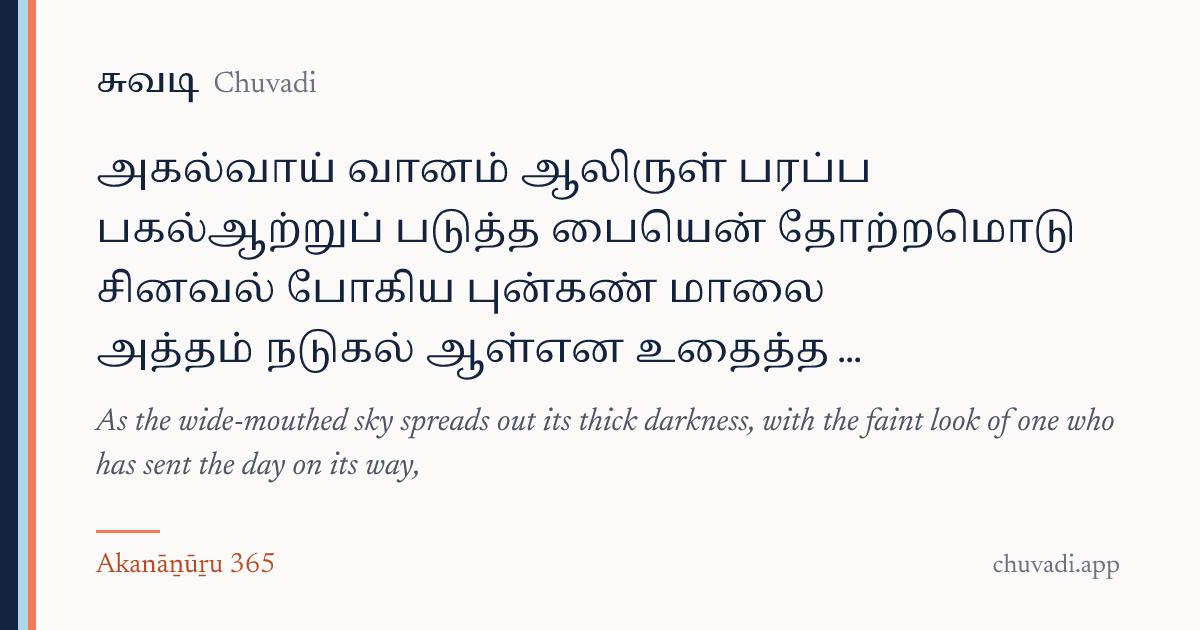
- As the wide-mouthed sky spreads out its thick darkness,
- with the faint look of one who has sent the day on its way,
- in the sad evening whose fierce heat has gone;
- where, having kicked a memorial stone on the path, taking it for a man,
- the forest elephant, its sharp nail chipped and broken,
- has it snap off like the stalk of a great palm frond, there;
- where lie those cut down by the arrows of fierce men,
- and, since no one comes, there is none to take them away —
- into that sun-scorched, burning wasteland, you brought me, you!
- Having caused this pain, you cannot bear it, and of turning back
- you think now — long may you live — O heart! — and of the victorious-speared
- Kaḻuvuḷ of great gifts, and there in his Kāmūr,
- of the rough-barked vēṅkai that a bhūta gave,
- whose cool, fresh, fragrant flowers she smells of —
- of her lovely sparse tresses, of her fine, innocent grace.
What the poem says
The hero is on the road through the wasteland and speaks to his own heart. It was the heart that drove him out after wealth; now, having brought him into this suffering, it cannot bear it and wants to turn back to the woman he left.
The evening scene is grim. Darkness spreads over the sky and the heat has gone out of the day. A wild elephant has kicked a memorial stone (naṭukal), mistaking it for a man, and its nail has snapped like a palm stalk. Around lie men killed by the arrows of bandits, with no passer-by to remove them. The memorial stone, set up for a fallen warrior, and the unburied dead show what a traveller in this land risks.
The last five lines are the thought that pulls him home: her sparse, lovely hair, scented like the fresh flowers of a vēṅkai tree at Kāmūr, the town of Kaḻuvuḷ, a chieftain praised here for his victorious spear and generosity. The poem says only that this vēṅkai was 'given by a bhūta', a spirit; it gives no story behind this, and none is supplied here.
The heart is both the culprit and the sufferer, a double role it often plays in the hero's monologues. 'Itakkai' in line 6 is taken as the stalk of a palm leaf; the exact sense is uncertain. This edition names no poet.