




அகநானூறு 366
பாடல் · The poem
Tap a word to see where else it occurs.
பொருள் · Meaning in TamilAI
தாழ்ந்த கிளைகளையுடைய மருதமரங்கள் அழகுறப் பொலியும், நீர் சூழ்ந்த அகன்ற களத்தில், போரைச் சரித்து நிரப்பி, கள்ளுண்ட உழவர்கள் எருதுகளைச் சுற்றிச் சுற்றி ஓட்டுகின்றனர். கடுங்காற்று வீசியதால் பறந்த தூசும் துரும்பும், உப்பங்கழியின் சிறிய உப்புப் பாத்திகளில் விழுந்து அவற்றைக் கெடுக்கின்றன. அதனால் அகன்ற கடலின் குளிர்ந்த துறையில் வாழும் பரதவர், இனிமையாக விளையும் வெள்ளுப்பு கெட்டதால் சினந்து, வயல் உழவர்களோடு எதிர்த்து மோதுகின்றனர். கரிய சேற்றில் நடக்கும் அந்தச் சண்டையைக் கண்டு, நரைத்த முதியவர்கள் அவர்களின் பிணைந்த கைகளை விலக்கி, அரும்பிலிருந்து முதிர்ந்த தெளிந்த கள்ளை நுளையர்க்குக் கொடுக்கின்றனர். அத்தகைய நாட்டையுடைய, பொன்னணி அணிந்த எவ்வியின் நிழலைப் போல இனிய, அழகிய மூங்கில் போன்ற தோள்களும் நல்ல நெற்றியும் உடைய இளம்பெண்ணோடு, நேற்று நீ மணம் கமழும் குளிர்ந்த சோலையில் தங்கினாய். நீ தனக்குத் தவறிழைத்ததை அறிந்து, தெய்வம் போன்ற எம் தலைவி அழுத கண்களோடு இருக்கிறாள்.
இது மருதத்திணை; பரத்தையோடு இருந்து திரும்பிய தலைவனிடம் தோழி வாயில் மறுத்துக் கூறுகிறாள். உப்பளத்தைக் கெடுத்த உழவர் சண்டை, ஒருவரின் இன்பம் மற்றவருக்குக் கேடாகும் என்ற உள்ளுறையாக இருக்கலாம்; அது உறுதியன்று. இறுதிச் சொல் "அன்னான்" என ஆண்பால் வடிவில் இருப்பது வியப்பானது; இங்கு அது தலைவியைக் குறிப்பதாகக் கொள்ளப்பட்டது.
ஆங்கிலம் · English translationAI
Translation
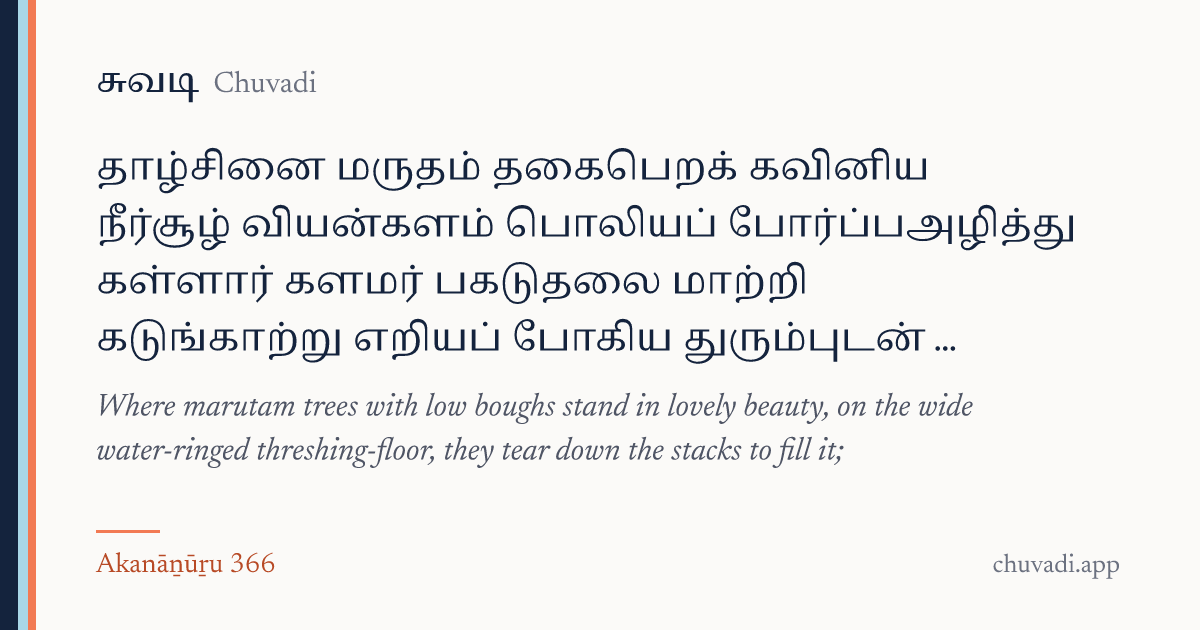
- Where marutam trees with low boughs stand in lovely beauty,
- on the wide water-ringed threshing-floor, they tear down the stacks to fill it;
- the field hands, full of toddy, drive the oxen round, turning them,
- and the chaff carried off as the fierce wind flings it
- falls into the small salt-pans of the backwater, spoiling their beds;
- so the paratavar of the cold shore by the wide dark sea,
- angry that their sweet-yielding white salt is ruined,
- come against the farmers of the fields and grapple with them,
- and seeing the brawl in the deep black mire,
- the grey-haired elders loosen their locked hands
- and give the nuḷaiyar clear liquor long matured from buds —
- like the shade of Evvi of the golden ornaments
- is the young woman with fair brow and lovely bamboo-like shoulders;
- with her you stayed in a cool fragrant grove yesterday;
- knowing that you had wronged her,
- she, our lady like a goddess, now has weeping eyes.
What the poem says
The friend speaks to the hero, who has come back after a night with another woman. She does not let him in easily: she tells him she knows he spent yesterday with a young woman in a fragrant grove, and that the heroine, knowing he has wronged her, has been crying.
The long opening is a lively picture of a farming coast. Drunken field hands thresh grain on a floor ringed by water and shaded by marutam trees; the wind blows the chaff into the small salt pans of the shore people, spoiling their salt. The salt-makers (paratavar) fight the farmers in the mud, and the old men separate them and give the fisherfolk (nuḷaiyar) liquor to make peace. This is the rich country of Evvi, a generous chieftain with gold ornaments; the other woman is said to be 'like the shade of Evvi', that is, as pleasant and comforting as his protection.
The quarrel between field and shore may carry a hidden meaning (uḷḷuṟai): the hero's pleasures spoil what belongs to another, and peace must be bought. That reading is not certain.
The last word, 'aṇaṅku aṉṉāṉ', has a masculine ending where a feminine one ('aṉṉōḷ') would be expected for the heroine; it is taken here as referring to her, but the form is odd and may be a misprint. 'Naṉai' in line 11 is read as 'buds' from which the liquor is made. This edition names no poet.