



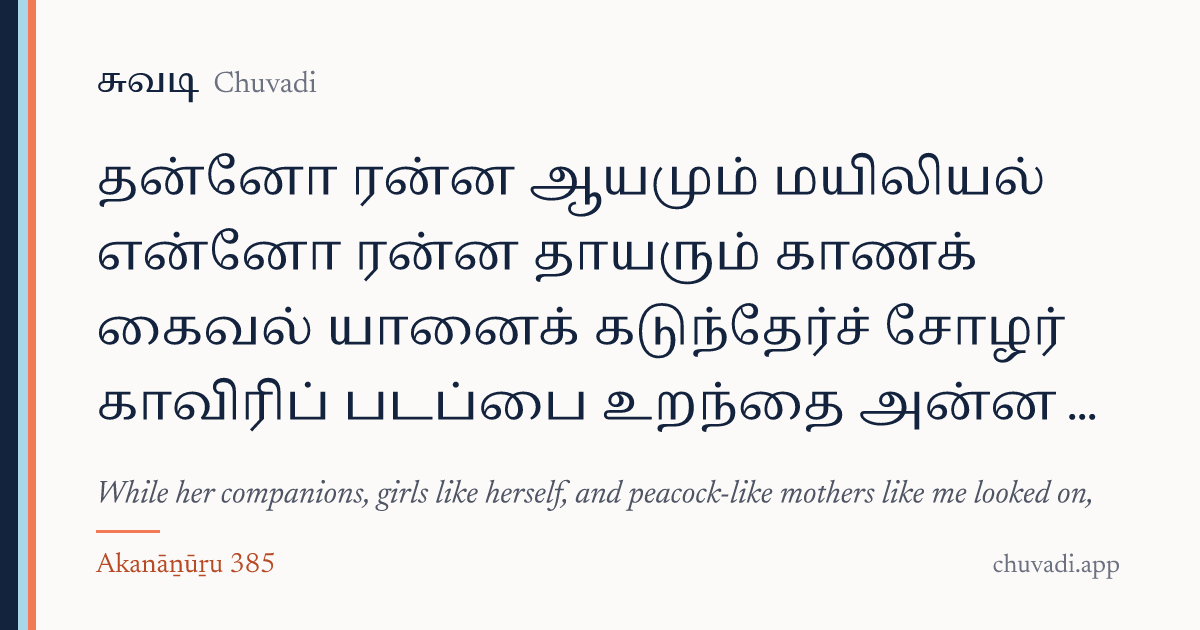

அகநானூறு 385
பாடல் · The poem
Tap a word to see where else it occurs.
பொருள் · Meaning in TamilAI
அவளைப் போன்ற தோழியரும், மயில் போன்ற என்னைப் போன்ற தாய்மாரும் காண, பழகிய யானைகளும் விரைந்த தேர்களும் உடைய சோழரின் காவிரித் தோட்டங்கள் சூழ்ந்த உறந்தையைப் போன்ற பொன் நிறைந்த எங்கள் உயர்ந்த மாளிகையில், பெரியோர் விழா நடத்த, சிறந்த திருமண விழாவில் தகரத்தால் அவள் கூந்தலைக் கழுவி, நாங்கள் பலவற்றை ஏற்பாடு செய்துகொண்டிருந்தோம்; அவள் எதுவும் சொல்லவில்லை. மூங்கிலோடு நெல்லியும் உயர்ந்து வளர்ந்த பாறைச்சரிவில், பாலைநிலத்து ஆலமரத்தின் உலர்ந்த நுனியுடைய நீண்ட விழுதுகள் தேமல் படர்ந்த அவள் தொடைகளில் நன்கு உரச, அவள் விரும்பும் துணைவன் வளையணிந்த முன்கையைப் பற்றி, பல வடங்களாக அடர்ந்த கரிய மணிக்கோவையும் பச்சைமணி மேகலையும் அணிந்த அகன்ற இடையைப் பிடித்து, ஆடும் மயிலின் தோகை போல அவள் கூந்தல் பொங்கும்படி, மிகவும் உயரமாக ஊஞ்சலாட்டுகிறான். கூரிய பற்களும் பவளம் போன்ற வாயும் உடைய அவள், எங்களை நினைக்காமல் சென்றுவிட்டாள். கண்ணி அணிந்த அந்த இளைஞனுக்காகச் சிலம்பு கழிக்கப்பட்டு, அவள் அறியாத நாட்டில் இருப்பது கொடுமையானது!
இது பாலைத்திணை; உடன்போக்கில் சென்ற மகளை நினைத்து நற்றாய் புலம்புகிறாள். வீட்டில் நடக்க இருந்த திருமணத்தையும், காட்டில் ஆலம்விழுதில் ஊஞ்சலாடும் மகளையும் அவள் அருகருகே எண்ணிப் பார்க்கிறாள். மகள் மகிழ்ந்திருப்பதாக எண்ணுவதே தாய்க்குப் பெருந்துயர் தருகிறது.
ஆங்கிலம் · English translationAI
Translation
- While her companions, girls like herself, and peacock-like
- mothers like me looked on,
- of the Cōḻar with skilled elephants and swift chariots,
- like Uṟantai in the gardens of the Kāviri,
- in our tall house full of gold, with noble guests holding the feast,
- at a splendid festival, washing her hair with takaram,
- while we arranged many things — she told us nothing; where with bamboo
- the nelli grows tall, on a rocky slope,
- the long aerial roots with withered tips of a banyan in the wasteland
- brushed fully against her thighs with their beauty spots,
- and he took her bangled forearm; clustered
- dense dark strings, a girdle of green beads,
- holding her wide hips; her hair
- puffing up like a dancing peacock's plumes, greatly
- as the mate she loves pushed her, swinging high —
- she of sharp teeth and coral lips who left without a thought,
- her anklets taken off for the young man with the garland,
- is now in a country she does not know — that is cruel!
What the poem says
A mother laments her daughter, who has run away with her lover. The poem sets two scenes side by side: the wedding she should have had at home, and the life she is imagined to be living now.
The first scene is the home wedding. Her friends and the other women of the house would have watched; in their tall house, as rich as Uṟantai, the Cōḻa city in the Kāviri gardens, noble guests would have held the feast, and the girl's hair would have been washed with fragrant takaram. The family was arranging all this, and she said nothing.
The second scene is the mother's imagination of the girl in the wilderness. On a rocky slope, among bamboo and nelli, the aerial roots of a banyan make a swing; her lover holds her bangled wrist and her hips and pushes her, and her hair flies out like a dancing peacock's tail. The picture is happy and playful, and this is what makes it painful to the mother: her daughter is enjoying herself in a place the mother does not know.
The last lines state the loss: the girl has had her anklets removed, a rite connected with marriage, for the young man, and now lives in an unknown land. 'Tittik kuṟaṅku' in line 10 is read as thighs marked with beauty spots (titti). This edition names no poet.