



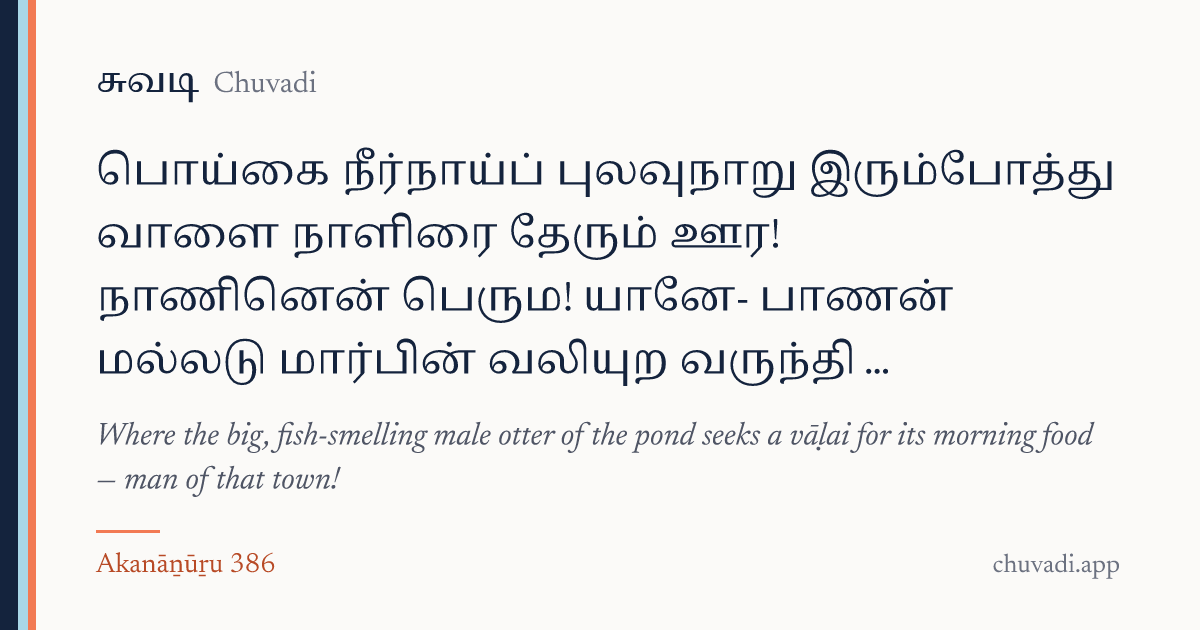

அகநானூறு 386
பாடல் · The poem
Tap a word to see where else it occurs.
பொருள் · Meaning in TamilAI
குளத்தில் வாழும், புலால் நாறும் பெரிய ஆண் நீர்நாய் தன் காலை உணவுக்காக வாளைமீனைத் தேடும் ஊரனே! பெருமானே, நான் நாணினேன்! பாணன் என்பவனின் மல்லர்களை வீழ்த்தும் மார்பு அழுத்தியதால் வருந்தி, அவனை எதிர்த்து வந்த ஆரியப் பொருநன், நிறைந்து திரண்ட முழவு போன்ற தோள்கள் அவன் கைப்பிடியில் நொறுங்க, வலிமை இழந்து கிடந்ததைப் பார்த்து, நல்ல போர்த்திறமுடைய கணையன் நாணியது போல நான் நாணினேன். அவள் மறைவாக மெல்ல வந்து, இனிய சொற்களைச் சொல்லி, "மை போன்ற கரிய கூந்தலுடைய இளம்பெண்ணே! நானும் உன் தெருவைச் சேர்ந்தவள்தான்; அடுத்த வீட்டுக்காரி; உனக்குத் தங்கையாக இருப்பேன்" என்று கூறி, மணி பதித்த மோதிரம் அணிந்த தன் மெல்லிய விரல்களால் குளிர்ச்சியாகத் தடவி, என் நெற்றியையும் கூந்தலையும் நீவினாள். பகலில் வந்து சென்ற ஒளிவீசும் நெற்றியுடைய அவளைக் கண்டு நான் நாணினேன்!
இது மருதத்திணை; பரத்தை வந்து அன்பு காட்டிச் சென்றதைத் தலைவி தலைவனிடம் நாணத்தோடு கூறுகிறாள். வாளையைத் தேடும் நீர்நாய், புதிய இன்பங்களை நாடும் தலைவனைக் குறிக்கும் உள்ளுறை. கணையன் ஆரியப் பொருநனுக்கு ஆதரவாக இருந்தான் என்பது குறிப்பாகத் தெரிகிறது; அவர்களுக்குள் உறவு என்ன என்பதைப் பாடல் சொல்லவில்லை.
ஆங்கிலம் · English translationAI
Translation
- Where the big, fish-smelling male otter of the pond
- seeks a vāḷai for its morning food — man of that town!
- I was ashamed, my lord, I was! — as when, by Pāṇaṉ's
- wrestler-crushing chest pressed hard and made to suffer,
- the Āriya champion who had taken him on
- lay, his full, rounded, drum-like shoulders crushed in that grip,
- sprawled with his strength undone, and seeing him, Kaṇaiyaṉ of fine
- battles was ashamed — just so. Stealthily she
- came softly, said kind things:
- 'Innocent girl with dark glossy hair! I too am of your
- street; I am the woman next door;
- I shall be a younger sister to you,' and with her hand's
- soft fingers, ringed with gems, coolly stroking,
- she smoothed my brow and hair —
- seeing her of the bright brow, who came by day and went away!
What the poem says
The heroine speaks to her husband, whose affair with another woman she knows about. The opening gives his town its usual marutam emblem: an otter in a pond hunting a vāḷai fish for its meal. The image carries a hidden meaning (uḷḷuṟai) about a man always out looking for new pleasures.
Her complaint is about a visit. The other woman came quietly by day, spoke sweetly, called the heroine an innocent girl, claimed to be a neighbour from the same street, offered to be like a younger sister, and stroked her brow and hair with jewelled fingers. The heroine says she felt deep shame on seeing her. The visit was a show of friendliness that was really a humiliation.
That shame is compared to a story the poem tells briefly. An Āriya champion took on the wrestler Pāṇaṉ and was crushed, his drum-like shoulders broken in Pāṇaṉ's grip, and when Kaṇaiyaṉ, a warrior 'of fine battles', saw him lying there he was ashamed. The poem implies that Kaṇaiyaṉ had backed the Āriya, but it does not say how they were connected, and no more is supplied here.
The simile turns a domestic insult into a public defeat: like Kaṇaiyaṉ, the heroine is shamed because someone on her side was beaten in front of everyone. This edition names no poet.