



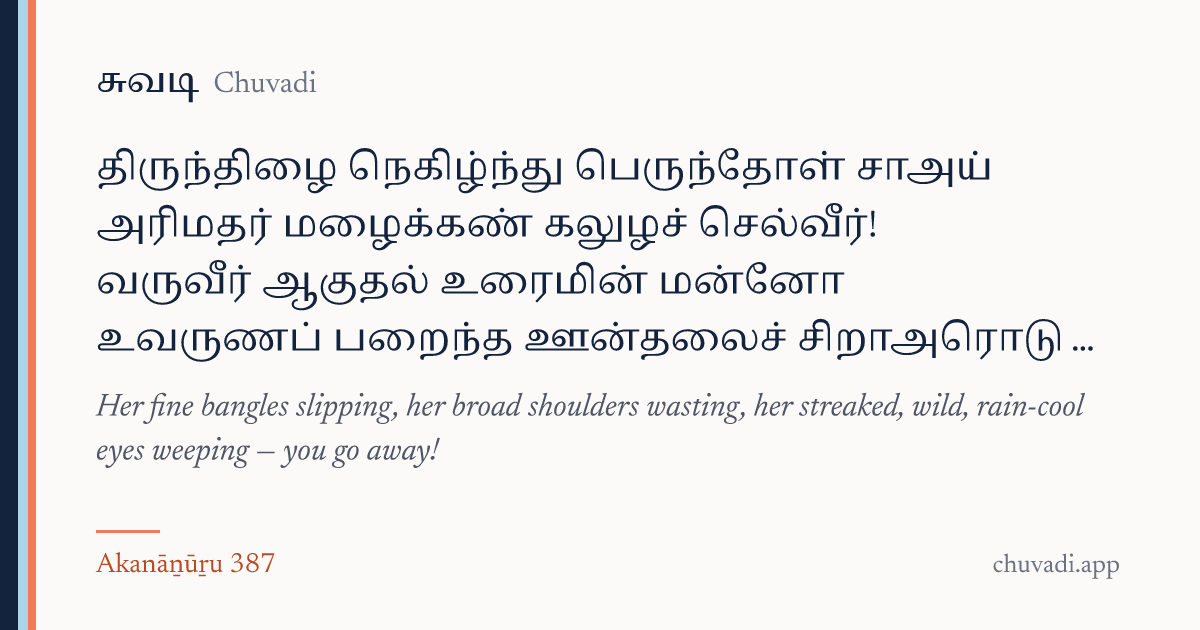

அகநானூறு 387
பாடல் · The poem
Tap a word to see where else it occurs.
பொருள் · Meaning in TamilAI
அவளுடைய அழகிய வளையல்கள் நெகிழ, பெரிய தோள்கள் மெலிய, செவ்வரி படர்ந்த மதர்த்த குளிர்ந்த கண்கள் அழும்படி நீ பிரிந்து செல்கிறாய்! திரும்பி வருவாய் என்பதையாவது சொல்லிவிட்டுப் போ. உவர்மண்ணால் மயிர் உதிர்ந்த தலையுடைய சிறுவர்களோடு இருக்கும் வண்ணாத்தி, கறைபடிந்த கூரிய நகங்களும் கஞ்சிப்பசை படிந்த விரல்களும் கொண்டு, பொன்மணி மேகலை அணிந்த இடையில் ஒளிரும் பூவேலைப்பாடுடைய ஆடையை நெடுநேரம் பிசைந்து கஞ்சி ஊட்டினாள்; அதன் அழகிய வரிகள் சிதைய நோக்கிய நிலை என்று சொல்லப்படுகிறது. கொடிய தொழில் செய்யும் வேடன், அடர்ந்த புதரில் மறைந்திருந்து எழுப்பும் அழைப்பொலிக்கு அஞ்சி, வரிகளையுடைய முதுகுள்ள காடையின் மணிபோன்ற கண்ணுடைய பெடை, நுண்ணிய புள்ளிகள் அணிந்த கழுத்தும் கூரிய முள்ளும் சிவந்த காலும் உடைய சேவலை அழைக்கிறது. அங்கே, விற்கள் நெருங்கிய கடும்போரை அழித்து நற்புகழை நிலைநாட்டிய மானமுள்ள மறவர்களின் வரிசையாக நின்ற நடுகற்களில் ஒட்டிக்கொண்டு, இமையாமல் இரைக்குக் காத்திருக்கும் முதிய பல்லி சிறிது தீக்குறியாக ஒலித்தாலும், முகபடாம் அணிந்த யானைகளையுடைய பெரியோர் ஆனாலும் நின்ற இடத்திலிருந்தே திரும்பிவிடுவர். அத்தகைய காட்டுக்கு "அவர் சென்றார்" என்று எண்ணி இங்கே இருப்பவர்களுக்காக, வருவதைச் சொல்லிவிட்டுப் போ!
இது பாலைத்திணை; பிரிந்து செல்லும் தலைவனிடம், திரும்பும் நாளையாவது சொல்லும்படி தோழி கேட்கிறாள். பல்லியின் தீய ஒலி கேட்டுப் பெரியோரும் திரும்புவர் என்பது அக்கால நம்பிக்கை; அத்தகைய வழியில் அவன் போவது வீட்டிலுள்ளோரை அஞ்சச் செய்கிறது. நான்கு முதல் எட்டு வரையிலான அடிகளின் பொருள் தெளிவாக இல்லை; வண்ணாத்தியின் காட்சி காடையோடு எப்படித் தொடர்புடையது என்பது உறுதியாகத் தெரியவில்லை.
ஆங்கிலம் · English translationAI
Translation
- Her fine bangles slipping, her broad shoulders wasting,
- her streaked, wild, rain-cool eyes weeping — you go away!
- At least tell us that you will come back.
- Where, with boys whose fleshy heads the salt-earth has left bare,
- the washerwoman, her sharp nails dark-stained, that wore away the lovely lines,
- her fingers sticky with starch, has long kneaded and stiffened
- the flowered cloth that glimmers on hips girt with golden beads —
- spoiling its lovely lines, looking on; of cruel work
- the hunter's call, lying in the dense thicket, startles
- the gem-eyed hen of the striped-backed quail,
- and she calls to the cock, its neck adorned with fine speckles, sharp-spurred,
- red-legged; there,
- crushing a hard battle thick with bows,
- the warriors with a sense of honour, who set up good fame —
- pressed against their memorial stones standing in a row, unblinking,
- the wise-mouthed lizard lying in wait for prey,
- if it gives even a small ill-omened chirp, then even great men,
- lords of elephants with forehead plates though they be,
- turn back from where they stand — that forest,
- for those who stay behind, saying 'he has gone there'!
What the poem says
The friend speaks to the hero as he is about to leave on his journey. She describes what his going is doing to the heroine, whose bangles slip from her wrists, whose shoulders waste and whose eyes are full of tears, and asks him at least to promise that he will come back.
She then describes the forest he must cross. A quail hen, frightened by the hunter's whistle from the thicket, calls to her red-legged mate. Rows of memorial stones (naṭukal) stand for warriors who died with honour in hard battle. Beside them a lizard lies in wait for insects; and if it gives even a small ill-omened chirp, even great men who ride armoured elephants turn back on the spot. The lizard's call as an omen for travellers belongs to the beliefs reflected in these poems.
Her point is that this is a road where even the mighty turn back at a lizard's sound, so how can those left at home bear it? The ending is addressed on behalf of 'those who stay', the heroine and her people.
Lines 4–8 are obscure in this text. They seem to describe a washerwoman with her bald-headed children, starching and kneading a flowered cloth worn on the hips, but how this connects to the quail is not clear. The translation follows the words as closely as possible, and the reading is tentative. This edition names no poet.