



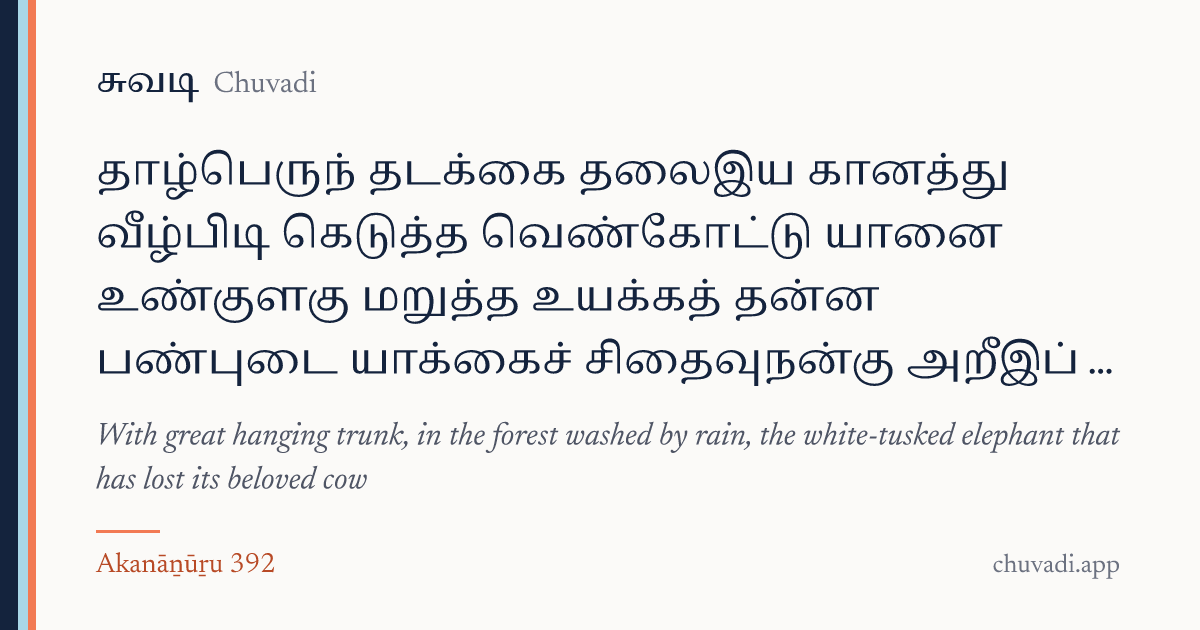

அகநானூறு 392
பாடல் · The poem
Tap a word to see where else it occurs.
பொருள் · Meaning in TamilAI
மழை பொழிந்த காட்டில், தாழ்ந்த பெரிய துதிக்கையுடைய வெண்கொம்பு யானை தன் அன்புப் பிடியை இழந்து, தின்னும் தழையுணவையும் மறுத்துக் களைத்திருப்பது போல, நல்ல உடல் சிதைந்திருப்பதை நன்கு உணர்ந்து, பின்தொடர்ந்து வேண்டுவதில் சலிக்காமல், "பூந்தாது படிந்த பாவை போன்ற, அழகிய மென்மையான இயல்புடைய இளம்பெண்ணிடம், தீங்கு இல்லாமல் நான் கடந்து செல்ல நீ தெப்பமாக இரு" என்று என்னையும் வற்புறுத்துகிறான். அப்படியானால், அவன் மனமுடைந்து திரும்பிப் போவது மிகவும் துன்பமானது. தோழி, இப்போதே இசைந்துகொள், நீ வாழ்க! கூட்டமான மேகங்கள் பொழிந்து காடு நனையும் இரவில், தினையை மேயும் யானைகள் கூட்டம் கலைந்து ஓடும்படி, பாறைமேல் உயர்ந்த பரணில் இருக்கும் காவலன் வலிய கவணால் எறிந்த கல் பெருவெடிபோல ஒலிக்க, வீரமுள்ள புலி உறும, காட்டுக்கோழிகள் கதற, கூட்டிலிருந்து விழித்த அழகிய மயில் அகவ, மலை முழுவதும் அஞ்சி நடுங்கும் பெரிய பாறைமலை நாட்டவனிடமிருந்து நீ பிரிவது அரிது. அதுமட்டுமன்று; அவன் உன்னைப் பிரிந்தானானால், வெற்றிவேல் வேந்தன் பிற செயல்களைவிட்டுத் திரும்பி, எல்லைகளை அழிக்கும் படையோடு வந்து முன்னே தங்கியபோது, தன் எல்லையாகவும் இருப்பிடமாகவும் இருந்த வலிய கோட்டையில், தாங்க முடியாமையால் பற்றிய வேலின் வலிமையால் குன்றாத பழம்புகழ் பெற்ற, மூங்கில் உறங்கும் மலைச்சரிவுகளையுடைய காட்டில் வாழும் நன்னனைப் போல நான் இருப்பேன்; உன் அழகை மீட்டுத் தருவேன்.
இது குறிஞ்சித்திணை; தலைவனை ஏற்குமாறு தோழி தலைவியை வேண்டுகிறாள். துணையிழந்த யானை தலைவனின் வாட்டத்துக்கு உவமை. நன்னன் தன் கோட்டையைக் காத்தது போலத் தானும் தலைவியைக் காப்பேன் என்று தோழி உறுதி கூறுகிறாள். "உரிதல் பண்பின்" என்ற தொடரும், நன்னன் பற்றிய அடிகளின் சொற்றொடர் அமைப்பும் உறுதியாகத் தெரியவில்லை.
ஆங்கிலம் · English translationAI
Translation
- With great hanging trunk, in the forest washed by rain,
- the white-tusked elephant that has lost its beloved cow
- and refuses the leafy fodder it would eat — like its weariness,
- seeing well how his fine body is wasting,
- and never wearying of pleading after me, and very earnestly,
- 'To that girl like a doll dusted with pollen,
- lovely, gentle-natured, innocent and fair,
- be my raft, so that I cross with no harm,' saying this,
- if he presses even me — then for him
- to go away broken would be very painful.
- Agree now, friend, long may you live! — with a crash,
- on a night when massed clouds pour, soaking the forest,
- so that the millet-grazing elephants break from their herd and run,
- the watchman on his tall platform on the rock hurls
- from a strong-mouthed sling a stone that cracks loudly;
- the fierce tiger growls, the wild fowl scream,
- the fine peacock cries out from its nest, now wakened,
- and the whole mountain trembles: from the man of that great rocky hill
- that you should part is hard indeed. And more —
- if he should part from you in the way men may,
- then, when the king of victorious spear, turning from other work,
- came up and camped in front with his frontier-slaying army,
- at the strong fortress that was his bound and dwelling,
- since it could not be borne, by the might of the spear he held
- won an ancient fame whose splendour never failed —
- where lovely tall bamboo sleeps on the slopes,
- like Naṉṉaṉ who dwells in the forest,
- so shall I be: I shall bring back your beauty.
What the poem says
The friend speaks to the heroine to persuade her to accept the hero. He has come to the friend for help, wasted like an elephant that has lost its mate and refuses food, and begs her to be his 'raft', the go-between who will carry him safely across to the girl. If he goes away rejected, says the friend, it will be very painful. So agree now.
The middle of the poem is a night scene in his hills. In heavy rain, elephants raid the millet; a watchman on a rock platform slings a stone that cracks like a shot; a tiger growls, wild fowl scream, a peacock wakes and cries, and the whole mountain shakes. It is a land of commotion and strength, and the friend says it would be hard for the heroine to be parted from such a man.
She ends with a promise. If he should ever leave her, the friend will stand by her like Naṉṉaṉ of the bamboo forest. The poem says that when a victorious king brought his army against Naṉṉaṉ's fortress, Naṉṉaṉ held it by the strength of his spear and won lasting fame. In the same way the friend will defend the heroine and restore her lost beauty.
The Naṉṉaṉ passage is difficult and the translation is tentative, especially line 20 ('urital paṇpiṉ') and line 24, where it is unclear who 'could not bear' what. This edition names no poet.