



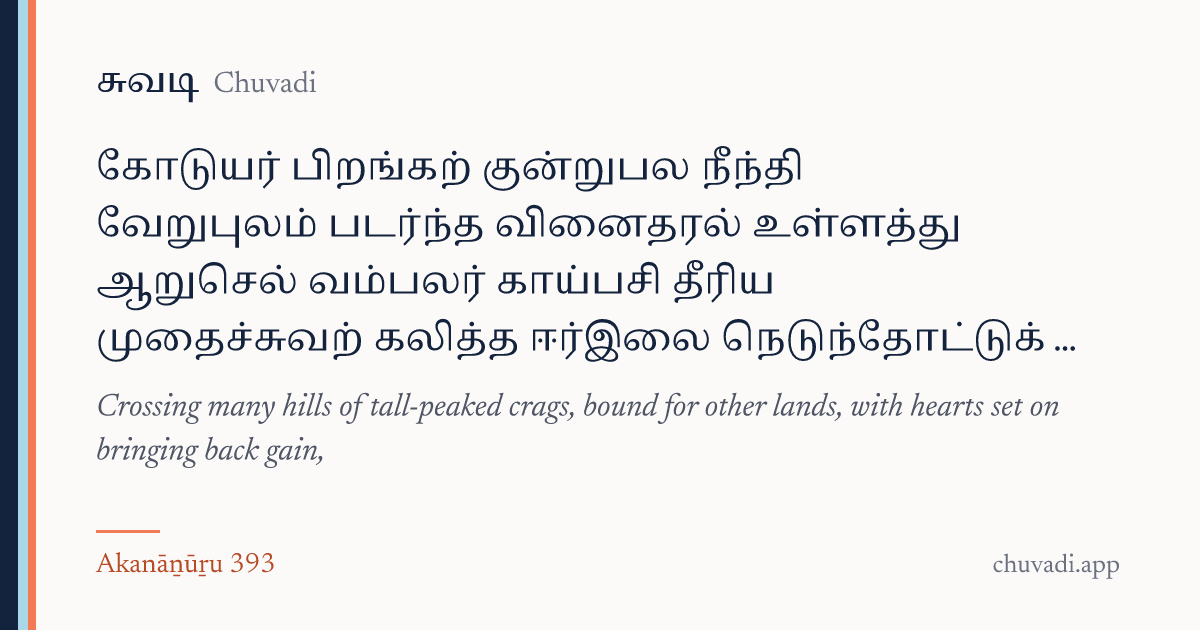

அகநானூறு 393
பாடல் · The poem
Tap a word to see where else it occurs.
பொருள் · Meaning in TamilAI
உயர்ந்த சிகரங்களையுடைய பல பாறைக்குன்றுகளைக் கடந்து, பொருள் கொண்டுவரும் எண்ணத்தோடு வேறு நாடுகளுக்குச் செல்லும் வழிப்போக்கரின் கொடிய பசியைத் தீர்ப்பதற்காக, பழைய மேட்டுநிலத்தில் செழித்து வளர்ந்த, ஈரமான நீண்ட இலைகளும் கவர்த்த கதிர்களும் உடைய வரகின் அடியில் குவித்த போரை, மாடுகளின் பிளவுபட்ட குளம்புகளால் மிதித்து உதிர்த்த தானியத்தை, அகன்ற பாறையில் முறையாக உலரவைக்கின்றனர். வரிவேலைப்பாடுடைய அணிகளும் திரண்ட தோள்களும் நீண்ட காதுகளும் உடைய அவர்கள் வீட்டுப் பெரியவர்கள், வயலில் விளைந்த வெண்மையான நெல்லரிசி போலத் தோன்றும்படி, சுழலும் மரத்தால் தோல் நீக்கி, முறத்தில் புடைத்த வெண்மணிகளை, பூண் அணிந்த உலக்கைகளால் மாறி மாறி இடிக்கின்றனர். உரலின் வாய்வரை நிறைந்த அந்தத் தானியத்தை அங்குள்ள பெரிய சுனைநீரோடு அள்ளி, களிமண் பானையில் இட்டுக் கல்லடுப்பில் ஏற்றி, கொத்தாக அடர்ந்த கொன்றையின் பூந்தாது போல நிறமுடைய, பொங்கிய கஞ்சியை ஆயர்கள் சமைத்து, செழித்த நல்ல பசுக்களின் பாலோடு பகிர்ந்து அளிக்கின்றனர். பல ஆநிரைகள் கூடிய, பெருமைமிக்க சொல்லுடைய புல்லியின், தேன் தொங்கும் உயர்ந்த மலைகளையுடைய நல்ல நாட்டுக்கு அப்பால் உள்ள வேங்கடத்தைக் கடந்து சென்றாலும், அவர் அங்கே நெடுநாள் தங்கமாட்டார், தோழி, நீ வாழ்க! அடர்ந்த, ஒளிவீசும் மயிலின் தோகையைப் போல, தகரத்தால் கழுவிய உன் குளிர்ந்த மணமுள்ள கொண்டையில் குற்றமற்ற குவளை அரும்போடு தேர்ந்தெடுத்த இதழ்களையுடைய வேனில் அதிரலைச் சூடி, உன்னோடு இன்பமாகக் கூடி உறங்கிய இனிய உறக்கத்தை மறந்துவிடமாட்டார்.
இது பாலைத்திணை; வேங்கடத்துக்கு அப்பால் சென்ற தலைவன் விரைவில் திரும்புவான் என்று தோழி தலைவியை ஆற்றுவிக்கிறாள். புல்லியின் நாட்டில் வழிப்போக்கர்க்கு உணவு சமைத்து அளிக்கும் விரிவான காட்சி, அந்நாடு விருந்தோம்பும் இடம் என்பதைக் காட்டுகிறது. எட்டு முதல் பன்னிரண்டு வரையிலான அடிகளின் அமைப்பும், "தன்னையர்" யார் என்பதும் உறுதியாகத் தெரியவில்லை.
ஆங்கிலம் · English translationAI
Translation
- Crossing many hills of tall-peaked crags,
- bound for other lands, with hearts set on bringing back gain,
- to ease the burning hunger of strangers on the road —
- of the millet grown lush on old ridges, with long moist leaf-blades
- and forked ears, the heaped straw gathered at the stalks,
- the many-branched spill threshed out under cloven hooves,
- is spread to dry on a broad flat rock in the right way;
- their elder kin with ornamented, stout shoulders and long-lobed ears,
- so that it looks like rice from the white ripe grain of the fields,
- the white kernels husked by the turning wood, tossed on the winnow,
- pounding in turn with fine iron-ringed pestles,
- the full hollowful that shows at the mortar's mouth
- they draw with water from a dark pool there,
- set it in a clay pot on a stone hearth,
- and, like the gathered pollen of the clustered koṉṟai,
- the herdsmen cook a frothing millet porridge
- and share it out with the milk of fine, sleek cows —
- Pulli of lofty words, with many herds gathered:
- beyond his good land of high mountains where honey hangs,
- though he has crossed Vēṅkaṭam, there he
- will not linger — long may you live, friend! — massed
- like the splendid thick plumes of a bright peacock,
- your cool fragrant tuft of hair washed with takaram,
- with spotless kuvaḷai buds and choice-petalled
- summer atiral twined in it — your
- sweet sleep in blissful union, forgetting it.
What the poem says
The friend comforts the heroine. Her man has gone far, beyond Vēṅkaṭam, the northern hill at the edge of the Tamil country, but he will not stay there long, because he will not forget the sweet sleep of their union and her hair, washed with takaram and dressed with kuvaḷai and atiral, thick as a peacock's plumes.
Most of the poem describes the land on his route: the country of Pulli, a chieftain 'of lofty words' rich in herds, whose land lies among honey-hung mountains. The friend describes in detail how food is prepared there for hungry travellers. Millet is threshed by the hooves of cattle, dried on a broad rock, husked and winnowed, pounded in turn with iron-ringed pestles, cooked in a clay pot on a stone hearth into a frothing porridge the colour of koṉṟai pollen, and shared out with cows' milk.
The point is that even his route is hospitable, and that it is the kind of country where travellers are fed and sent on, not one where a man stays. The detail also gives a rare glimpse of herding life in the north of the Tamil region.
Lines 8–12 are hard to construe. 'Taṉṉaiyar' (line 8) usually means elder brothers or elder kin, but the shoulder and ear ornaments suggest women; who is pounding is uncertain. 'Kuṭavar' in line 16 is taken as herdsmen. This edition names no poet.