




அகநானூறு 394
பாடல் · The poem
Tap a word to see where else it occurs.
பொருள் · Meaning in TamilAI
களாப்பழங்கள் புளித்துவிட்டன; விளாம்பழங்களும் பழுத்துவிட்டன. சிறிய தலையுடைய செம்மறியாட்டின் பாலில் இருந்து நன்றாகத் தோய்ந்து பழுப்பு நிறமான தயிரும், புதிதாகத் திருத்திய புனத்தில் விளைந்த வரகின் நன்கு குற்றிய அரிசியும், மழை பெய்து ஓய்ந்த பின் ஈரமான வாயுடைய புற்றிலிருந்து எடுத்த ஈசலைப் போட்டுச் சமைத்த இனிய புளிப்புடைய சூடான சோறும், அதன் சூடான மேற்புறத்தில் செம்பசுவின் வெண்ணெய் உருக, உன் இளைய வீரர்கள் உண்ணட்டும். அதன் பின் நீயும், நட்ட முள்வேலியும் வளைந்த கால்களையுடைய பந்தலும், புதுப்பானை போலச் சிவந்த வாயிலும் உடைய சிறிய வீட்டில், அழகுசெய்த கரிய கூந்தலுடைய உன் மனைவி சமைக்கும் பாற்சோற்றை உண்பதற்காக ஒருநாள், பெருங்கொடை வள்ளலே, வந்து பின் செல்வாயாக! காட்டில் வாழும் இடையன் தன் ஆடுகளைத் திருப்பி ஓட்டும்போது உதட்டை மடித்து அடிக்கும் சீழ்க்கை ஒலிக்கு அஞ்சி, சிறிய முயல் ஊர்மன்றத்தில் உள்ள கரிய புதரில் ஒளிந்துகொள்ளும், வன்புலத்தில் உள்ள எங்கள் சிறிய நல்ல ஊருக்கு வந்து செல்வாயாக!
இது முல்லைத்திணை; வழியே செல்லும் தலைவனை ஒருநாள் தன் வீட்டுக்கு வந்து மனைவி சமைத்த உணவை உண்டு செல்லுமாறு அழைக்கும் பாடல். கூறுபவர் யார் என்பது பாடலில் குறிக்கப்படவில்லை; "உன் மனைவி" என்று சொல்வதால், தலைவியின் ஊரைச் சேர்ந்த தோழி போன்றவர் எனக் கொள்ளலாம். முல்லைநிலத்து எளிய உணவும் அமைதியான ஊர்க்காட்சியும் இல்லறத்தின் இனிமையைக் காட்டுகின்றன.
ஆங்கிலம் · English translationAI
Translation
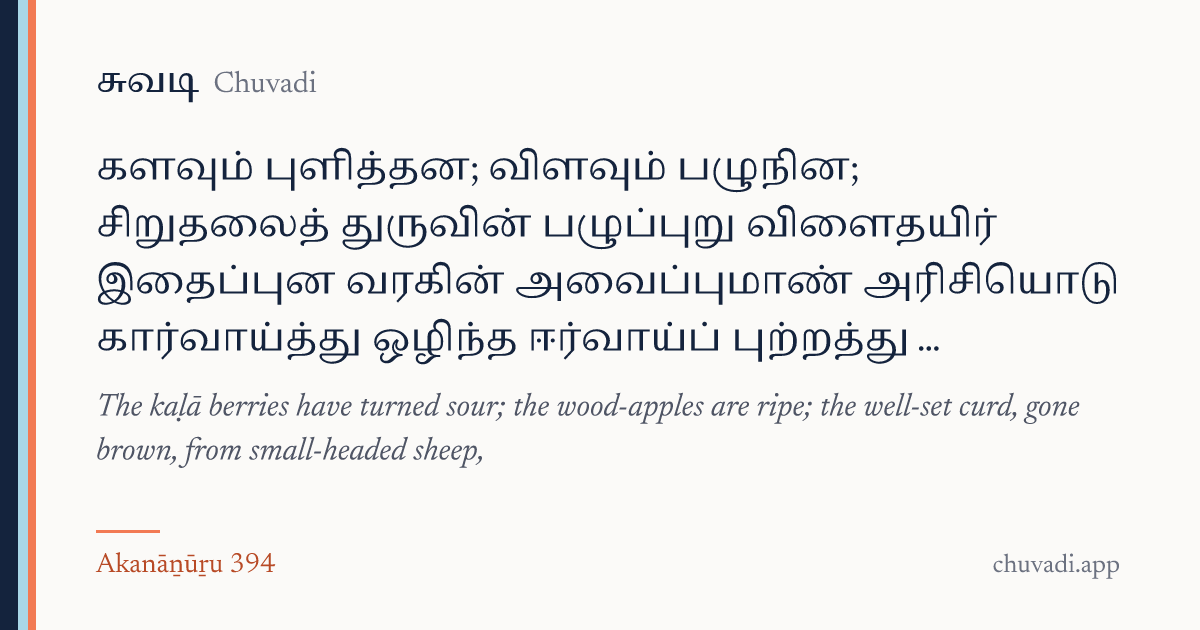
- The kaḷā berries have turned sour; the wood-apples are ripe;
- the well-set curd, gone brown, from small-headed sheep,
- with fine pounded grain of millet from the new-cleared field,
- and from the moist-mouthed anthill, after the rains have come and gone,
- winged termites put in, a hot rice cooked sweet and sour;
- with butter of the red cow melting on its hot top —
- when your young men have eaten, afterwards you too,
- with a fence of laid thorns and a bower on crooked posts,
- a little house, red-doored like a new pot,
- where your wife with her dark adorned hair prepares it,
- to touch the milk-rice, for one day,
- great-handed lord, come, and then go —
- where the forest-dwelling herdsman, turning his goats back,
- whistles through a folded lip, and, startled, the little hare
- hides in the dark bush of the village common —
- to our small, good village in the dry land.
What the poem says
This mullai poem is an invitation. A speaker from a small herding village in the dry country addresses a 'great-handed lord' (māvaṇ tōṉṟal) who is passing through, perhaps on his way to or from war, and asks him to stop for a day. It is not marked who speaks; the reference to 'your wife' who prepares milk-rice in the little house suggests that the speaker is someone of his wife's village, perhaps her friend, urging him to visit his home.
The poem is generous with homely detail. The kaḷā berries are sour and the wood-apples ripe; there is sheep's curd, millet from a newly cleared plot, and a sweet-sour hot rice cooked with winged termites gathered from an anthill after the rains, topped with melting butter. His young men can eat that first; then he can go into the little house with its thorn fence and crooked-post bower, and eat milk-rice made by his wife.
The closing lines describe the village. A herdsman turns his goats home with a whistle through his lip, and a little hare, startled, hides in the bushes of the common. The quiet sound and the small creature give the scene its peace.
In mullai convention the season of rain is the season of return, and this poem shows the domestic life to which the man is invited back. 'Ītal' (line 5) is taken as winged termites, a seasonal food of this landscape. This edition names no poet.