




அகநானூறு 4
பாடல் · The poem
Tap a word to see where else it occurs.
பொருள் · Meaning in TamilAI
முல்லை தன் கூரிய முனையுடைய அரும்புகளைக் காட்டுகிறது; இல்லத்தோடு பசுந்தண்டுடைய கொன்றையும் மென்மையாகக் கட்டியிருந்த மொட்டுகளை அவிழ்க்கிறது. முறுக்கிய இரும்பைப் போன்ற மிகக் கரிய கொம்புகளை உடைய ஆண்மான், பரல்கற்கள் நிறைந்த பள்ளங்கள் நீரால் நிரம்ப, துள்ளிக் குதிக்கிறது. அகன்ற உலகம் தனிமைத் துயருக்குப் புறங்கொடுக்கிறது. திரண்ட மேகங்களை உடைய வானம் விரைந்த துளிகளைச் சிதறி மழைக்காலத்தைக் கொண்டுவந்துவிட்டது; காடு அழகு பெற்றுவிட்டது. வளைந்த தலையாட்டத்தால் பொலிந்த, கத்தரித்த பிடரியுடைய குதிரைகளை, யாழ் நரம்பைப் போல இழுத்துக் கட்டிய கடிவாளங்களோடு செலுத்தி, பூத்த சோலையில் துணையோடு தங்கியிருக்கும் தேன் உண்ணும் பறவைகள் அஞ்சிவிடுமே என்று அஞ்சி, தன் சிறந்த தேரின் மணிகளின் நாக்கைக் கட்டிவிட்டு வருகிறான். அதோ பார், குறும்பொறை நாடன் தோன்றுகிறான்! ஒலிக்கும் விழாக்களை உடைய உறந்தைக்குக் கிழக்கே உள்ள நெடிய பெரிய குன்றில் செறிந்து மொட்டவிழ்ந்து மலரும் காந்தள் பூவைப் போல மணக்கும் உன் சிறந்த அழகை நினைந்து அவன் வருகிறான், அழகிய வளையல் அணிந்தவளே!
இது முல்லைத் திணை; மழைக்காலத்தில் திரும்புவேன் என்று சொல்லிப் பிரிந்த தலைவன் வருவதைத் தோழி தலைவிக்குக் கூறுவதாகக் கொள்ளலாம். மழை வந்து உலகம் தனிமைக்குப் புறங்கொடுத்தது, தலைவியின் காத்திருப்பு முடிந்ததைக் குறிக்கிறது. துணையோடு உறங்கும் பறவைகளைப் பிரிக்க விரும்பாமல் மணிநாவைக் கட்டியவன், தன் துணையிடம் விரைந்து வருபவன் என்பது குறிப்பு. குதிரைகளைப் பற்றிய எட்டு, ஒன்பதாம் அடிகளின் சரியான பொருள் உறுதியாகத் தெரியவில்லை.
ஆங்கிலம் · English translationAI
Translation
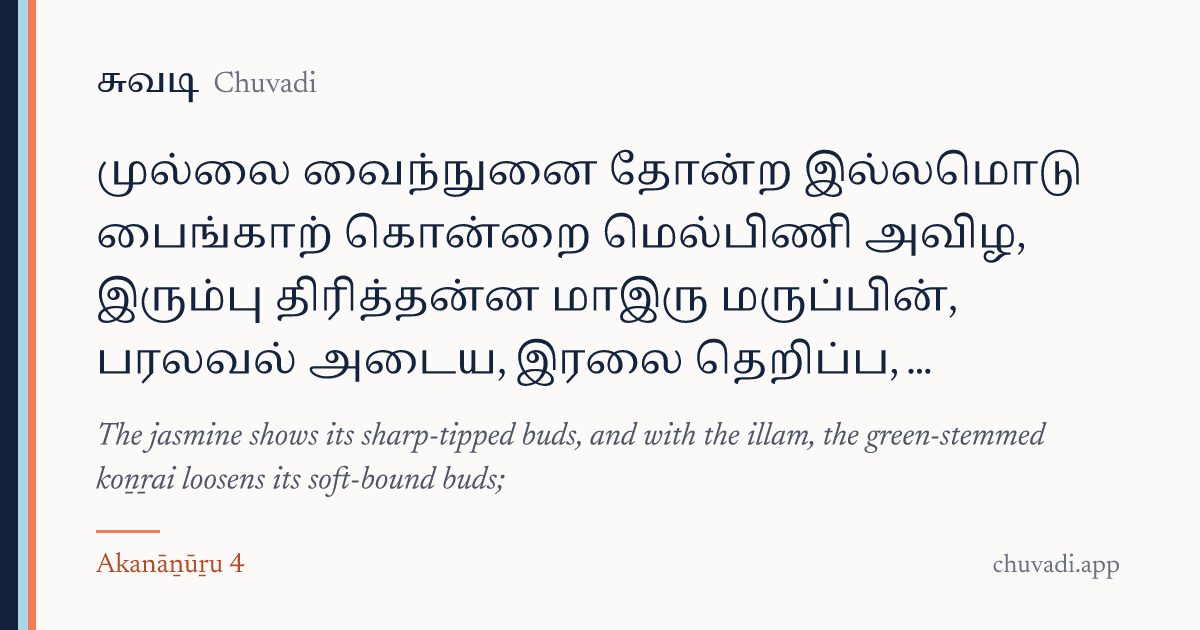
- The jasmine shows its sharp-tipped buds, and with the illam,
- the green-stemmed koṉṟai loosens its soft-bound buds;
- with very dark horns like twisted iron
- the stag leaps as the pebbly hollows fill;
- the wide earth turns its back on desolation;
- the sky with its massed clouds scatters swift drops
- and has brought the rainy season; the forest has taken on its beauty.
- With horses whose clipped manes are splendid with curving plumes,
- reins drawn taut like strung strings, hard to hold,
- and fearing that, in the flowering boughs, resting with their mates,
- the pollen-sipping birds might be startled,
- he has tied the tongues of the bells on his finely made chariot —
- look, there he comes, the man of the land of low hills,
- to the east of Uṟantai, with its loud-drumming festivals,
- on the tall great hill where the kāntaḷ crowds
- and opens its buds into blossom — fragrant like those flowers —
- girl of fine bangles! — he comes yearning for your rare beauty.
What the poem says
Someone, most naturally the heroine's friend, speaks to the heroine, who has been waiting for her husband's return through the season of separation. Mullai is the tiṇai of patient waiting, and its sign is the coming of the rains: the poem opens with the rainy season fully arrived.
The first seven lines are the landscape of mullai at the moment of fulfilment. Jasmine buds show their points, the koṉṟai and illam open, rain fills the stony hollows and the stag leaps for joy, and the earth 'turns its back on loneliness'. That phrase gives the meaning of the whole scene: the time of desolation is over. He had promised to return with the rains, and the rains have come.
The middle section is the much-loved detail of the poem. The hero drives home fast, his horses straining at reins drawn tight as instrument strings, yet he has tied the clappers of his chariot bells so that their sound will not disturb the birds sleeping with their mates in the flowering trees. A man who will not part the birds from their mates is a man hurrying back to his own.
The last lines praise the heroine through scent. Her beauty smells like the kāntaḷ flowers on the great hill east of Uṟantai (Uṟaiyūr, the Cōḻa town, here noted only for its noisy festivals). The poem does not name the hill. Lines 8–9 are hard to construe exactly; the reins 'hard to hold' is one possible sense of a compressed phrase.