



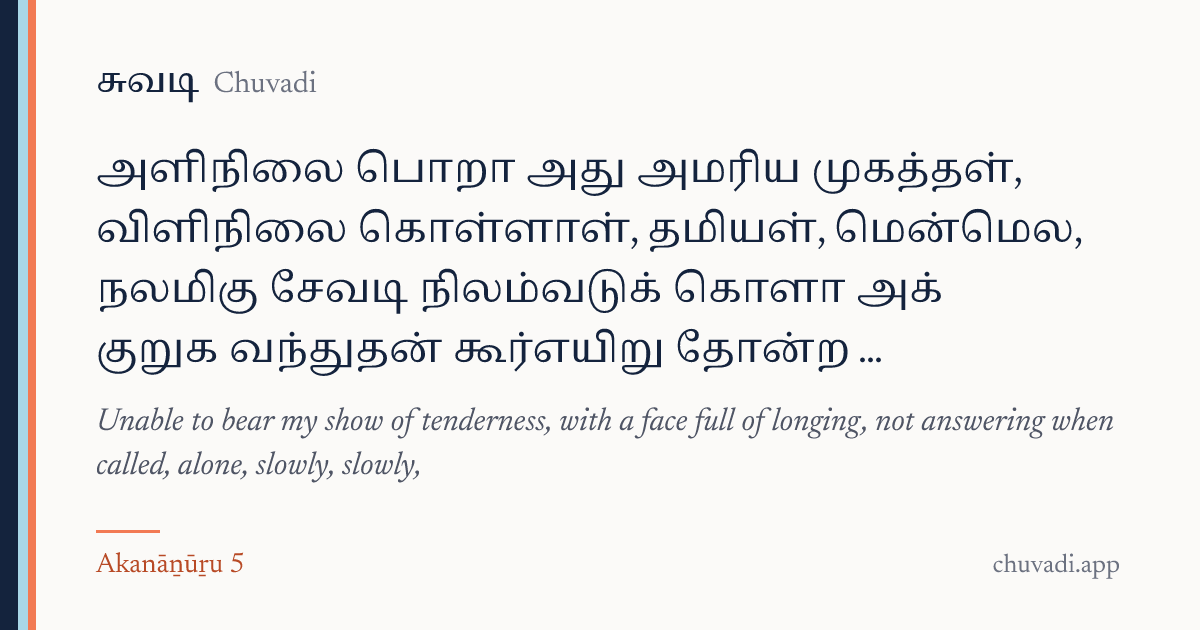

அகநானூறு 5
பாடல் · The poem
Tap a word to see where else it occurs.
பொருள் · Meaning in TamilAI
நான் காட்டிய அன்பைத் தாங்க முடியாமல், ஏக்கம் நிறைந்த முகத்தோடு, அழைத்தாலும் பதில் சொல்லாமல், தனியாக மெல்லமெல்ல, தன் அழகிய சிவந்த அடிகள் நிலத்தில் தடம் பதிக்காதபடி அவள் அருகே வந்தாள். உள்ளுக்குள் எழுந்து உதட்டில் சிறிதே தெரிந்த புன்முறுவலில் அவள் கூரிய பற்கள் தோன்றின. அவள் எண்ணியதை நான் உணர்வதற்கு முன்பே, ஒளிரும் நெற்றியுடைய அவள், நான் வேலைக்குப் புறப்படக் கூடாது என்ற நினைவோடு இருந்தாள். 'உலர்ந்த ஓமை மரங்கள் நிற்கும் பழைய தரிசுக் காட்டில், பளிங்கு போன்ற நெல்லிக்காய்கள் பெரிய உயர்ந்த பாறைமேல் குவித்த வட்டுகள் போல வெயில் காயும் சரிவில் உதிர்ந்து கிடக்கின்றன; தேய்த்தது போல மழுங்கிய முனைகளும், பாத்தி வரப்புப் போன்ற உச்சிகளை உடைய கூரிய கற்களும், கால்விரல் நுனியைச் சிதைக்கும் வரிசைக் கற்களுடைய வழிகளும் உள்ள, பரல்கற்களும் மேட்டு நிலமுமாகிய பயனற்ற அந்தக் காட்டைக் கடக்க நினைத்தால், "அது அறவழி அன்று" என்ற பழைய சொல் அப்படியே ஆகட்டும்' என்று சொல்பவள் போல, குறிப்பால் காட்டி, முகத்தாலேயே உரைத்தாள். ஓவியத்தில் உள்ள உருவம் போல ஒன்றையே நினைந்து நின்று, கண்மணிகளை மறைக்கும் குளிர்ந்த கண்ணீரோடு, மார்போடு அணைத்த மகனின் மென்மையான தலையில் இருந்த, தூய நீர் தந்த மலர்களால் ஆன இணைமாலையை முகர்ந்தாள். அவள் பெருமூச்சு விட்டபோது அந்தப் பெரிய மலர்கள் நீலமணி நிறம் இழந்தன. அந்த அழகழிந்த தோற்றத்தைக் கண்டு நான் பயணத்தைக் கைவிட்டேன். ஒளிரும் வளையல் அணிந்த அவள், நாம் அருகில் இருக்கும்போதே வருந்துகிறவள்; நாம் பிரிவோம் என்று சொன்னால் உயிர் பிழைக்க மாட்டாள்.
இது பாலைத் திணை; பிரிவைக் கைவிட்டதற்கான காரணத்தைத் தலைவன் கூறுவது. அவன் தன் நெஞ்சுக்கோ தோழனுக்கோ சொல்கிறான் என்பது பாடலில் தெளிவாக இல்லை. சொல்லாமல் முகத்தால் உரைக்கும் தலைவியின் மௌனமும், அவள் மூச்சின் வெம்மையால் மலர் நிறம் இழப்பதும் அவள் துயரத்தின் ஆழத்தைக் காட்டுகின்றன. முதல் அடியின் சரியான பொருளும், கற்களைப் பற்றிய பன்னிரண்டு, பதின்மூன்றாம் அடிகளின் பொருளும் உறுதியாகத் தெரியவில்லை.
ஆங்கிலம் · English translationAI
Translation
- Unable to bear my show of tenderness, with a face full of longing,
- not answering when called, alone, slowly, slowly,
- so that her lovely red feet left no mark on the ground,
- she came close, her sharp teeth showing
- in a faint smile that rose from within and barely reached her lips;
- before I could grasp what she meant, she of the bright brow,
- with the thought that I must not set out on my task —
- 'In the forest of old fallow land where the ōmai stands withered,
- where the many fruits of the nelli, like crystal,
- like dice heaped up on a great high rock,
- drop and lie scattered on slopes scorched by the sun's rays;
- where blunt points show as if they had been rubbed away,
- and sharp stones with crests like the ridges of garden plots,
- paths of stones set in rows that split the tips of the toes,
- the barren forest turned to gravel and hard ground —
- if you mean to cross it, then let the ancient saying, spoken of old,
- that "this is not the way of virtue,"
- be so,' as if she were saying this,
- she showed her meaning by signs, and told it with her face;
- like a figure in a painting, thinking of one thing, fixing on it,
- with a look of cold tears that drowned the pupils of her eyes,
- she held our son close to her breast, and on his soft-haired head
- the paired garland of flowers that pure water bears
- she breathed in; and when she breathed out, the great flowers
- lost their sapphire colour — that ruined beauty
- I saw, and gave up the journey; she of bright bangles,
- who grieves even while we are at her side,
- would surely not survive if we said that we would part.
What the poem says
The hero explains why he has given up a journey he had planned. He may be speaking to his own heart or to a companion who expected him to leave; the poem does not say, and it reads best as a man recounting to himself the moment his resolve broke.
He had been especially tender with her, and she, guessing what that tenderness meant, could not bear it. She did not answer when called. She came to him slowly and alone, smiling only faintly, a smile that rose inside her and hardly reached her mouth. Before he understood, she had grasped that he was about to leave.
What she says, she says without words. The long middle passage (lines 8–18) is what her face tells him: the forest he means to cross is a waste of withered ōmai, of nelli fruits scattered like dice on hot rock, of stones sharp enough to split the toes. If he will go there, then let the old saying that such a journey 'is not the way of virtue' (aṟattāṟu aṉṟu) stand. Her silence is an accusation.
The ending is the poem's heart. Holding their small son to her breast, she smells the garland of water flowers on his head, and her breath is so hot with grief that the dark flowers lose their colour. Seeing this, he abandons the journey: a woman who grieves even when he is beside her would die if he left.
Several details are uncertain: the precise sense of line 1, the 'dice' of line 10, and the stony images of lines 12–13, which are compressed and may describe different features of the ground.