




அகநானூறு 6
பாடல் · The poem
Tap a word to see where else it occurs.
பொருள் · Meaning in TamilAI
பரல் இட்ட சிலம்பும், ஆம்பல் மலரால் ஆன ஆடையும், அரத்தால் அறுத்த அழகிய சங்கு வளையல் பொலியும் முன்கையும், அணிகலன்கள் அணிந்த திரண்ட தோளும் உடையவள் அவள். ஐயையின் தந்தையும், மழையால் வளம் தரும் பெருங்கொடையாளனுமாகிய தித்தனுடைய, நெற்குவியல் நிறைந்த உறந்தையில், மூங்கில் கழி ஊன்ற முடியாத ஆழமுள்ள காவிரி வெள்ளத்தில், சிறந்த குழையும் ஒளிரும் அணிகலனும் அணிந்த நீ விரும்பும் அவளோடு, நாணலால் ஆன வெண்மையான மிதவையைத் தழுவிக்கொண்டு, பூழியரின் யானை குளத்தை நாடி மகிழ்வதுபோல மகிழ்ந்த முகத்தோடு, உன் அழகிய மார்பில் உள்ள பூமாலை கசங்க, நேற்று நீராடினாய். இன்று வந்து, 'அழகிய மார்பில் தேமல் அரும்பிய முலையும், குற்றமற்ற கற்பும் உடையவள், என் மகனின் தாய்' என்று வணங்கி வஞ்சகப் பொய்மொழிகளைத் திரும்பத் திரும்பச் சொல்கிறாய். எங்கள் முதுமையை ஏளனம் செய்யாதே; அது போதும்! சுடர் போன்ற தாமரை மலர்கள் நிறைந்த ஆழமான நீருடைய வயலில், உள்துளையுடைய வள்ளைக் கொடிகளைச் சிக்கவைத்து, வாளை மீனைத் தின்ற கூர்ப்பல் நீர்நாய், முள் நிறைந்த பிரம்பின் பழைய புதருக்குள் சென்று பதுங்குகிறது. பல வேல்களை உடைய மத்தியின் கழார் நகரைப் போன்ற எங்கள் இளமை கழிந்து நெடுங்காலம் ஆகிவிட்டது. இனிப் பொய்மொழிகள் எங்களுக்கு என்ன இனிமை செய்யும்?
இது மருதத் திணை; பரத்தையோடு நீராடிவிட்டு வந்து புகழ்ந்து பேசும் கணவனிடம் தலைவி ஊடிக் கூறுவது. வயலில் விளையாடி மீனைத் தின்றுவிட்டுப் பழைய புதருக்குத் திரும்பும் நீர்நாய், இன்பம் துய்த்துவிட்டு வீட்டுக்குத் திரும்பும் கணவனைக் குறிக்கும் உள்ளுறை. முதல் மூன்று அடிகள் பரத்தையைக் குறிப்பதாக இங்கே கொள்ளப்பட்டது; அவை ஐயையைக் குறிப்பதாகவும் கொள்ள இடமுண்டு.
ஆங்கிலம் · English translationAI
Translation
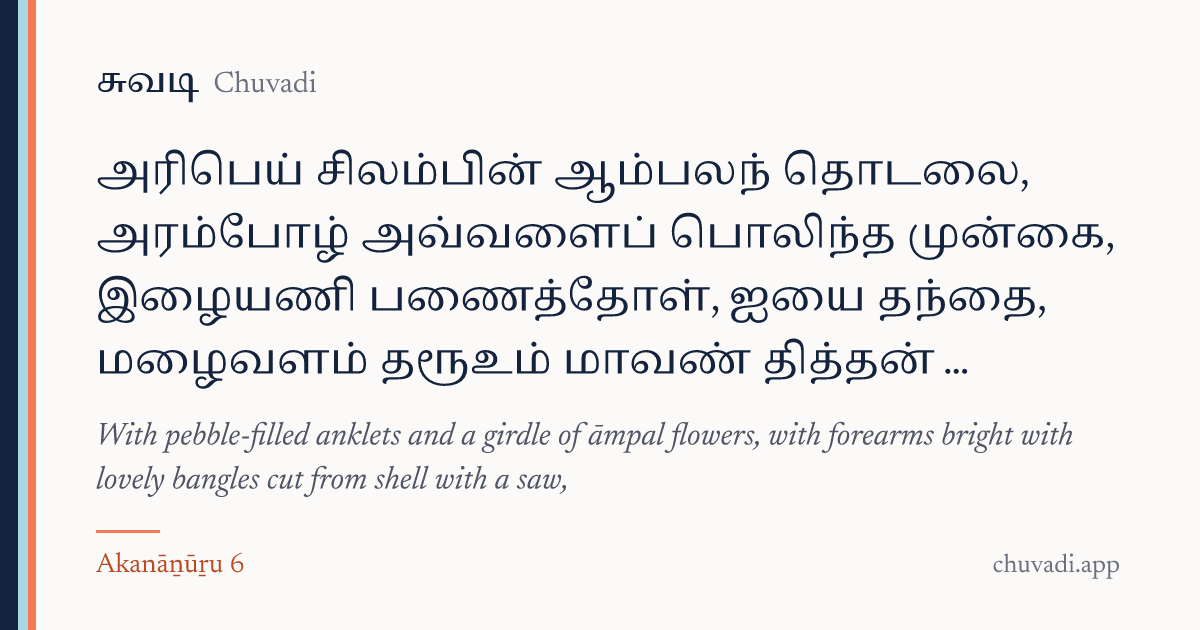
- With pebble-filled anklets and a girdle of āmpal flowers,
- with forearms bright with lovely bangles cut from shell with a saw,
- with jewelled, rounded shoulders — in the land of Aiyai's father,
- Tittaṉ of great bounty, who brings the wealth of rain,
- in Uṟantai, rich with heaps of paddy,
- in the flood of the Kāviri where no pole can find the bottom,
- with her of fine earrings and bright jewels whom you desire,
- clasping a white float of reeds, like the Pūḻiyar's
- elephant seeking out a pool, your face glad,
- the flower garland on your proud, handsome chest crushed,
- yesterday you sported in the water; and today you come
- saying, 'Lovely breasts on her chest where pale spots have budded,
- flawless in her chastity, mother of my son!' —
- bending low, you keep repeating cunning lies; our
- age — do not mock it; enough of that!
- In the deep-watered field of flame-bright lotus flowers
- tangling the fine vines of hollow-stemmed vaḷḷai,
- the sharp-toothed otter that has fed on vāḷai fish
- creeps into the old thicket of thorny-stemmed cane;
- like Kaḻār of Matti of many spears was our
- youth; it is gone, and long gone;
- what sweetness can lying words bring to us now?
What the poem says
The wife speaks to her husband, who has come home after spending time with another woman, most likely a courtesan (parattai). This is the classic marutam situation of sulking (ūṭal): the man returns with flattery and the wife refuses to be won over.
Her case is precise. Yesterday he was seen in the Kāviri flood at Uṟantai, clinging to a raft of reeds with the woman he desires, his garland crushed against his chest, his face as glad as the Pūḻiyar's elephant plunging into a pool. The opening lines describe that woman: pebble anklets, a girdle of water lilies, shell bangles, jewelled shoulders. Today he comes home praising his wife as the chaste mother of his son. She calls this what it is, deceitful talk, and tells him not to mock her age.
The otter is the uḷḷuṟai. In the lotus field it tangles the vaḷḷai vines, eats the vāḷai fish, and then slips back into its old thicket of thorny cane. The husband does the same: he plays in the waters of pleasure, takes what he likes, and creeps back to the old home when he is done. The 'old thicket' turns her own word 'age' back on him.
Several names appear. Tittaṉ is called the father of Aiyai and a generous lord whose land the rain enriches; Uṟantai is his town. Matti is a man of many spears and Kaḻār his town, used to say how fine her youth once was. The poem says nothing more about them. It is also possible to read lines 1–3 as describing Aiyai herself rather than the other woman; they are taken here with 'her whom you desire'.