




அகநானூறு 40
பாடல் · The poem
Tap a word to see where else it occurs.
பொருள் · Meaning in TamilAI
கடற்கரைச் சோலையில் மாலை நேரத்தில் உப்பங்கழியின் மலர்கள் குவிகின்றன. நீலநிறப் பெருங்கடல் ஓசையோடு எழுந்து முழங்குகிறது. மீனை நிறைய உண்ட மென்சிறகுடைய நாரைக் கூட்டம் அடர்ந்த கரிய புன்னை மரத்திலுள்ள கூடுகளைச் சேர்கின்றன. களைத்த வண்டுகள் ஒலிக்கும் இந்தத் தங்கும் வேளையில், தாழைமரம் தளரும்படி அசைத்து, அழிவைத் தரும் கீழைக்காற்று வந்தது. அதனோடு என் மிகுந்த ஏக்கமும், என் அழகிய நெஞ்சும் செயலற்று வருந்துகின்றன. இத்துன்பத்தைச் செய்து அவர் நமக்கு அருள் காட்டாவிட்டாலும், அவருடன் கொண்ட உறவு அறுபடாமல் இருப்பதாக! தோழி! வயல்களில் வெண்ணெல் அறுப்பவர்களின் பின்னால் முழங்கும் தண்ணுமைப் பறைக்கு அஞ்சிய பெரிய கால்களுடைய நாரை, நீர் மடையில் ஊதும் கொம்பு போல அலறிப் பனைமரத்தின் உள்மடலில் சென்று தங்கும் கடற்கரைக்குத் தலைவன் அவன். இனிய உறக்கம் தரும் அவனுடைய மார்பிடம் சென்ற என் நெஞ்சம், அவன் அன்பில்லாதவன் என்பதால் அங்கே வாழ்வதை வெறுத்தாலும், திரும்பி என்னிடம் வராமல் இருப்பதாக!
இது நெய்தல் திணை; தலைவனைப் பிரிந்து மாலைப்பொழுதில் வருந்தும் தலைவி தோழியிடம் கூறுவது. எல்லாம் அடங்கும் மாலையும் கீழைக்காற்றும் அவள் துயரை மிகுவிக்கின்றன. பறையொலிக்கு அஞ்சிப் பனைமடலில் ஒதுங்கும் நாரை, அலருக்கு அஞ்சி அவனிடம் அடைக்கலம் தேடும் அவளுடைய நிலையைக் குறிப்பாகக் காட்டலாம்; இது உறுதியான பொருள் அன்று.
ஆங்கிலம் · English translationAI
Translation
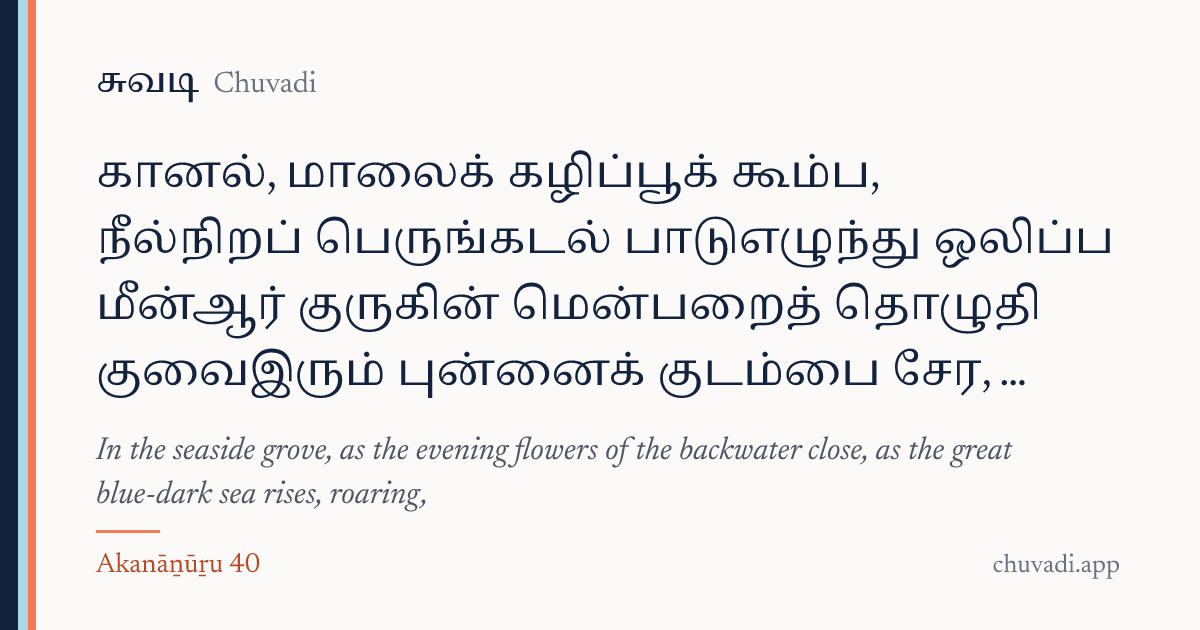
- In the seaside grove, as the evening flowers of the backwater close,
- as the great blue-dark sea rises, roaring,
- as the soft-winged flock of herons, full of fish,
- come home to their nests in the dense, dark punnai,
- at the hour of rest when the tired bees hum,
- shaking the tāḻai till it droops, at evening
- came the east wind, bringing ruin, and with it my overflowing longing
- and my lovely heart, helpless, grieving;
- though he brings this sorrow and shows us no grace,
- may my bond with him never be broken!
- Tired of staying there because he is unkind,
- let it not come back, I pray, friend, from him — in the fields
- behind the reapers of white paddy the throbbing
- drum frightens the long-legged stork,
- which, blaring like a horn at the crowded sluice, goes into the palmyra
- to rest in the heart of its fronds; the lord of that shore —
- my heart that went to his chest, so sweet to sleep on!
What the poem says
The heroine speaks to her friend at dusk, the hour of neytal grief. Everything around her is going to rest: the backwater flowers close, the herons come back full of fish to their nests in the punnai trees, the bees settle humming. Only the sea is loud, and the east wind comes in shaking the screw-pine. That wind brings no comfort; it stirs up her longing and leaves her heart helpless.
Even so, she does not curse the hero. Though he causes her pain and does not come, she prays that their bond may never break. Her heart has gone to him, to the chest where she once slept sweetly; and even if it finds him unkind and grows weary of living there, she asks that it should not come back to her. The paradox is the centre of the poem: she would rather be heartless and still bound to him than have her heart back and the bond lost.
The hero's shore is described through a small scene in the fields beside it. The drums that beat behind the reapers of white paddy frighten a long-legged stork, which gives a cry like a horn blown at a sluice and goes to hide in the palmyra's inner fronds. The picture fits a neytal-marutam border, where the coast meets paddy fields. It may hint at the heroine herself, frightened by noise, perhaps the town's gossip, and seeking a refuge, as her heart has taken refuge in him; but that reading is only suggested.
'Ceṟimaṭai vayiriṉ' is taken as 'like a horn at the crowded sluice'; the sense of the comparison is clear, the exact picture less so.