




அகநானூறு 41
பாடல் · The poem
Tap a word to see where else it occurs.
பொருள் · Meaning in TamilAI
நீண்ட இரவு புலர்ந்து விடியும்போது இருள் விலகுகிறது. முற்றிய முருக்கமரத்தின் கரிய மொட்டுகள் அவிழ்ந்து, நெருப்புப் போலத் தோன்றும் பூங்கிளைகளில் வண்டுக் கூட்டங்கள் ஒலிக்கின்றன. நெடிய நெல் அறுத்துக் குவித்த வயல்களில் ஏர்களைச் செலுத்தி, குடுமி போலக் கட்டிய கதிர்க்கட்டுகள் உள்ள தோட்டங்களோடு நிலம் புரண்டு மேலெழுகிறது. அறுத்த தாள்களைப் பிளக்கும் தேர்ந்த எருதுகளையுடைய உழவர்களின் தெளிந்த அழைப்பொலி வயல்தோறும் பரவுகிறது. செழித்த பூங்கொத்துகளைத் தாங்கிய மரங்கள் அழகுபெற, காடு அணிகொண்டு காண்பதற்கு இனிதாக உள்ளது. இந்தப் பொழுதில், நான் பிரிந்ததால் வரும் தனிமையில் அவள் அழகு கெட்டு மெலிந்து, நம் பிரிவை அறியாத நலத்தோடு சிறந்திருந்த அவளுடைய அழகிய தோள்கள் நெகிழ, வருந்துகிறாளோ? மென்சிறகுடைய வண்டுகள் மொய்க்கும் குளிர்ந்த மணமுள்ள பூங்கொத்தின் இனிய மகரந்தத் தூளைத் தளிரின் மேல் சொரிந்தது போன்ற அழகிய ஒளிரும் மாமை நிறமும், நுண்ணிய பல தேமல் புள்ளிகளும் உடைய அந்த மாநிறத்தவள்!
இது பாலைத் திணை; பொருள்வயிற் பிரிந்த தலைவன் வழியில் தலைவியை நினைந்து தனக்குள் கூறுவது. இளவேனிற் காலத்தின் அழகு, கூடியிருக்க வேண்டிய பருவத்தில் பிரிந்திருப்பதை அவனுக்கு உணர்த்துகிறது. நான்காம், ஐந்தாம் அடிகளின் பொருள் முழுமையாகத் தெளிவாக இல்லை.
ஆங்கிலம் · English translationAI
Translation
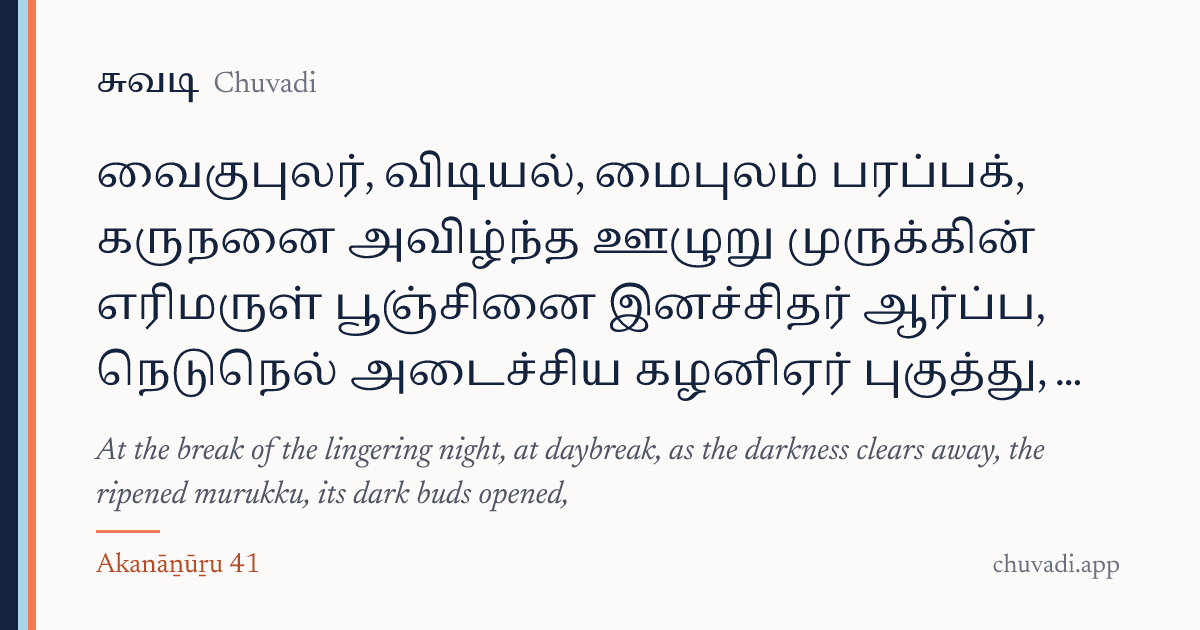
- At the break of the lingering night, at daybreak, as the darkness clears away,
- the ripened murukku, its dark buds opened,
- its flowering branches like fire, loud with swarms of bees;
- the ploughs sent into fields where the tall paddy had been heaped,
- the soil turned over beside the plots where sheaves are bound in tufts;
- the ploughmen with choice oxen, who split the reaped stubble,
- spreading their clear calls across every field;
- the trees grown lovely with rich clusters bursting out,
- the forest putting on its finery: at this season so fair to see,
- in the loneliness of my leaving, her beauty gone, wasted thin,
- those fine shoulders, splendid with a beauty that never knew our parting,
- now loosening, is she suffering, I wonder,
- she whose lovely gleaming dark skin, as if the cool fragrant flower-cluster
- of the soft-winged bees had poured its sweet spray of pollen
- over tender shoots, is set off
- with many fine freckles, the dark one?
What the poem says
The hero speaks to himself while away from home. The time is early spring after the harvest: the murukku (flame-of-the-forest) is in flower, its red blossoms like fire and full of bees; the ploughmen are back in the fields breaking the stubble with their oxen and calling to one another; every tree has burst into clusters and the forest is at its loveliest.
Such a season is, by convention, the season of lovers' union, and the beauty around him turns his mind to her. He wonders whether she is suffering, alone because he has gone, her beauty wasting and her shoulders growing thin and loose, the familiar signs of a woman pining for an absent man. The phrase 'shoulders that never knew our parting' sets her former fullness, while they were together, against her present decline.
The poem ends on a portrait of her: her glowing dark (māmai) skin, likened to tender shoots sprinkled with pollen from a fragrant cluster that bees have visited, and the fine freckles (titti) that were counted marks of beauty. The whole poem is a single long sentence that holds the question back until the last line, so that the landscape and her body are both laid out before the word 'the dark one'.
Lines 4–5 are not fully clear. They are taken as ploughs entering fields where the tall paddy had been gathered, with the soil turned over beside plots where sheaves are tied in tufts ('kuṭumi'); other readings of these words are possible.