



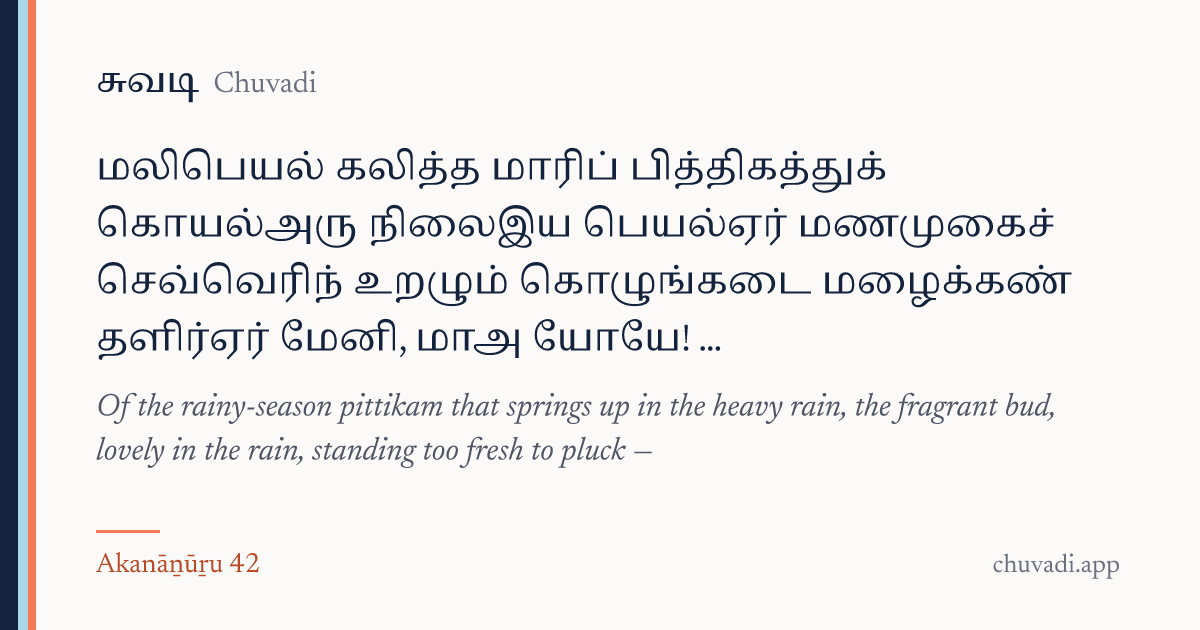

அகநானூறு 42
பாடல் · The poem
Tap a word to see where else it occurs.
பொருள் · Meaning in TamilAI
பெருமழையால் செழித்து வளர்ந்த மழைக்காலப் பித்திகக் கொடியில், பறிக்க முடியாத நிலையில் நிற்கும், மழையால் அழகுபெற்ற மணமுள்ள மொட்டின் சிவந்த முதுகைப் போன்ற செழித்த கடைகளை உடைய குளிர்ந்த கண்களும், தளிர் போன்ற மேனியும் உடைய மாநிறத்தவளே! நாடு வறட்சியால் வாடி, ஏர்கள் தொழிலின்றி உறங்க, கோடை நீண்டுபோன வாட்டமான காலத்தில், மலையைப் போல உயர்ந்த கரைகளை உடையதும், எந்தப் பறவையும் சென்று தங்காததும், உள்ளே நீரில்லாததுமான கோடைக்காலத்து அகன்ற குளம் நிறையும்படி, காவல் தரும் விடியற்காலையில் பெருமழை பொழிந்தது. அப்போது பலரும் அடைந்த மகிழ்ச்சி எல்லாம் என் உள்ளத்தில் ஒருசேரப் பெய்தது போலாயிற்று; தொலைவில் ஓங்கித் தோன்றும் உயர்ந்த மலையையுடைய, வானைத் தொடும் குன்றின் தலைவன் வந்ததனால்!
இது குறிஞ்சித் திணை; தலைவன் வந்ததைத் தோழி தலைவியிடம் மகிழ்ந்து கூறுவது. வறண்ட குளம் பெருமழையால் நிறைவது, பிரிவால் வாடிய தலைவி அவன் வரவால் மீண்டும் தழைப்பதைக் காட்டுகிறது. அவன் மணம் பேச வந்தானா, வழக்கம் போலச் சந்திக்க வந்தானா என்பதைப் பாடல் வெளிப்படையாகச் சொல்லவில்லை.
ஆங்கிலம் · English translationAI
Translation
- Of the rainy-season pittikam that springs up in the heavy rain,
- the fragrant bud, lovely in the rain, standing too fresh to pluck —
- its red back is matched by the rich corners of your cool, moist eyes,
- your body lovely as tender shoots, O dark one!
- When the land grows harsh with drought and the ploughs lie asleep,
- in a parched season when the summer has dragged on,
- with banks like hills, but where no birds of any kind
- will go to roost, empty within,
- the wide pond of the hot months is filled as the rain sweeps down:
- the great rain poured at a dawn of relief,
- and all the joy that so many people felt then
- has been poured into me — far off,
- the high mountain that rises into view —
- because the man of the sky-touching hill has come!
What the poem says
The heroine's friend speaks to the heroine. She opens with praise: the heroine's eyes, with their full red-tinged corners, are like the back of a pittikam bud swelling in the rains, and her body is lovely as young leaves. Then she tells her the good news: the hero has come.
The whole of the friend's joy is put into a single comparison. After a long, harsh summer the country is dry and the ploughs lie idle; the great village tank has banks as high as hills, but it is so empty that not even birds will roost there. Then, at dawn, a great rain sweeps in and fills it, and the whole people rejoice. All that common joy, the friend says, has been poured into her alone, because the hero from the far mountain has come.
The drought and the rain mirror the lovers' situation. The heroine has been withering through a time of separation or uncertainty; the hero's arrival is the rain that restores her. In kuṟiñci poems a visit announced with such open joy often means that he has come to ask for her hand, though this poem does not say so explicitly, so it may simply be his return to the night meetings.
The opening words about the pittikam bud are compressed: 'koyal aru nilaiiya' is taken as 'standing too fresh to pluck', describing a bud not yet ready to be picked.