




அகநானூறு 45
பாடல் · The poem
Tap a word to see where else it occurs.
பொருள் · Meaning in TamilAI
கோடை நீண்ட அகன்ற பெருங்குன்றுகளில், வாடிய உழிஞ்சில் மரத்தின் முற்றிய நெற்றுகள் அழகிய கொத்துகளாக, ஆடுகளத்துப் பறையைப் போல ஒலிக்கின்றன. நீரில்லாத கடக்க அரிய வழியில், மேலெழுந்த களிற்றைக் கொன்று, ஆளில்லாத பாலைவழியில் புலி துள்ளித் திரிகிறது. அத்தகைய காட்டைக் கடந்து சென்றுவிட்டார் என் காதலர். என் மாநிற மேனி, நுண்ணிய புள்ளிகளாகப் பசலை பரவி, பீர்க்கம் பூவின் அழகிய மஞ்சள் நிறத்தை ஒத்துவிடும். ஊரார் தூற்றும் அலரோ, குறுக்கைப் போர்க்களத்தில் அன்னி என்பான் திதியனுடைய பழமையான புன்னை மரத்தை அடியோடு வெட்டி வீழ்த்திய நாளில், இசைக்கலைஞர் முழக்கிய இனிய இசையின் ஆரவாரத்தை விடப் பெரியது. நானோ, காதலனை இழந்த இழிவால் நோய் மிகுந்து, ஆதிமந்தியைப் போல மயங்கி வருந்தித் திரிவேனோ? பொன்மாலை அணிந்த, கடலைக் கலக்கிய வெற்றிவேலையுடைய வானவரம்பனின் போர்முனையில் கலங்கிய, மதில் உடைந்த தனி அரண் போல, அஞ்சத்தக்க நோயோடு உறங்காமல் கிடக்கும் நான்!
இது பாலைத் திணை; தலைவன் பிரிந்த பின் தலைவி தோழியிடம் கூறுவது. பசலை, அலர், தனிமை ஆகிய மூன்று துயரங்களும் வரலாற்று உவமைகளால் பெரிதாகக் காட்டப்படுகின்றன. மதில் உடைந்து அடுத்த தாக்குதலை அஞ்சும் கோட்டை, தற்காப்பை இழந்த அவள் நிலைக்கு உவமை. அன்னி, திதியன் இவர்களில் மரத்தை வெட்டியவர் யார் என்பது இலக்கண அமைப்பால் மட்டுமே கொள்ளப்பட்டது.
ஆங்கிலம் · English translationAI
Translation
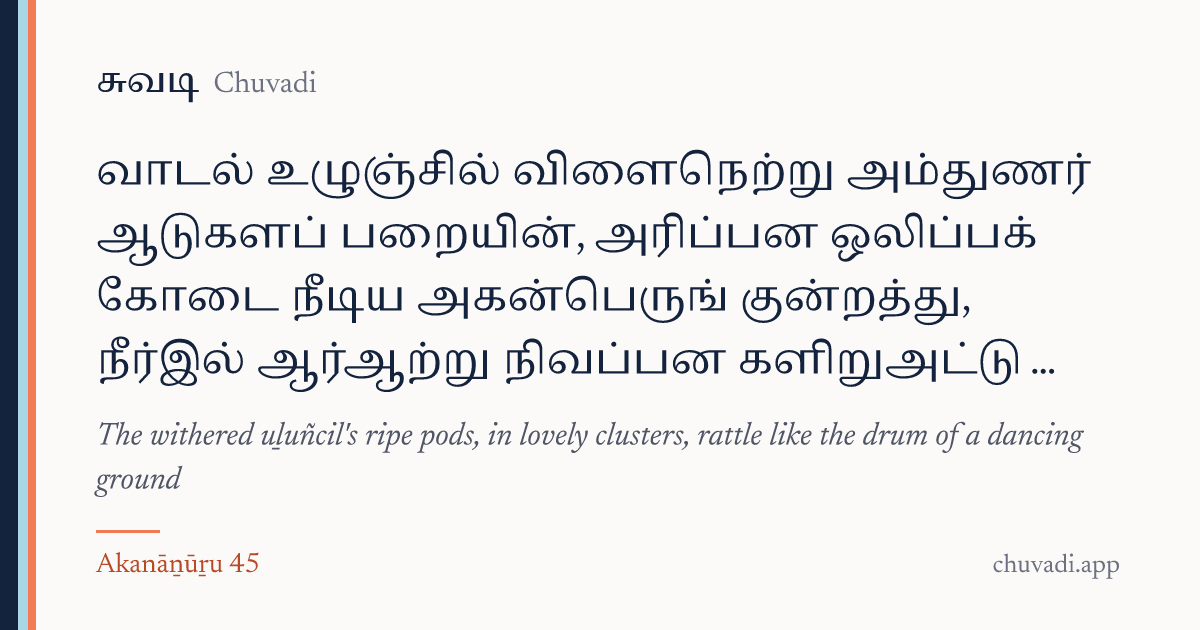
- The withered uḻuñcil's ripe pods, in lovely clusters,
- rattle like the drum of a dancing ground
- in the broad, great hills where summer has stretched long;
- on the waterless hard path, having killed a tusker that reared up,
- a tiger bounds through the wasteland where no one goes:
- that forest he has crossed, my lover. My dark glow,
- overspread with finely flecked pallor, must come to resemble
- the lovely flower of the pīram; the gossip —
- at Kuṟukkai battlefield, when Aṉṉi had Titiyaṉ's
- ancient-standing tree severed at its whole trunk
- and cut down the punnai, on that day the musicians'
- sweet music roared — the gossip is louder even than that; and I,
- grown sick with the shame of having lost my lover,
- like Ātimanti, dazed,
- shall I wander in distress? — of the one with golden garland,
- whose good victorious spear stirred up the sea,
- the Vāṉavarampaṉ, shaken at his battle front,
- like a lone fortress with broken walls,
- I who lie sleepless with dreadful pain!
What the poem says
The heroine speaks, most likely to her friend, after the hero has left. She pictures the land he has crossed: hills baked by a long summer, dry uḻuñcil pods rattling like a drum at a dance ground, and a tiger that has killed an elephant on a dry path where nobody passes.
At home three things torment her. Her dark skin is turning pale, and soon it will be the yellow of the pīram flower, the colour of love-sickness. The gossip about her is louder than the music that roared at Kuṟukkai on the day Aṉṉi cut down Titiyaṉ's ancient punnai tree; the poem gives that event only as a measure of noise, and is read here with Aṉṉi as the one who had the tree cut, which the grammar suggests. And she herself is like Ātimanti, who, as the poem says, lost her lover and wandered dazed with grief. The poem gives nothing more about Ātimanti, who appears again in akam.76.
The last image is martial. She lies awake in fear like a lone fort with broken walls, shaken before the attack of the Vāṉavarampaṉ, a Cēra title, whose golden garland and victorious spear are praised; 'kaṭal kāl kiḷarnta', 'that stirred up the sea', is left as the poem gives it. A besieged fortress, its walls breached and waiting for the next assault, is an apt picture for a woman whose defences against shame and grief have failed.
The passage on Kuṟukkai is compressed, and the roles of Aṉṉi and Titiyaṉ could be read the other way round; the reading chosen is the more natural one.