



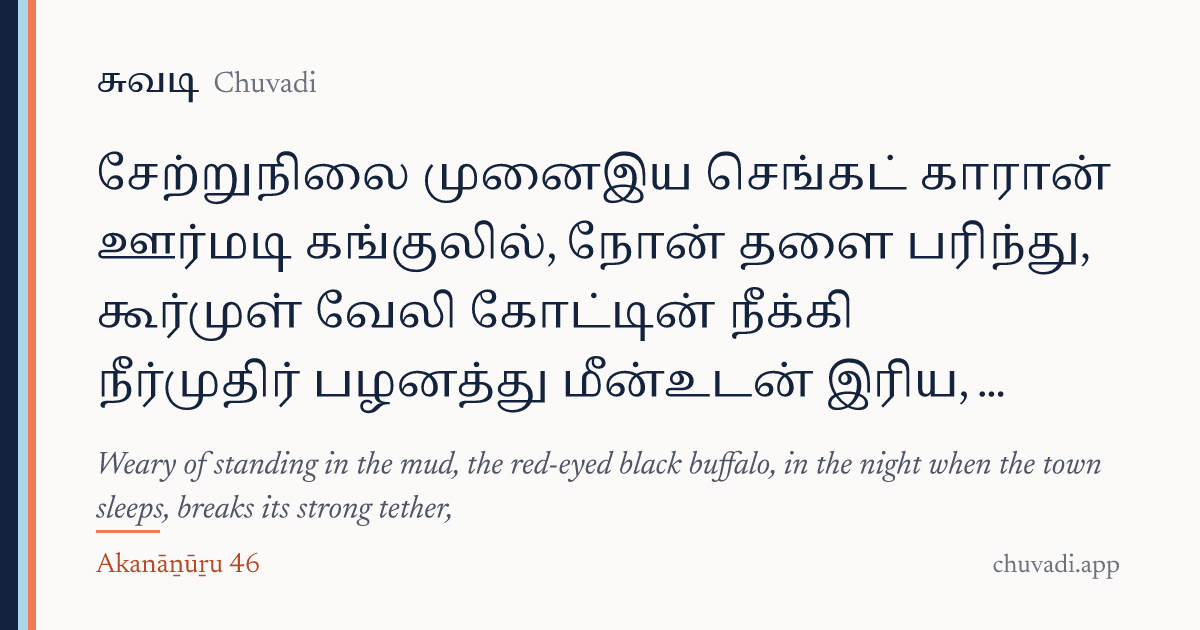

அகநானூறு 46
பாடல் · The poem
Tap a word to see where else it occurs.
பொருள் · Meaning in TamilAI
சேற்றில் நின்று அலுத்த சிவந்த கண்களையுடைய கரிய எருமை, ஊர் உறங்கும் இரவில் தன் வலிய கட்டை அறுத்துக் கொண்டு, கூரிய முள்வேலியைக் கொம்பால் தள்ளி, நீர் நிறைந்த வயலில் மீன்கள் சிதறி ஓடும்படி இறங்கி, அழகிய உட்டுளையுடைய வள்ளைக் கொடியைச் சிதைத்து, வண்டுகள் ஊதும் தாமரையின் குளிர்ந்த மலர்களைத் தின்னும் ஊரைச் சேர்ந்தவனே! உன்னோடு ஊடுவதற்கு நாங்கள் யார்? சீவி முடிக்கப்பட்டு, கட்டையும் மீறி ஒளிரும் நீண்ட கரிய கூந்தலையுடைய ஒருத்தியை நம் வீட்டுக்குக் கொண்டுவந்து மணம் செய்துகொண்டாய் என்று பிறரும் சொல்கின்றனர். அதை நாங்கள் சொல்ல மாட்டோம். என் தலைவனே, வாழ்வாயாக! பகைவர்களின் யானைகள் நிறைந்த கடும்போரைச் சிதைத்து அழிக்கும், ஒளிவீசும் வாட்படையுடைய வெற்றிச் செழியனின், குவித்த நெல் நிறைந்த அள்ளூர் போன்ற என் ஒளிவீசும் வளையல்கள் கழன்றாலும் கழலட்டும். பெருமானே, போ! உன்னைத் தடுப்பவர் யார்?
இது மருதத் திணை; பரத்தையோடு உறவுகொண்டு மீண்ட தலைவனிடம் தலைவி கூறுவது. கட்டறுத்து வேலியைத் தாண்டிப் பிறர் வயலில் தாமரையைத் தின்னும் எருமை, இல்லறக் கட்டுப்பாட்டை மீறிப் பிற பெண்களை நாடும் தலைவனைக் குறிக்கும் உள்ளுறை. 'நம்மனைத் தந்து' என்பது நம் வீட்டுக்கா, நம் தெருவுக்கா என்பது உறுதியாகத் தெரியவில்லை.
ஆங்கிலம் · English translationAI
Translation
- Weary of standing in the mud, the red-eyed black buffalo,
- in the night when the town sleeps, breaks its strong tether,
- thrusts aside the sharp-thorned fence with its horns,
- and in the brimming field, sending the fish fleeing together,
- tangles the lovely hollow-stalked vaḷḷai, and the lotus's
- cool flowers where bees hum it eats — man of such a town!
- Who are we, to sulk with you? Combed out,
- spilling past its band, a fall of shining dark hair:
- others too say that a girl like that you brought into our house
- and held a wedding for her; that, we
- will not say. Long may you live, my lord! Of his enemies
- the hard battle of elephants he shatters and crushes,
- the victorious Ceḻiyaṉ with his army of gleaming swords:
- like his Aḷḷūr, rich in heaped paddy, I am; and my
- bright bangles, if they slip loose, let them slip;
- go, great one! Who is there to hold you back?
What the poem says
The heroine speaks to the hero, who has come home after taking up with another woman. Her words are bitter and ironic. She does not argue or plead; she disclaims any right to sulk at all, and sends him away.
The opening picture of his town is the uḷḷuṟai, the hidden comparison. A buffalo grows tired of standing in its mud, breaks its tether at night while everyone sleeps, pushes through the thorn fence with its horns, wades into a flooded field, tramples the vaḷḷai and eats the lotus flowers. The hero is that buffalo: restless at home, slipping out at night, breaking through the bounds that should hold him and feeding on what is not his.
The gossip she reports is specific: people say he has brought into 'our house' a girl with long shining hair and held a wedding for her. 'That we will not say', she adds, refusing even to repeat it as a charge, and she blesses him with formal courtesy. Then she compares herself to Aḷḷūr, the rich paddy town of the Pāṇṭiya Ceḻiyaṉ, praised for crushing his enemies' elephant battles: she was once as rich in beauty as that town. If her bangles now slip from her wasted arms, let them slip. 'Go; who is there to stop you?' closes the poem with a dismissal that is also a reproach.
'Nam maṉai tantu', 'brought into our house', may also mean 'brought to our street'; the poem leaves it unclear whether the other woman was brought into the heroine's own home.