




அகநானூறு 47
பாடல் · The poem
Tap a word to see where else it occurs.
பொருள் · Meaning in TamilAI
அழியாத ஊக்கமுடைய உள்ளம் தலைமுறை தலைமுறையாகச் சிறப்புப் பெறும்படி, இங்கு வந்த வேலையை முடித்துவிட்டோம் என்றால், நெஞ்சே, வாழ்க! இனி மிக விரைந்து எழுவாயாக. ஒலிக்கும் உச்சியையுடைய அசையும் மூங்கில்கள் ஒலிக்கும்படி தாக்கி, குறுக்கே எழுந்து வீசும் கடுங்காற்று மூட்டிய, கொழுந்துவிட்டு எரியும் கூரிய தீ, பிளவுகளும் குகைகளும் உடைய மலைச்சரிவில் பாய்வதால், ஒருசேர மூங்கிற்கணுக்கள் வெடிக்கும் ஓசை கலைமான் கூட்டங்களை விரட்டுகிறது. அத்தகைய வெப்பமிக்க கடத்தற்கரிய பாலைவழியைக் கடந்து மேலே செல்வோம். அகன்ற கதிரவன் மலையைச் சேர்ந்து மறைய, வீட்டில் ஒளிவீசும் வளையல் அணிந்த பெண்கள் வெண்திரியை ஏற்றும்போது, குறுநடையுடைய சிவந்த கால்களையுடைய ஆண்புறா உயர்ந்த பெரிய மாளிகையில் தான் விரும்பும் துணையை அழைக்கிறது. தனிமையோடு வந்த அந்தத் துன்பமான மாலையில், 'அவர் எங்கே இருக்கிறாரோ?' என்று அழுகின்றவளை அடைவோம். அணிகலன்கள் பூண்ட நெடிய தேரையும் கொடைமிக்க கையையும் உடைய செழியனின், மேகங்கள் விளையாடும் வளமான சிறுமலைச் சரிவில் கூதளம் மணக்கும் மலையின் மூங்கிலைப் போன்ற அவளுடைய பருத்த தோள்களை, பரவியிருக்கும் அவள் நோயின் களைப்பு நீங்கும்படி, பலமுறை தழுவுவோம்!
இது பாலைத் திணை; வினை முடிந்த தலைவன் வீடு திரும்ப விரைந்து தன் நெஞ்சிடம் கூறுவது. மாலையில் துணையை அழைக்கும் புறா, கணவனை எண்ணி அழும் தலைவியின் ஏக்கத்தை எதிரொலிக்கிறது. வழியில் எரியும் மூங்கிலும், முடிவில் வரும் மூங்கில் போன்ற தோளும் ஒன்றுக்கொன்று எதிராக அமைந்துள்ளன.
ஆங்கிலம் · English translationAI
Translation
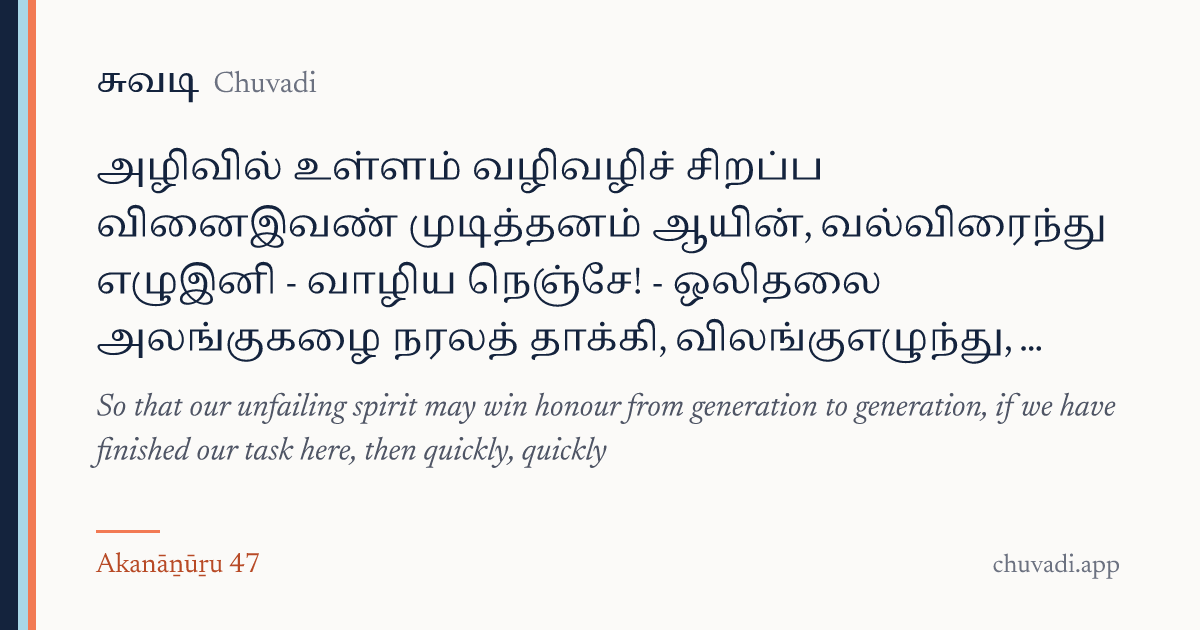
- So that our unfailing spirit may win honour from generation to generation,
- if we have finished our task here, then quickly, quickly
- rise now, long live my heart! Where, striking the rustling-topped,
- swaying bamboo till it creaks, the fierce wind rises across the land,
- and the sharp fire it has stirred up, its tongues spreading,
- leaps onto slopes of clefts and caves, and all at once
- the snapping of the bamboo nodes drives off the herds of stags,
- crossing that hard wasteland of burning edges, pressing on beyond,
- when the wide sun goes down behind the hill, and in the house
- the women with bright bangles take up white wicks,
- and the red-legged cock-dove of short steps
- calls to its beloved mate in the tall, wide mansion,
- at the sad evening that comes with loneliness,
- 'Where can he be?' she weeps; let us reach her,
- and, of Ceḻiyaṉ of the generous hand with his tall jewelled chariot,
- on his rich Ciṟumalai where the clouds play,
- the mountain whose slopes are fragrant with kūtaḷam — like its bamboo
- are her full shoulders; that the spreading
- weariness of her pain may leave her, let us embrace them many times!
What the poem says
The hero has completed the work for which he left home and speaks to his heart, urging it to set off at once. The task was undertaken so that his spirit, his manly resolve, would bring honour to his line, and now that it is done he has no reason to stay.
Between him and home lies a dreadful tract: a fierce wind lashes the bamboo, the fire it raises leaps onto the rocky slopes, and the stems burst with sharp cracks that scatter the herds of stags. The pālai landscape is drawn at its most violent, but here it is something to be crossed on the way back, not a cause of parting.
He then pictures the scene at home at nightfall. The sun sets behind the hill, the women of the house light the lamps, and a dove in the tall house calls to its mate. In that lonely hour his wife weeps and asks where he is. The dove calling its mate repeats her longing in the bird world and makes the evening sadder.
The last lines turn to what he will do on arriving: embrace her full shoulders many times, shoulders like the bamboo of the Ciṟumalai of the Pāṇṭiya Ceḻiyaṉ, where clouds play over slopes fragrant with kūtaḷam, so that her long weariness may end. The bamboo of the ending answers the burning bamboo of the journey: the cruel stems of the wilderness give way to the bamboo-like arms of home.
'Kaṇakkalai' in line 7 is taken as 'herds of stags'.