




அகநானூறு 49
பாடல் · The poem
Tap a word to see where else it occurs.
பொருள் · Meaning in TamilAI
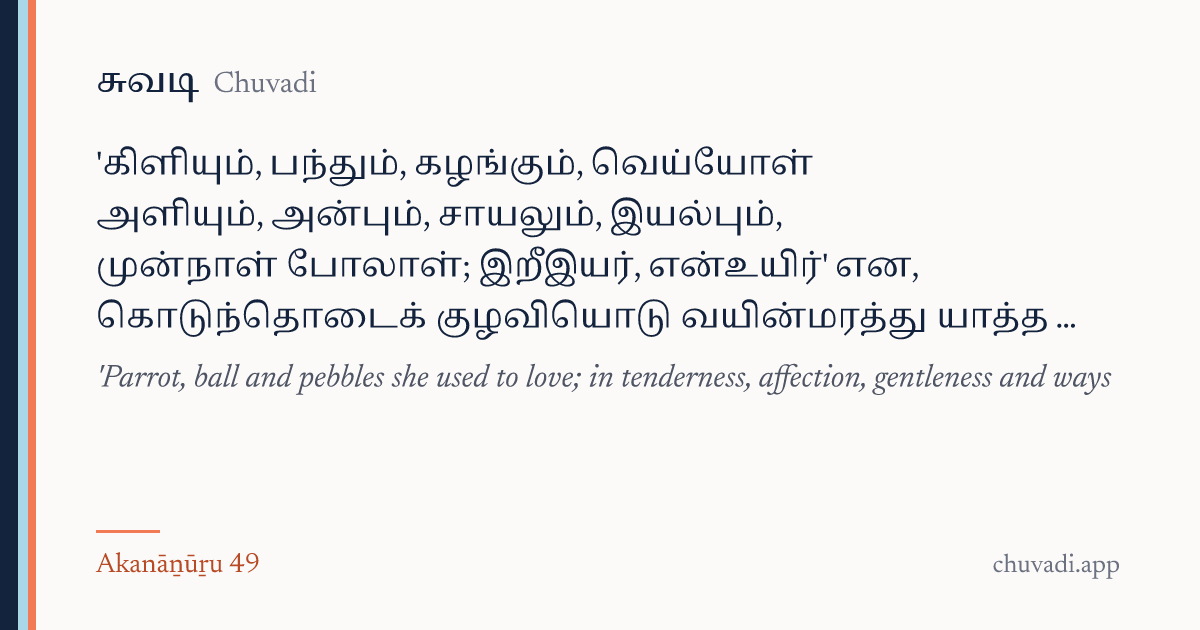
'கிளியையும் பந்தையும் கழங்கையும் விரும்பியவள், அன்பிலும் அன்புகாட்டுவதிலும் மென்மையிலும் இயல்பிலும் முன்பு போல இல்லை; என் உயிர் அழியட்டும்!' என்று நான் சொல்லி, முற்றத்து மரத்தில் கன்றோடு கட்டிய, கடுமையான கண்களையுடைய கறவைப் பசுவைப் போல, அவளுடைய சிறிய முதுகைப் பார்த்து, அருகில் வந்து, திரண்ட நெற்றியைத் தடவி, மெல்லத் தழுவிக்கொண்டேன். அப்போது என் மகள், அழகிய மார்பில் முலைகளின் இடையே வியர்க்கும்படி, என்னைப் பலமுறை தழுவிக்கொண்டாளே! ஐயோ! மிகுந்த வலிமையுடைய பெருந்தகையைப் பலவாறு புகழ்ந்து, வறண்ட நிழலில் தங்கி, மழை பொழியாத வானத்தை வெறுத்து வருந்திய இளமான் கூட்டம் உலர்ந்த மரலைச் சுவைக்கும் காட்டில் அவனுடன் அவள் சென்றுவிடுவாள் என்று அறிந்திருந்தால், உணவுப்பொருள் நிறைந்த, காவல் மிகுந்த தந்தையின் பெரிய மனையில், அவள் செல்லும் இடமெல்லாம் உடலின் நிழலைப் போலச் சென்று, மாலையணிந்த தோழியரோடு ஓரை விளையாட்டில் ஈடுபட்டு, பரல்கள் உடைய சிலம்பு ஒலிக்க அவள் ஆடும் இடமெல்லாம் அவளை விட்டு அகலாமல் இருந்திருப்பேனே!
இது பாலைத் திணை; தலைவனுடன் உடன்போக்கில் சென்ற மகளை நினைந்து செவிலித்தாய் வருந்துவது; நற்றாய் கூறுவதாகவும் கொள்ளலாம். பிரியும் முன் மகள் பலமுறை தழுவியதன் பொருள் இப்போதுதான் அவளுக்குப் புரிகிறது. வறண்ட காடும், செல்வமிக்க தந்தையின் மனையும் ஒன்றுக்கொன்று எதிராகக் காட்டப்படுகின்றன.
ஆங்கிலம் · English translationAI
Translation
- 'Parrot, ball and pebbles she used to love;
- in tenderness, affection, gentleness and ways
- she is not as she was before; let my life perish!' I said,
- and, like a fierce-eyed milch cow tied to the yard tree
- with its calf on a twisted tether, I gazed at her slender back,
- came close, stroked her rounded brow,
- and gently held her; and my daughter,
- her fine breast sweating between her breasts,
- embraced me again and again, she did! Alas!
- Praising so much the noble man of great prowess,
- through the forest where, resting in a parched shade, pained by the failing sky,
- the weary herd of young deer chew the shrivelled maral,
- had I known she would go off with him, in her father's
- great guarded house where stores of food abound,
- wherever she went, wherever she went, like her body's shadow,
- while with her garlanded companions she played the ōrai game,
- her anklets of joined beads tinkling, wherever she
- played, wherever she played, I would never have left her!
What the poem says
A mother, probably the foster-mother (cevili), though it could be the birth mother, grieves after her daughter has eloped with her lover across the wasteland. She looks back on the day before the flight and sees its signs too late.
She had noticed that the girl had changed: she no longer cared for her pet parrot, her ball and her game pebbles, and her manner was not what it had been. In distress the mother said, 'Let my life perish!', and went to her as a cow tied up in the yard strains toward its calf. She stroked the girl's forehead and held her, and the daughter, flushed and sweating, embraced her again and again. Only now does the mother understand that this was a farewell.
The poem then sets two places against each other. On one side is the forest the girl has entered with her lover, whom she praised so warmly: a place of sparse, scorched shade where weary young deer, suffering under a rainless sky, chew dry maral fibre. On the other is the father's great house, well guarded and full of food, where the girl played the ōrai game with her friends, her anklets ringing. Had she known, says the mother, she would have followed her there everywhere, like her shadow.
The doubled phrases at the end, 'wherever she went, wherever she went', 'wherever she played, wherever she played', give the mother's lament the sound of real speech. 'Koṭuntoṭai', describing the calf's tether, is taken as 'twisted'.