




அகநானூறு 50
பாடல் · The poem
Tap a word to see where else it occurs.
பொருள் · Meaning in TamilAI
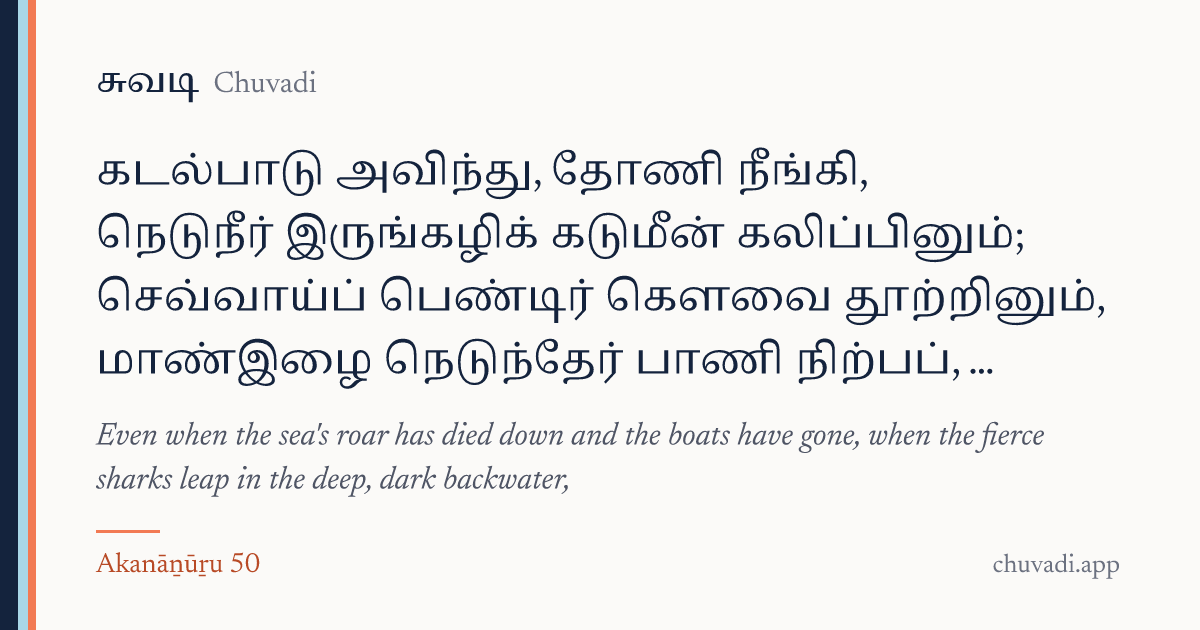
கடலின் ஓசை அடங்கி, தோணிகள் கரையை விட்டு நீங்கி, ஆழமான கரிய உப்பங்கழியில் கொடிய சுறாமீன்கள் துள்ளினாலும், சிவந்த வாயுடைய பெண்கள் அலர் தூற்றினாலும், அழகிய அணிகளையுடைய நெடுந்தேர் காத்து நிற்க, பகலிலும் நம்மை விட்டு நீங்காமல், குளிர்ந்த நீருடைய கடற்கரைத் தலைவன் முன்பு அடிக்கடி வந்துகொண்டிருந்தான். இப்போதோ, மணத்தில் முடிவது அரிதான காதலை அவன் விலகியிருக்கும் நிலையில் நாம் கடந்து வருந்துகிறோம். அப்படியிருந்தும் 'வராதவர் நமக்கு யார்?' என்று அவள் சொல்லவில்லை. நீயோ வலிமையான பழைய ஊரில் போய் மறைந்திருக்கிறாய். பாணனே! 'இரவில், வீட்டருகே உள்ள பனைமரத்தில் வாழும் வளைந்த அலகுடைய அன்றில் பறவை, தன் துணையை ஒருமுறை பிரிந்தாலும் உறங்காது, பார்!' என்று சொல்லி, நீர் நிறைந்த கண்களை மறைத்துக்கொண்டு, ஒளிவீசும் நெற்றியுடைய இளம்பெண் 'நான் என்ன செய்வேன்?' என்று கேட்பதை அவனிடம் போய்ச் சொன்னால் என்ன?
இது நெய்தல் திணை; தலைவன் வாராமையால் வருந்தும் தலைவியின் நிலையைத் தோழி பாணனிடம் கூறித் தூது அனுப்புவது. துணையைப் பிரிந்தால் உறங்காத அன்றில், பிரிவைத் தாங்காத தலைவியைக் காட்டுகிறது. ஏழாம் அடியின் பொருளும், மறைந்திருப்பவன் பாணனா என்பதும் உறுதியாகத் தெரியவில்லை.
ஆங்கிலம் · English translationAI
Translation
- Even when the sea's roar has died down and the boats have gone,
- when the fierce sharks leap in the deep, dark backwater,
- even when the red-mouthed women spread their gossip,
- his tall chariot with its fine fittings waiting for him,
- by day too he would not leave our side,
- but came again and again, the lord of the cold-watered shore;
- now, as we struggle through a love hard to bring to marriage, while he keeps away,
- she does not say, 'Who is he to us, who does not come?'
- and you go off and stay hidden in the strong old town;
- what harm if you told him, bard! 'At night
- the bent-beaked anṟil in the palmyra beside the house,
- parted from its mate even once, cannot sleep, look!' she says,
- and, hiding her eyes brimming with tears,
- the bright-browed girl asks, 'What can I do?'
What the poem says
The heroine's friend speaks to the bard (pāṇaṉ), the hero's go-between. She reminds him how things used to be: whatever the danger at sea, whatever the women of the village whispered, the hero came constantly, even by day, leaving his chariot waiting. Now he stays away, and the bard, instead of carrying word, keeps out of sight in the town.
The friend asks the bard simply to repeat to his master what the heroine says. She does not disown the hero; she never says 'What is he to us, if he will not come?' Instead she points to the anṟil birds nesting in the palmyra by the house, a pair believed to be unable to bear even a moment's separation, and says that if one is parted from its mate even once, it cannot sleep. Then she hides her tears and asks, 'What can I do?'
The anṟil is a stock emblem of inseparable love, and here it carries the whole message: if a bird cannot sleep when parted, how can she? The friend's tactic is to let the heroine's own quiet words, and her concealed tears, move the hero more than any argument could.
Line 7 is difficult. 'Maṇapparum kāmam taṇappa nīnti' is taken as 'struggling through a love hard to bring to marriage while he keeps away'; 'taṇappa' could also mean that the love itself is cooling. Line 9, 'maṟaiyiṉai ceṉṟu', is read as addressed to the bard, who goes and hides in the town; this too is not certain.