




அகநானூறு 53
பாடல் · The poem
Tap a word to see where else it occurs.
பொருள் · Meaning in TamilAI
தோழி, வாழ்க! நீ அறியமாட்டாய். இருள் நீங்கும்படி வானம் முழுவதும் விளங்கும் விரைந்து செல்லும் சக்கரம் போன்ற கதிரவனின் கடுங்கதிர்கள் தாக்கியதால் பிளந்த நிலத்தின் வெடிப்புகள் நிறையும்படி, நீண்ட அடியுடைய முருங்கையின் வெண்பூக்கள் உதிர்ந்து பரந்து கிடக்கின்றன. நீரின்றி வறண்ட, முடிவில்லாத நீண்ட வழியில், கூரிய பற்களையுடைய செந்நாய், பசியால் வருந்தும் தன் பெண்நாயோடு, கள்ளிகள் நிறைந்த காட்டு வழியில், உள்ளே ஊன் வற்றிய சுருண்ட மூக்குடைய நொள்ளைகள் உழிஞ்சில் மரத்தின் வெடித்த அடிமரத்தை மூடியிருக்கும் தனிமையான வழியில், சிறந்த அம்புகளையுடைய வீரர்கள் எய்த அம்பால் வீழ்ந்தவர்களுக்காக நட்ட, எழுத்துப் பொறித்த நடுகல்லின் இனிய நிழலில் தங்குகிறது. அத்தகைய கடத்தற்கரிய பாலைவழியின் கிளைவழிகளைக் கடந்து செல்ல அவர் துணிகிறார். இல்லாதவர்க்கு 'இல்லை' என்று சொல்லித் தன்னால் கொடுக்கக்கூடியதை மறைக்க முடியாத அவருடைய நெஞ்சம் அவரை உறுதிப்படுத்துகிறது. நம்மை விடப் பொருளின் மீதே காதலருக்குக் காதல் மிகுதி. நீயோ, 'காதலர் அருளே வடிவானவர்' என்கிறாய்!
இது பாலைத் திணை; பொருள்வயிற் பிரியக் கருதும் தலைவனை அன்புடையவன் என்று தேற்றிய தோழிக்குத் தலைவி கூறுவது. இரப்போர்க்கு மறுக்க முடியாத அவனுடைய கொடைப் பண்பே பிரிவுக்குக் காரணமாகிறது. 'நொள்ளை' என்பது நத்தை வகையாக இருக்கலாம்; இச்சொல்லின் பொருள் உறுதியாகத் தெரியவில்லை.
ஆங்கிலம் · English translationAI
Translation
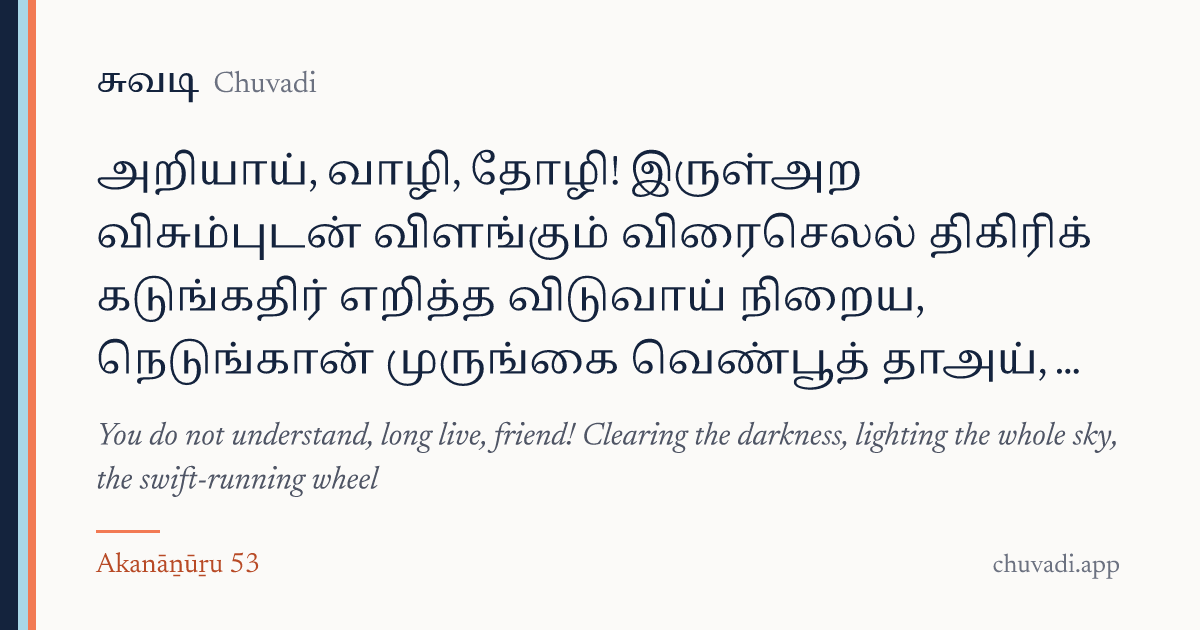
- You do not understand, long live, friend! Clearing the darkness,
- lighting the whole sky, the swift-running wheel
- shoots its fierce rays and splits the ground, and filling those cracks
- the white flowers of the tall-stemmed murungai lie strewn;
- on the long, endless way, dried up and waterless,
- the red dog with sharp teeth, with its bitch suffering from hunger,
- in the passes of the kaḷḷi-covered forest, where on the uḻiñcil
- the curl-snouted noḷḷai, their inner flesh withered,
- cover the cracked trunk, on that lonely path,
- of men who fell when warriors with fine-fitted arrows let fly,
- in the sweet shade of the hero-stone with its carved letters, rests:
- crossing the forked tracks of that hard wasteland — always,
- to say 'there is none' to the needy and hide what one could give,
- that his heart cannot do; it makes him resolve; more than us,
- it is wealth that our lover loves;
- and you say, 'Our lover is all kindness'!
What the poem says
The heroine answers her friend, who has been reassuring her that the hero is kind and will not abandon her. 'You do not understand,' she says, and describes the road he means to take.
The wasteland is pictured in a series of grim details. The sun, called the swift-running wheel, splits the parched ground, and the white flowers of the murungai fall into the cracks. A red dog and its starving bitch rest in the shade of a hero-stone (naṭukal), the memorial raised for men killed by bowmen, its inscription still legible. Near by, on the cracked trunk of an uḻiñcil, cluster noḷḷai with curled snouts, their flesh dried inside; the word is taken to mean a kind of snail, but it is not certain. The only shade on this road is the shade of a grave-stone.
Her charge is precise and not entirely unfair to him. He cannot bring himself to tell a poor man 'I have nothing' and keep back what he could give; that generous pride is what drives him to seek wealth. So his love, she concludes, is for wealth more than for her. The last line turns the friend's comforting words back on her: 'and you call him all kindness!' The motive the poem gives for the journey, wealth for giving to those in need, is a common one in pālai, and here it becomes the reason for the heroine's grief.
The line order in lines 6–11 is involved; the red dog of line 6 is the subject of 'rests' in line 11.