



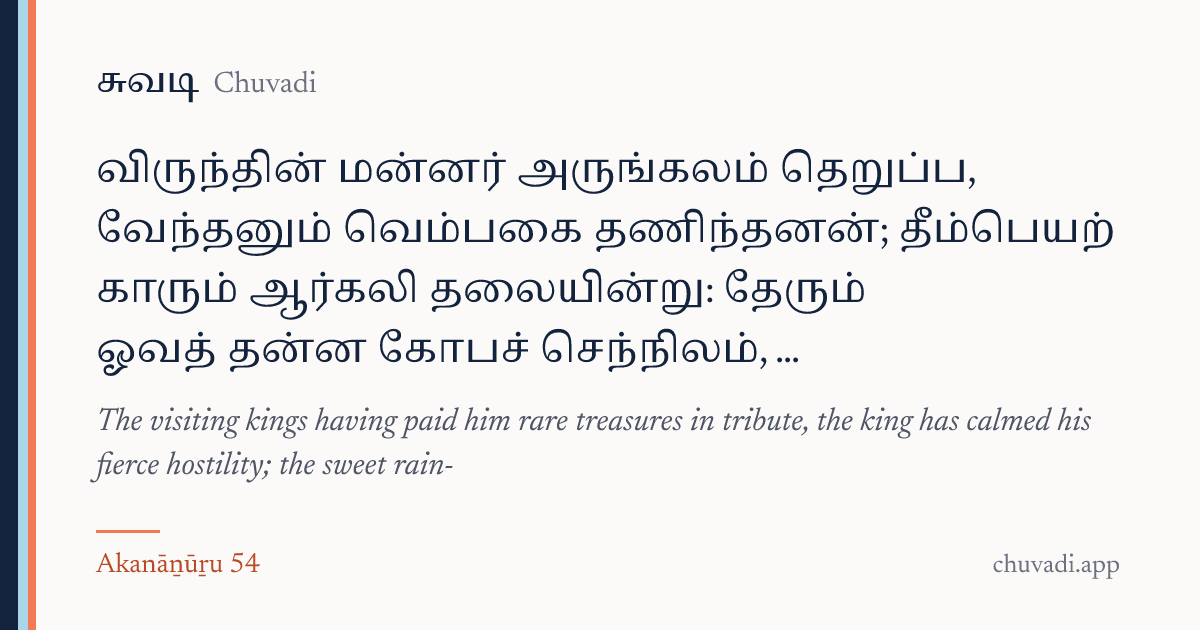

அகநானூறு 54
பாடல் · The poem
Tap a word to see where else it occurs.
பொருள் · Meaning in TamilAI
விருந்தினராக வந்த மன்னர்கள் அரிய அணிகலன்களைத் திறையாகச் செலுத்தியதால், அரசனும் தன் கடும்பகையைத் தணித்துக்கொண்டான். இனிய மழையைத் தரும் கார்மேகமும் முழக்கத்தை நிறுத்திவிட்டது. ஓவியம் போல அழகுடைய, இந்திரகோபப் பூச்சிகள் நிறைந்த செம்மண் நிலத்தில், கூரிய விளிம்புடைய தேர்ச்சக்கரம் அழுந்தி உருளும்படி, பாகனே, தேரை விரைந்து செலுத்து; நாம் அதைக் காண்போம். மெல்ல நடக்கும் கன்றுகள் கயிற்றில் இழுபட, பருத்த மடி தொங்க, உரத்த குரலில் கத்திக் கால்களை விரைவாக எடுத்து வைக்கும், கழுத்தில் ஒலிக்கும் மணிகளையுடைய கறவைப் பசுக்கூட்டமும், கையில் கோலும், வளைத்து மடித்த ஆடையும், கொன்றைக் குழலும் உடைய கோவலர்கள் பின்னால் மெல்லச் செல்ல, வீடுதோறும் செல்லும் மொட்டுகள் மலரும் மாலைவேளையில், தனக்கென வாழாமல் பிறருக்கு உரியவனாக வாழும் பண்ணனின் சிற்றூர்த் தோட்டத்திலுள்ள நுண்ணிய இலையுடைய நெல்லியின் பசுங்காயைத் தின்றவர் பின்பு குடிக்கும் நீரின் சுவையைப் போல இனிமையாகப் பேசி, 'அரும்பும் ஒளியுடன் விளங்கும் இளம்பிறையே! பொன்னாலான தாலியணிந்த என் மகனைத் தொட வருவாயானால் உனக்குப் பால் தருவேன்' என்று, சாய்ந்த பார்வையுடைய கண்களோடு விரலால் பலமுறை அழைத்து, தேமல் படர்ந்த இடையுடைய என் காதலி, பூங்கொடி போன்றவள், மகனைப் பொய் சொல்லி ஏமாற்றும் நிலையைக் காண்போம்!
இது முல்லைத் திணை; போர் முடிந்து வீடு திரும்பும் தலைவன் தேர்ப்பாகனிடம் கூறுவது. மாலையில் வீடு திரும்பும் பசுக்களும், நிலவைக் காட்டி மகனுக்குப் பாலூட்டும் தலைவியும், அவன் காண விரும்பும் இல்லறக் காட்சியாக வருகின்றன. 'கொடுமடி' என்பதன் சரியான பொருள் உறுதியாகத் தெரியவில்லை.
ஆங்கிலம் · English translationAI
Translation
- The visiting kings having paid him rare treasures in tribute,
- the king has calmed his fierce hostility; the sweet rain-
- clouds too have ceased their roaring; let the chariot,
- over red earth lovely as a painting with velvet-mites,
- its sharp-rimmed wheel sinking in as it rolls,
- be driven on; let us see it, charioteer! At the time when, slow-paced
- calves tugging on their ropes, swelling udders sagging,
- with loud lowing calls, hurrying on their feet,
- the herd of milk cows with ringing bells at their throats,
- and the cowherds with staves in hand and folded cloth at their waists,
- with flutes of koṉṟai, follow behind at their ease,
- and go home, house by house, at the evening when buds smile —
- of Paṇṇaṉ, who lives not for himself but belongs to others,
- in the garden of his little village, of the fine-leaved,
- thin-stoned nelli the green fruit those who have eaten
- find water sweet to drink; so sweet her prattle:
- 'O young moon shining with budding light!
- If you come and touch my son, who wears the golden amulet,
- I will give you milk,' she says,
- beckoning again and again with her finger, eyes glancing sideways,
- my beloved, with the freckled waist:
- the sight of my flowering vine coaxing her son with make-believe!
What the poem says
The hero speaks to his charioteer on the way home from a campaign. Everything is settled: the kings who came as guests have paid tribute, the king's anger has cooled, and the rains have stopped thundering. The road runs over red earth dotted with velvet-mites, so bright it looks painted, and the wheels sink into the wet soil. He urges the charioteer on: 'let us see it'.
What he longs to see is a scene at home, and he imagines it in detail. It is the mullai evening, when buds open and the cows come back to the village with bells ringing and calves on tethers, the cowherds strolling behind with their staffs and koṉṟai-pod flutes. At that hour his wife is trying to get their little son to drink his milk. She points to the young moon, calls it with her finger and promises it milk if it will come and touch the boy, who wears a gold amulet. This is the make-believe with which she 'deceives' him.
Her talk is compared to the sweetness of water after eating a sour green nelli fruit, a familiar experience; the nelli are those of the garden of Paṇṇaṉ, whom the poem praises as a man who lived not for himself but for others. The poem gives nothing more about him.
The tenderness of the ending is unusual. The waiting wife is shown not pining but busy and playful with the child, and the hero's eagerness to get home is eagerness to see exactly that. 'Koṭumaṭi uṭaiyar', 'with folded cloth', describes the cowherds' dress; the exact sense is not certain.