



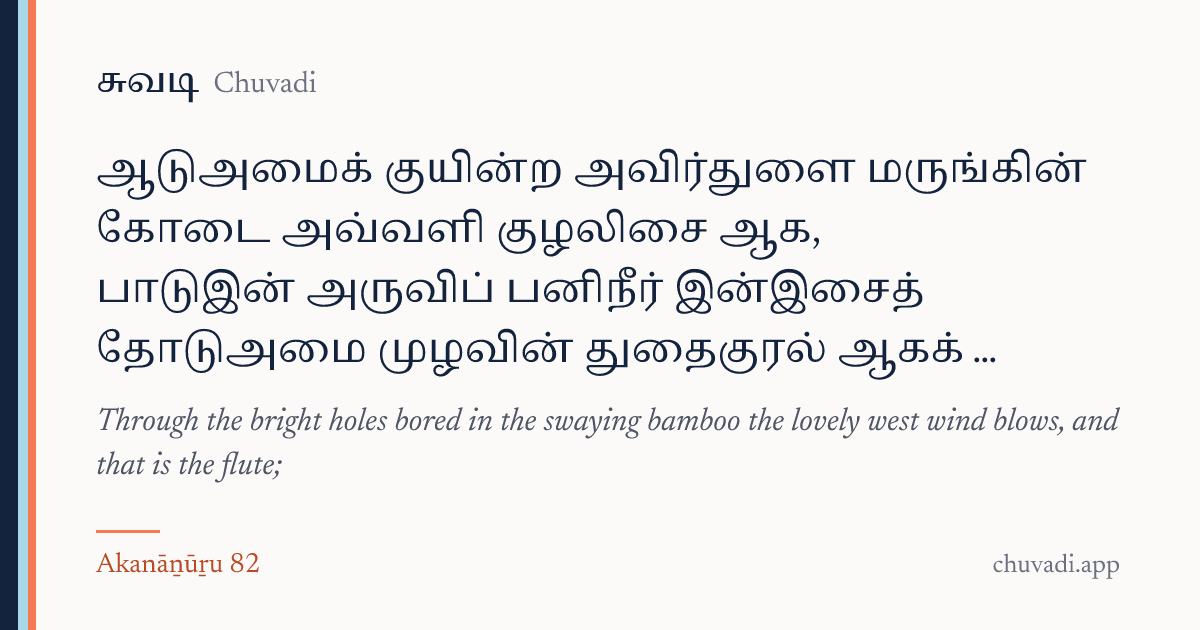

அகநானூறு 82
பாடல் · The poem
Tap a word to see where else it occurs.
பொருள் · Meaning in TamilAI
அசையும் மூங்கிலில் துளைக்கப்பட்ட ஒளிரும் துளைகளின் வழியே வீசும் அழகிய மேல்காற்று குழலிசையாகவும், இனிய ஒலியுடைய அருவியின் குளிர்ந்த நீரின் இன்னிசை வார்க்கட்டிய முழவின் அடர்ந்த குரலாகவும், கூட்டமாக வாழும் கலைமான்கள் கத்தும் கடுங்குரல் தூம்பு என்னும் கொம்பின் ஒலியாகவும், மலையின் பூத்த சாரலில் உள்ள வண்டுகள் யாழாகவும் அமைய, இனிய பல்லியங்களின் ஒலியைக் கேட்டு, மகிழ்ச்சி மிகுந்து, மந்திகளின் நல்ல அவை வியந்து பார்க்க, மூங்கில் வளரும் மலைச்சரிவில் அசைந்து ஆடும் மயில், நனவிலேயே அரங்கில் புகும் விறலியைப் போலத் தோன்றும் நாட்டின் தலைவன் அவன். அழகிய வலிய வில்லைப் பற்றி, அம்பைத் தேர்ந்தெடுத்து, போர்செய்யும் யானை சென்ற வழியைக் கேட்டுக்கொண்டு, காய்ந்த கதிர்களையுடைய தினைப்புனத்தின் வேலியிடைவழி உள்ள ஒரு பக்கத்தில், மலர்மாலை அணிந்த மார்போடு அவன் நின்றதைக் கண்டவர்கள் பலர், தோழி, நீ வாழ்க! அவர்களுக்குள், அடர்ந்த இருளுடைய இரவில் படுக்கையோடு பொருந்திக் கிடந்து, நீர் வழியும் கண்களோடும் மெலிந்த தோள்களோடும் நான் ஒருத்தி மட்டும் இப்படி ஆவது ஏன்?
இது குறிஞ்சித் திணை; தலைவனைக் கண்டு காதல்கொண்டு வருந்தும் தலைவி தோழியிடம் கூறுவது. மலையே ஓர் அரங்காகி, காற்று குழலாகவும் அருவி முழவாகவும் வண்டு யாழாகவும் மயில் விறலியாகவும் தோன்றுவது, தலைவனின் நாட்டின் சிறப்பைக் காட்டுகிறது. யானை சென்ற வழியைக் கேட்பது தலைவன் தலைவியை அணுகும் வழக்கமான சாக்கு.
ஆங்கிலம் · English translationAI
Translation
- Through the bright holes bored in the swaying bamboo
- the lovely west wind blows, and that is the flute;
- the cold water of the sweet-sounding waterfall, with its sweet music,
- is the thick, deep voice of the drum with its band of leather;
- with the harsh-voiced horn of the stags that bellow in their herd,
- the bees on the mountain's flowering slope are the lute;
- hearing that sweet, many-voiced, ringing music, overjoyed,
- the good assembly of monkeys looks on, astonished,
- and on the bamboo-grown ridge the dancing peacock, moving,
- appears like a dancing girl stepping onto the stage in waking life: lord of that land!
- Gripping his fine, strong bow, choosing an arrow,
- asking for the path taken by the battling elephant,
- by the millet whose ears are drying, at one side, by the gap in the fence,
- he with the flowering garland on his chest — those who saw him standing there
- were many, friend, long life to you! Among them,
- in the night of thick darkness, lying close against my bed,
- how is it that I alone am the one
- with tear-streaming eyes and slackened arms?
What the poem says
The heroine speaks to her friend. She is lovesick for the hero, whom she first saw standing at the edge of the millet field, bow in hand, asking which way a wild elephant had gone. Many people saw him there, she says; why is it that she alone now lies awake at night with tears in her eyes and her arms grown thin?
The first ten lines are one of the most famous set-pieces of kuṟiñci landscape: the mountain as a theatre. The wind in holes bored in the bamboo is the flute; the waterfall is the drum; the bellowing of a herd of stags is the horn; the bees on the flowering slopes are the lute. The monkeys sit as an astonished audience, and a peacock on the bamboo ridge dances like a professional dancer (viṟali) coming onto the stage. This is the hero's country, and the image of a whole land performing for joy says a great deal about the man.
The second half drops to a plain, almost bare question, and the contrast with the opening splendour is the point. The hero's pretext of asking about the elephant is a common way for a hunter-lover to approach the girls in the field.
The text is clear. 'Naṉavup puku viṟali' (line 10) is taken as 'a dancer entering the stage in waking reality', that is, as vivid as a real performance.