



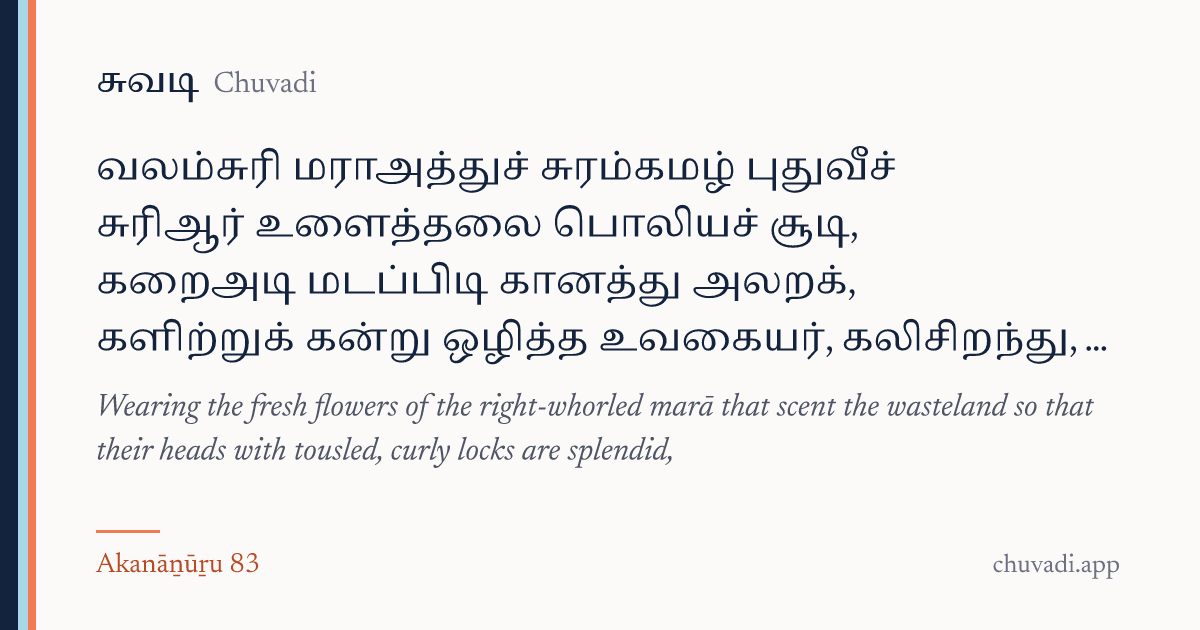

அகநானூறு 83
பாடல் · The poem
Tap a word to see where else it occurs.
பொருள் · Meaning in TamilAI
பாலைநிலத்தில் மணக்கும், வலமாகச் சுழித்த மராமரத்தின் புதிய மலர்களைச் சுருண்டு அடர்ந்த முடியுடைய தலை பொலியும்படி சூடிக்கொண்டு, கறைபடிந்த அடிகளுடைய இளம் பெண்யானை காட்டில் அலறும்படி, அதன் கன்றைப் பிரித்துக் கொண்டுவந்த மகிழ்ச்சியோடு, ஆரவாரம் மிகுந்து, கரிய அடியுடைய மராமரத்தின் செழித்த கிளையைப் பிளந்து, பெரிதாக உரித்த வெண்மையான நாரால் இறுக்கமாகக் கட்டி, நீண்ட கொடிகள் அசையும் அங்காடிகளுடைய பழைய ஊரில், கள் விற்கும் நல்ல இல்லத்தின் முன் புல்லின் அடியில் அதைக் கட்டிவைக்கும், கல்வியறிவில்லாத இளைஞர்களின் தலைவனான புல்லியின் அகன்ற நல்ல நாட்டில் உள்ள வேங்கடமலையைக் கடந்து சென்றாலும், நாம் தொலைவில் இருக்கிறோம் என்று எண்ணாமல், மிகுந்த அன்பு செலுத்த, நம்மை அடைய வந்துவிட்டன — மொட்டு விரியும் நெய்தல் மலரைப் போன்ற, உயர்ந்த அழகுடைய குளிர்ந்த கண்களையுடைய நம் காதலியின் நற்பண்புகள்!
இது பாலைத் திணை; பொருள்வயின் பிரிந்து சென்ற தலைவன், தொலைவிலும் தலைவியின் நினைவு தன்னைப் பின்தொடர்வதைச் சொல்வது. தாயிடமிருந்து பிரித்துக் கொண்டுவரப்பட்ட யானைக்கன்று, தலைவன் தலைவியைப் பிரிந்த நிலையை மறைமுகமாக நினைவூட்டலாம். கன்றைக் கள்ளுக்கு விற்பதாகக் கொள்வது பாடலின் சொற்களிலிருந்து ஊகிப்பதே; ஐந்து, ஆறாம் அடிகளின் சில விவரங்கள் உறுதியில்லை.
ஆங்கிலம் · English translationAI
Translation
- Wearing the fresh flowers of the right-whorled marā that scent the wasteland
- so that their heads with tousled, curly locks are splendid,
- making the young cow-elephant with scarred feet cry out in the forest,
- glad at having parted the elephant calf from her, exultant,
- they split a thick branch of the black-stemmed marā,
- bind it fast with great strips of white fibre,
- and in the old market town where the long flags flutter,
- at the good house that sells toddy, tie it to the root of the grass:
- the lord of such unlettered young men, Pulli —
- even though we pass beyond Vēṅkaṭam in his wide, good land,
- not thinking us far away, driven on by great love,
- they have come to reach us here — of the neytal
- like a bud just opening, the flower it rivals,
- her cool eyes of lifted beauty: our beloved's qualities!
What the poem says
The hero speaks, on his journey, perhaps to himself or to his companions. He has gone so far that he is passing beyond Vēṅkaṭam, the hill country of the chieftain Pulli; yet the qualities of his beloved, her eyes like neytal buds just opening, have not counted him far and have followed him all the way, 'driven by great love'.
Most of the poem describes Pulli's young men, whom the poem calls 'unlettered', that is, rough and unschooled hill folk. Wearing marā flowers in their tousled hair, they have separated an elephant calf from its mother, who cries out in the forest. They bind it with strong white fibre to a branch of marā and take it down to a market town with long flags, where they tie it outside the toddy shop: by the look of it, they mean to trade the calf for drink. The poem names Pulli as lord of these men and of Vēṅkaṭam, and says nothing more about him.
The captured calf and its crying mother may cast a shadow on the hero's own journey, which has parted him from his beloved. But the poem's turn is tender, not reproachful: love travels faster than he does.
'Patavu mutal piṇikkum' (line 8) is taken literally as 'tie to the root of the grass', that is, tether the calf; the commercial sense is implied by 'the house that sells toddy' (naṟavu noṭai nal il). Some details of the binding in lines 5 to 6 are uncertain.