



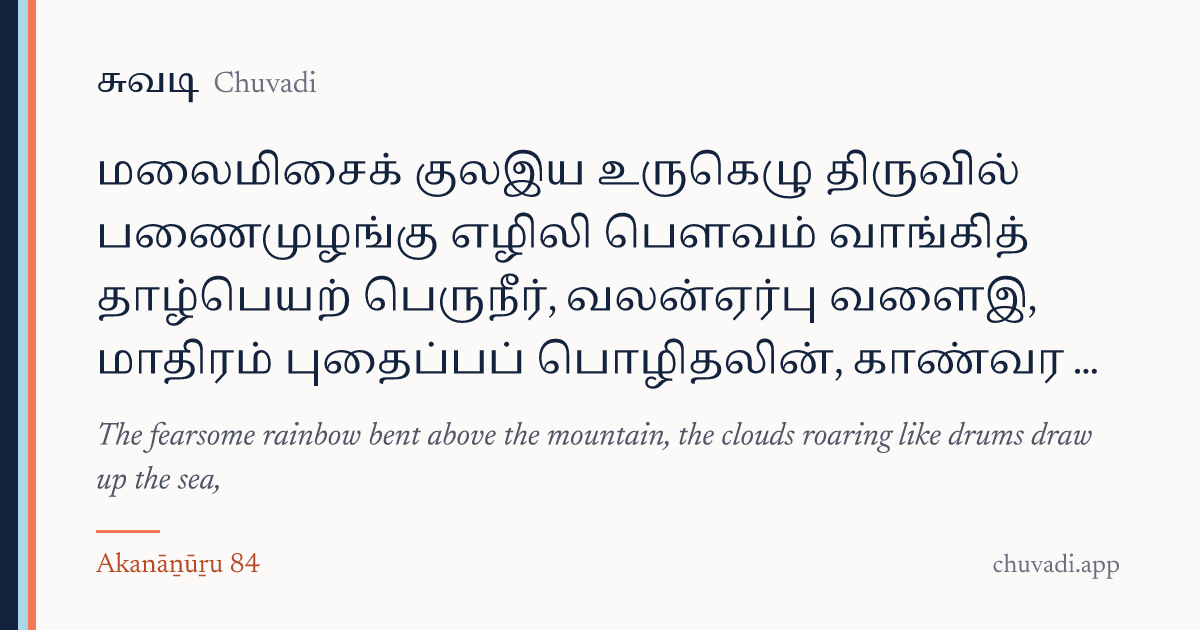

அகநானூறு 84
பாடல் · The poem
Tap a word to see where else it occurs.
பொருள் · Meaning in TamilAI
மலையின் மேல் வளைந்து நிற்கும் அச்சம் தரும் வானவில்லோடு, முரசு போல முழங்கும் மேகம் கடல்நீரை முகந்துகொண்டு, தாழ்ந்து பெய்யும் பெருமழை வலமாக எழுந்து சுற்றிவளைத்துத் திசைகளை மறைக்கும்படி பொழிவதால், காண்பதற்கு அழகாகப் பெரிய நிலம் பொலிவுற்ற இந்த இன்பமான காலத்தில், நெருப்பைப் போன்ற சிறிய கண்களையுடைய பன்றி நுண்மணலில் உள்ள படர் புதருக்குள் தூங்கும்போது அதன் முதுகை மூடும்படி, நறுமணமுள்ள முல்லையின் அன்றலர்ந்த மலர்கள் உதிரும் காட்டுநிலத்தைச் சேர்ந்த, அரிய எல்லைப்புற வழியோரத்துச் சிற்றூரில் இருக்கிறாள் ஒளிரும் நெற்றியுடையவள்! நாமோ, தீ போன்ற நிறமுடைய பல மலர்களை ஒதுக்கிவிட்டு, அறுவடை செய்வோர் கட்டிய தலைசாயும் பெரிய நெற்கட்டுகளோடு, கள்ளுண்ட உழவர்கள் களம்தோறும் சுற்றித் திரியும், குளிர்ந்த வயல்கள் சூழ்ந்த, கொடிகள் அசையும் அரிய அரணுடைய நகரத்தார் அரிய திறையைக் கொடுத்தாலும் ஏற்காமல், சினம் மிகுந்து, தன் படையைப் போர்ப்பணியில் செலுத்தும் மாலை அணிந்த வேந்தனின் பாசறையில் இருக்கிறோம்!
இது முல்லைத் திணை; கார்காலம் வந்தும் போர்ப்பாசறையில் தங்க நேர்ந்த தலைவன் தலைவியை நினைந்து கூறுவது. முல்லை மலர்கள் மூடத் தூங்கும் பன்றி, அவன் விரும்பும் அமைதியான இல்லத்தையும், திறையையும் ஏற்காத வேந்தனின் சினம் அவன் திரும்ப முடியாமையையும் காட்டுகின்றன. பன்னிரண்டாம் அடியில் 'அரிஞ்ர்' என்பது 'அரிஞர்' என்பதன் அச்சுப்பிழை.
ஆங்கிலம் · English translationAI
Translation
- The fearsome rainbow bent above the mountain,
- the clouds roaring like drums draw up the sea,
- and the great water of the low-hanging rain, rising to the right, wheeling round,
- pours down so that it hides the quarters, and, lovely to see,
- the great earth has grown beautiful in this season of delight —
- the small-eyed boar, its eyes like fire,
- so that its back, as it sleeps in the paṭar bush on fine sand, is buried
- by the day's fresh fragrant mullai flowers that drop on it,
- on the path by the hard frontier that reaches the pastures,
- she is in the small village — the girl of bright brow! — and we,
- where, tossing the many fire-coloured flowers aside,
- the reapers bind great sheaves with swaying heads,
- and the toddy-drinking workers go round from threshing floor to threshing floor,
- by the strong fort, with fluttering flags, ringed by cool fields,
- which, even though they offer hard tribute, he will not take, his anger growing,
- with his army bent upon its task,
- we are in the war camp of the garlanded king!
What the poem says
The hero speaks from a war camp. The rains have come: a rainbow arches over the mountain, the clouds draw up water from the sea and thunder like drums, rain wraps the horizon, and the earth grows beautiful. It is the season when, in mullai convention, a man away on duty should be home with his wife.
Instead, there are two places in the poem. Far off is the small village by the frontier path, among the pastures, where a wild boar sleeps under a bush while fresh mullai flowers drop on its back and bury it: there lives his 'girl of bright brow'. And here is the camp, set before an enemy fort in rich farmland where reapers bind sheaves and toddy-drinking workers go round the threshing floors. The king, his anger rising, refuses even the heavy tribute the besieged offer, and keeps his army at its work.
The quiet image of the boar asleep under a fall of flowers is the opposite of the siege: peace, the season's softness, the place he would rather be. The king's refusal of tribute explains why the hero cannot leave; the poem names no king, and the fort is not identified.
The printed 'அரிஞ்ர்' in line 12 is a misprint for 'அரிஞர்', 'reapers'. The interjection 'oṇṇutal' (girl of bright brow!) in line 10 is set off by the edition's dashes and kept on its own line here.