



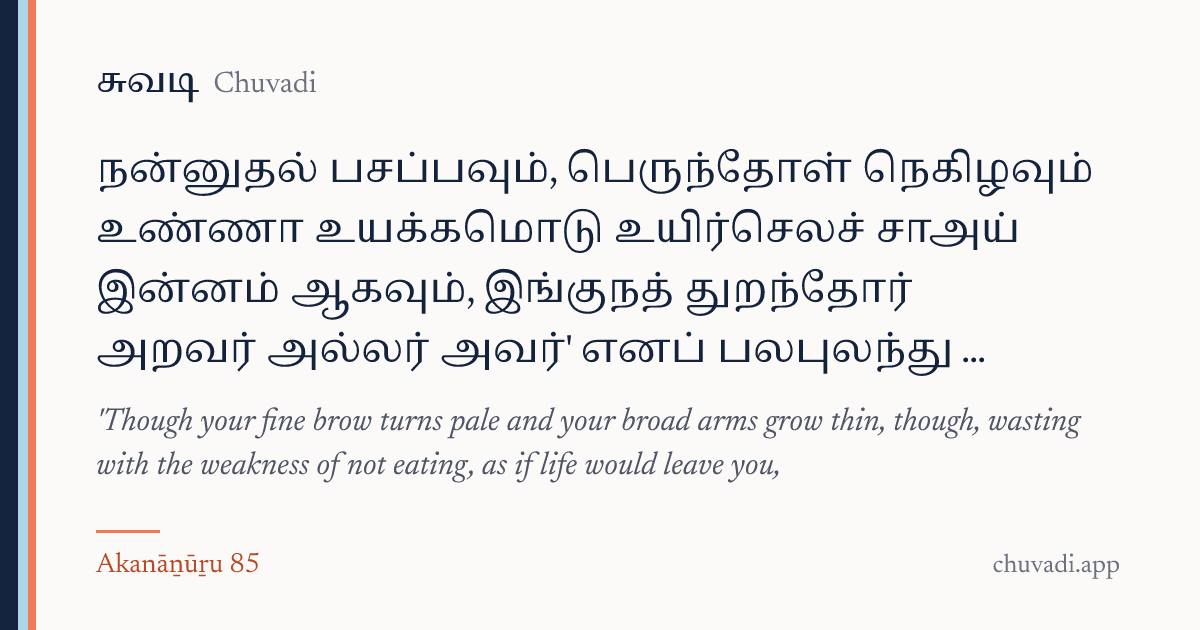

அகநானூறு 85
பாடல் · The poem
Tap a word to see where else it occurs.
பொருள் · Meaning in TamilAI
'நல்ல நெற்றி பசலை படர்ந்தும், பெரிய தோள்கள் மெலிந்தும், உண்ணாமையால் வரும் சோர்வோடு உயிர் போகும்படி வாடி, இந்த நிலையில் நாம் இருக்கவும், இங்கே நம்மைக் கைவிட்டுச் சென்றவர் அறம் உடையவர் அல்லர்' என்று பலவாறு புலம்பி வருந்தாதே, தோழி, நீ வாழ்க! 'கன்றை ஈன்று சில நாளே ஆன மெல்லிய நடையுடைய இளம் பெண்யானை கன்றின் பசியைப் போக்கும்படி, பசிய கண்ணுடைய ஆண்யானை முற்றாத மூங்கில் முளைகளைக் கொண்டுவந்து ஊட்டும் சாரலையுடைய, வெல்லும் வேலுடைய திரையனின் வேங்கட நெடுமலையில், நல்ல நாளில் பூத்த இளைய வேங்கையின் நறுமலர்களில் நீராடிய புள்ளிகளும் வரிகளும் கொண்ட மயில், அரும்பு நிறைந்த பசிய குருந்த மரத்தின் மணக்கும் கிளையில் அமர்ந்து தன் துணையை அழைத்து அகவும், துணைகளைச் சேர்த்துவைக்கும் குளிர்ந்த கார்காலத்தில் நாம் வருவோம்' என்று அவர் உன்னைத் தேற்றிய பருவம் இதுதான், பார்! மழை எங்கும் பரவிவிட்டது.
இது பாலைத் திணை; பிரிவால் வருந்தும் தலைவியைத் தோழி ஆற்றுவிப்பது. பிடிக்கு உணவூட்டும் களிறும், துணையை அழைக்கும் மயிலும், தலைவன் அன்புடையவன் என்பதையும் அவன் திரும்பும் பருவம் வந்துவிட்டது என்பதையும் உணர்த்துகின்றன. வேங்கடத்தின் தலைவனாகத் திரையன் பெயர் மட்டுமே சுட்டப்படுகிறது.
ஆங்கிலம் · English translationAI
Translation
- 'Though your fine brow turns pale and your broad arms grow thin,
- though, wasting with the weakness of not eating, as if life would leave you,
- you are in such a state, he who left us here
- is not a righteous man' — so, with many complaints,
- do not sink in grief — long life to you, my friend! — 'On the slope,
- where the soft-stepping young cow-elephant, days after giving birth,
- so that her calf's hunger may end, the green-eyed tusker
- brings shoots of young bamboo and feeds her —
- on the tall range of Vēṅkaṭam, of Tiraiyaṉ of the conquering spear —
- where, from the young vēṅkai that flowered on an auspicious day,
- a striped and spotted peacock, bathed in its fragrant blossoms,
- perched on the scented branch of the budding green kuruntu,
- calls and cries for its mate in the cool rains that bring mates together:
- then we shall come' — so he assured you;
- see, that is the season; the rain has spread!
What the poem says
The heroine's friend comforts her. The girl has been pining while the hero is away: her brow has paled, her arms have thinned, she will not eat, and she complains bitterly that the man who left her is no man of virtue. The friend tells her not to sink into grief and reminds her of his promise.
The promise is quoted in his own words and painted as a picture of the place he went to, the long range of Vēṅkaṭam, here said to belong to Tiraiyaṉ 'of the conquering spear'. There a bull elephant brings tender bamboo shoots to feed his mate, who has just given birth, so that she in turn can feed the calf. And a peacock, dusted with vēṅkai blossom, sits in a budding kuruntu tree and calls to its mate when the cool rains come. 'In that season we shall return,' he said.
Both images are about care and reunion. The elephant feeding his weakened mate answers the girl's charge that her lover is heartless, and the peacock calling its mate in the rains marks the very season of return. The friend ends simply: look, the rain has come; that is the season he named.
Tiraiyaṉ is named only as lord of Vēṅkaṭam; the poem says nothing more of him. The poem's mood of waiting through the rains is close to mullai, though it stands in a pālai place because it concerns a journey of separation.