




அகநானூறு 93
பாடல் · The poem
Tap a word to see where else it occurs.
பொருள் · Meaning in TamilAI
துன்பத்தில் வீழ்ந்த நண்பர்களைத் தாங்கவும், உறவினர்களை உண்பிக்கவும், உறவில்லாதவரும் நெருங்கி நட்பாக வாழவும், முயற்சிக்கு எதிர்கொண்ட ஊக்கத்தோடு ஆர்வம் மிகுந்து, ஆத்திமாலை அணிந்த, கொல்லும் போர் செய்யும் சோழரின் அறம் நிறைந்த நல்ல அவையுடைய உறந்தை நகரம் போன்ற, பெறுவதற்கரிய நல்ல அணிகலன்களைப் பெற்று, நாம் தேடிச் சென்ற செய்வதற்கரிய செயலை முடித்தோம் என்றால், பல அரண்களைக் கடந்து வென்ற, மாறுபாடு கொண்ட படையையும் வாடாத வேப்பமாலையையும் உடைய வழுதியின் கூடல் நகரத்துப் பகல் அங்காடியைப் போல மணக்கும் நறிய நெற்றியும் நீண்ட கரிய கூந்தலும் உடைய மாநிறத்தாளோடு, மலையைக் குடைந்து அமைத்தது போன்ற வானைத் தொடும் நெடிய மாளிகையில், நுரையை அள்ளி வைத்தது போன்ற மென்மையான மலர்ப்படுக்கையையுடைய உயர்ந்த கட்டிலில், நீண்ட சுடர்விளக்கின் ஒளியில், அவளுடைய அழகிய மார்பில் என் அணிகலன்களின் வடு பதியும்படி, சென்று தழுவுவோம், நெஞ்சே! வரிகள் கொண்ட நெற்றியும், வலிமையோடு ஒளிர்ந்து வாய்வரை வழியும் மதநீரும், வீரனின் வலிமையும் கொண்டு, நிலத்தை உதைத்துக்கொண்டு நெருங்கி, ஆளைப் பிடிப்பதில் தவறாத அச்சம் தரும் பெரிய கையுடைய கடிய ஆண்யானைகளையும் நெடிய தேர்களையும் உடைய கோதையின் செல்வமிக்க அகன்ற நகரமான கருவூரின் முன்துறையில், தெளிந்த நீரின் உயர்ந்த கரையில் குவிந்து கிடக்கும் குளிர்ந்த ஆன்பொருநை ஆற்றின் மணலைவிடப் பல முறை!
இது பாலைத் திணை; பொருள் தேடி முடித்து வீடு திரும்ப எண்ணும் தலைவன் தன் நெஞ்சுக்குக் கூறுவது. சோழரின் உறந்தை, பாண்டியனின் கூடல், சேரனின் கருவூர் என மூவேந்தர் நகரங்களும் உவமையாக வருகின்றன. கடைசி அடியில் 'தன்ஆன்' என்பது 'தண் ஆன்' என்பதன் அச்சுப்பிழையாகக் கொள்ளப்பட்டது.
ஆங்கிலம் · English translationAI
Translation
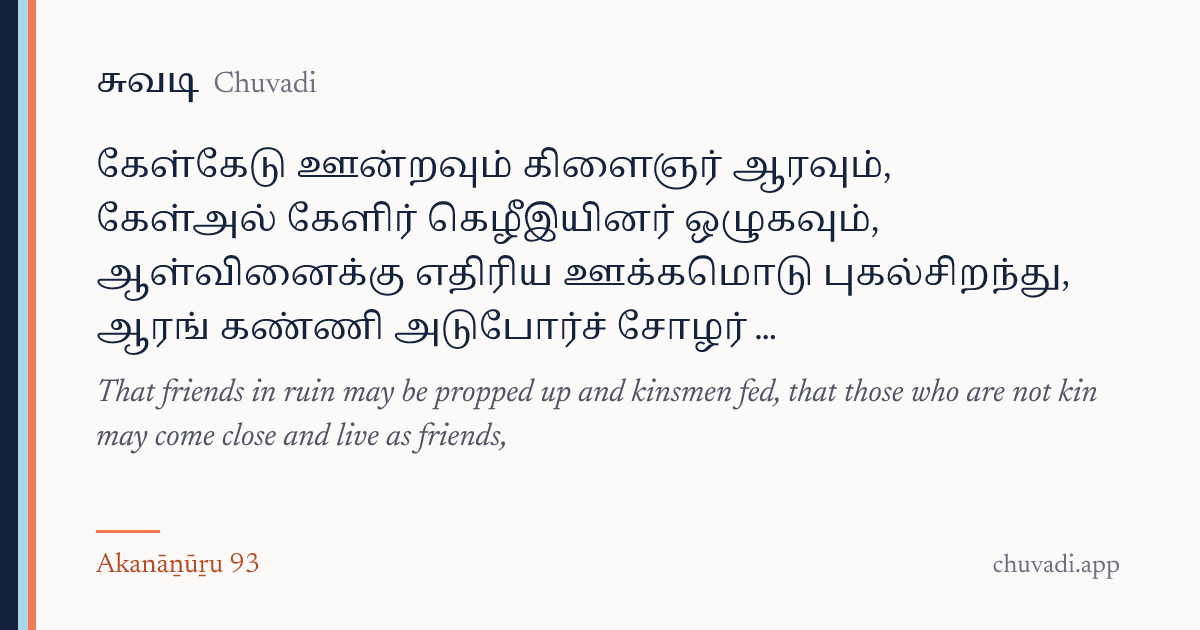
- That friends in ruin may be propped up and kinsmen fed,
- that those who are not kin may come close and live as friends,
- with zeal rising to meet the task and our eagerness great,
- like the city of the Cōḻar, who wear the ār garland and wage deadly war,
- Uṟantai with its good assembly full of justice,
- gaining rare fine treasures, if the task we seek,
- so hard to achieve, we have achieved,
- then, of him who stormed many forts, with his army of strife,
- of the unfading neem, Vaḻuti — his Kūṭal's
- day-market is the fragrance of her brow;
- with that dark girl of long dark hair,
- in the tall mansion touching the sky, as if carved out of a mountain,
- on a bed of soft flowers like scooped-up foam,
- on the raised couch, in the light of the tall lamps,
- so that her lovely breast is printed with the marks of my jewels,
- let us go and hold her — my heart! — With striped brow,
- its musth shining with strength as it flows into its mouth,
- with a hero's might, coming close as it strikes the ground,
- never failing to seize its man, with a dreadful great trunk:
- of such fierce bull elephants and tall chariots is Kōtai's
- great, wide, splendid city Karuvūr; at its front ghat,
- heaped up on the high banks of clear water,
- are the sands of the cool Āṉ Porunai — more times than those!
What the poem says
The hero speaks to his heart. He has been away to earn wealth, and the poem states the classic reasons with unusual frankness: to support friends who have fallen on hard times, to feed his kin, and to win over people who are not his relatives. He imagines the hard task done and treasures gained as precious as Uṟantai, the Cōḻa city, famous for its just assembly.
If that is achieved, he says, let them go home to the dark girl whose brow is as fragrant as the morning market of Kūṭal, the city of Vaḻuti (a Pāṇṭiya name), whose neem garland never fades and whose armies have taken many forts. In a mansion as tall as a carved mountain, on a bed soft as foam, by lamplight, he will hold her so close that his ornaments leave marks on her breast.
How often? More times than the grains of sand heaped up on the banks of the Āṉ Porunai at the landing place of Karuvūr, the city of Kōtai, a Cēra name, whose elephants with striped brows and flowing musth never fail to catch their man. The three great kingdoms, Cōḻa, Pāṇṭiya and Cēra, each supply one comparison, which gives the poem a grand, celebratory sweep. Beyond these epithets the poem gives no history.
The printed 'தன்ஆன் பொருநை' in line 23 is best taken as a misprint for 'தண் ஆன்பொருநை', 'the cool Āṉ Porunai'; 'its own Āṉ Porunai' is a possible but weaker reading. Pālai fits as a poem of separation now ending.