



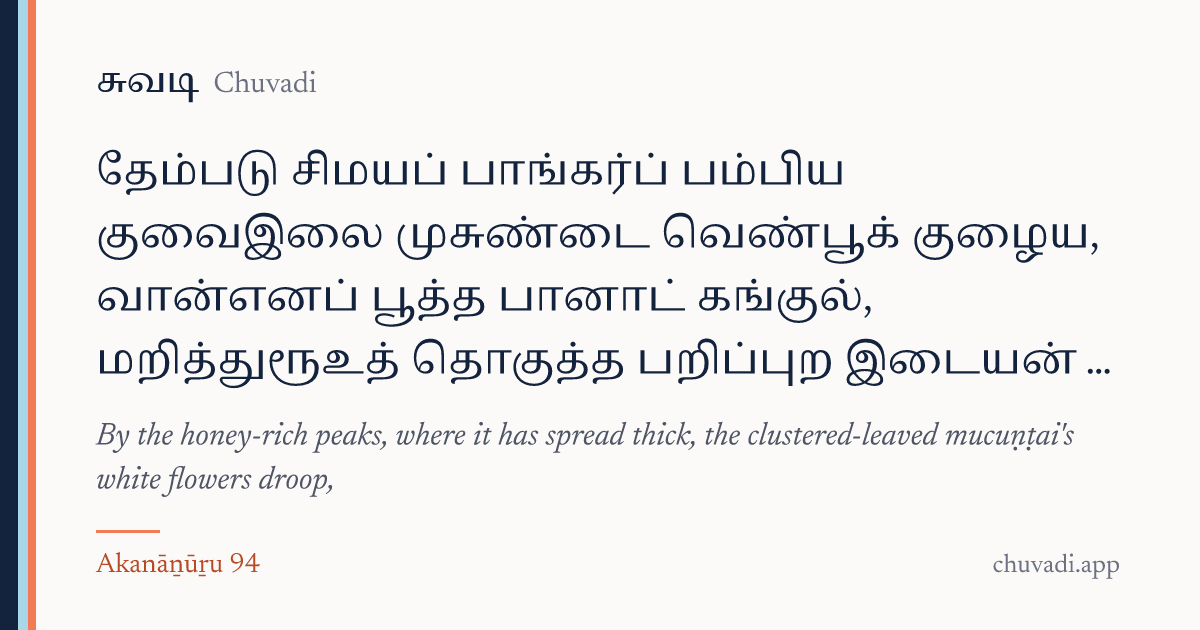

அகநானூறு 94
பாடல் · The poem
Tap a word to see where else it occurs.
பொருள் · Meaning in TamilAI
தேன் நிறைந்த மலைமுகடுகளின் பக்கத்தில் அடர்ந்து படர்ந்த, கொத்தான இலைகளையுடைய முசுண்டைக் கொடியின் வெண்மலர்கள் வானத்து விண்மீன்கள் போலப் பூத்துத் துவளும் நள்ளிரவில், ஆடுகளை மடக்கித் திரட்டிய, முதுகில் பறிக்கூடையுடைய இடையன், குளிர்ந்து மணக்கும் முல்லையைத் தோன்றிப் பூவோடு கலந்து வண்டுகள் மொய்க்கும்படி தொடுத்த, நீர் சொட்டும் மாலையை அணிந்து, மெல்ல எரியும் கொள்ளிக்கட்டையில் தன் உள்ளங்கையைக் காய்த்துக்கொண்டு, சிறு நரிகள் ஊளையிடும் அடர்ந்த இருளில் எழுப்பும் நீண்ட அழைப்பொலி, சிறிய கண்ணுடைய பன்றிகளின் பெருங்கூட்டத்தை ஓட்டுவதற்காகப் பழைய கொல்லைகளைக் காப்பவர்கள் நினைத்து நினைத்து ஊதும் கரிய கொம்பின் ஓசையோடு சேர்ந்து ஒலிக்கும் வன்னிலக் காட்டுநாட்டில் இருக்கிறது — அன்பு கலந்த, ஆர்வம் மிகுந்த மென்மையும், அடர்ந்த கரிய கூந்தலும், சிறந்த அணிகலன்களும் உடையவளின் ஊர்!
இது முல்லைத் திணை; பதிப்பில் கூற்று இல்லை; வினை முடிந்து திரும்பும் தலைவன் தன் பாகனிடம் தலைவியின் ஊரைப் பற்றிக் கூறுவதாகக் கொள்ளலாம். கார்கால இரவில் இடையனின் அழைப்பும் காவலரின் கொம்போசையும் கலக்கும் முல்லை நிலக் காட்சி, அவனுடைய ஏக்கத்தோடு இணைகிறது.
ஆங்கிலம் · English translationAI
Translation
- By the honey-rich peaks, where it has spread thick,
- the clustered-leaved mucuṇṭai's white flowers droop,
- blooming like the starry sky, in the middle of the night;
- the herdsman who has penned and gathered the flock, a basket on his back,
- mixing cool, fragrant mullai with tōṉṟi,
- wears a dripping garland woven so the bees settle on it;
- warming his palm at a dimly smouldering brand,
- his long call, in the deep dark where the little jackals whine,
- sounds together with the black horn's note
- that the guards of the old clearings blow, remembering, now and then,
- to drive off the great herds of small-eyed pigs:
- it is there, in the forest country of hard ground — full of love,
- with a grace that kindles longing,
- with thick dark hair and fine jewels: that is her town!
What the poem says
A man describes where his beloved lives, and the night sounds of that place. The edition names no speaker; the poem reads most naturally as the hero on his way home, perhaps speaking to his charioteer, picturing the girl's village in the mullai forest.
The scene is a rainy-season night in the pastoral woodland. Mucuṇṭai creepers cover the hillsides with white flowers like stars. A herdsman has penned his flock and stands warming his hand over a smouldering brand, wearing a wet garland of mullai and tōṉṟi with bees on it. His long call rings out in the dark where small jackals cry, and mixes with the blast of black horns blown by watchmen in the fields to keep wild pigs away.
All this is simply 'her town'. The poem ends by naming her through her qualities rather than her name: her loving grace, her thick hair, her fine jewels. The effect is of a man so absorbed in longing that even a herdsman's whistle and a field-guard's horn belong to her.
Mullai, the tiṇai of patient waiting and of the forest pasture in the rains, fits both the landscape and the mood. The verb uḷampum (line 8) may refer to the jackals' whining or to the call frightening them; either way the night is full of small, distant sounds.