




அகநானூறு 95
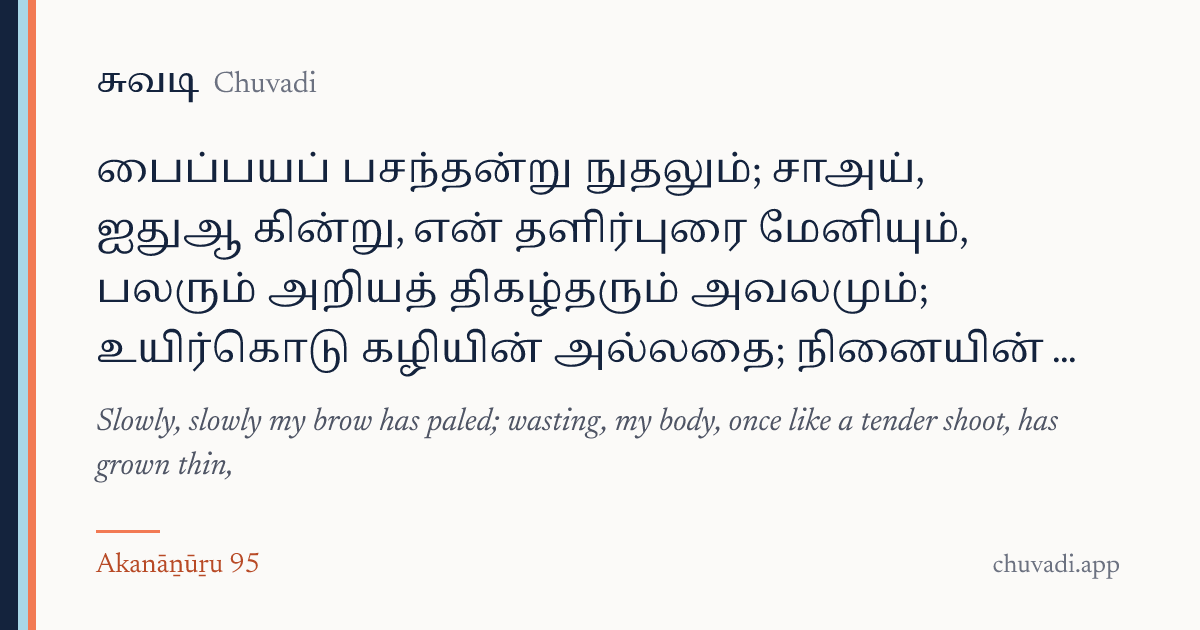
பாடல் · The poem
Tap a word to see where else it occurs.
பொருள் · Meaning in TamilAI
மெல்ல மெல்ல என் நெற்றியும் பசலை படர்ந்தது; தளிர் போன்ற என் மேனியும் வாடி மெலிந்தது; பலரும் அறியும்படி வெளிப்படும் என் துயரமும் அப்படியே ஆனது. இது என் உயிரோடு சேர்ந்து போனால் அன்றி, எண்ணிப் பார்த்தால் வேறு என்ன செய்வது? தோழி, நீ வாழ்க! வெடித்த அடியும் முண்டுகள் நிறைந்த அடிமரமும் கொண்ட இலுப்பை மரத்தின் குவிந்த கொத்துகளிலிருந்து கழன்று விழும், ஆலங்கட்டியைப் போன்ற உள்துளையுடைய திரண்ட பூக்களை, வழிச்செல்லும் பயணிகள் நீண்ட வழியில் வருந்தும்போது, குட்டிகளை ஈன்ற கரடியின் பெருங்கூட்டம் கவர்ந்து உண்ணும் பல பாலைநிலங்களைக் கடந்து சென்றவருக்காக இரங்குவோம் என்று இவ்வூரார் சொல்லமாட்டார்கள்; பழிச்சொல்லையே விரும்புவார்கள். 'இவ்வூரின் நரகம் போன்ற பெண்கள் சொல்லும் கொடிய சொற்கள் என் மகளுக்குப் பொருந்துவன அல்ல' என்று கூறித் தெய்வத்தை வேண்டி, நம்மைப் புரிந்துகொண்டு அமைதியாக இருக்கும் இயல்புடைய அன்னையின் முன்னால், நான் இந்த நிலையில் இருப்பது எப்படி?
இது பாலைத் திணை; பொருள்வயின் பிரிந்த தலைவனை எண்ணி வருந்தும் தலைவி தோழியிடம் கூறுவது. ஊரார் பழிக்க, தன்னை நம்பும் தாயின் முன் துயரை மறைக்க முடியாமையே அவளுக்குப் பெரும் வேதனை. குட்டிகளுக்கு உணவு தேடும் கரடி, தாயின் பரிவோடு ஒப்பாக அமையலாம். பத்து முதல் பதின்மூன்று வரையான அடிகளின் தொடர்பு முழுமையாக உறுதியில்லை.
ஆங்கிலம் · English translationAI
Translation
- Slowly, slowly my brow has paled; wasting,
- my body, once like a tender shoot, has grown thin,
- and so has the grief that shines out for all to know;
- unless it goes, taking my life with it — if one thinks of it,
- what is to be done? — long life to you, friend! — From the cracked-stemmed,
- knob-trunked iruppai, from its heaped bunches, there drop
- hollow, plump flowers like hailstones,
- and, while travellers on the road grieve on the long way,
- the great family of a bear that has just given birth snatches them up:
- for him who crossed such wastelands they will not say they feel pity;
- bent on slander, 'The cruel things
- these hellish women of this town are saying
- do not befit my daughter,' — so, praying for me,
- is my mother, whose way is to understand us and stay calm;
- before her, what am I to do, to be found in this state?
What the poem says
The heroine speaks to her friend while the hero is away beyond the wasteland. Her brow has paled, her body has thinned, and her grief has become so visible that everyone can see it. 'Unless it ends with my life,' she says, 'what can be done?'
The middle of the poem describes the road he took. Iruppai trees drop their fat, hollow flowers like hailstones, and a bear with her newborn cubs gathers them up, while weary travellers suffer on the long way. Nobody in town thinks of pitying a man who has gone through such country; they would rather gossip.
The last lines bring in her mother. The town women, 'women of hell' as she calls them, say hurtful things, and her mother answers that such talk does not fit her daughter, and prays for her. The mother understands and keeps calm. That is exactly what makes it unbearable: how can the girl let her grief show in front of a mother who trusts her so?
The bear feeding her young on the fallen flowers may be meant as a quiet contrast, a mother caring for her family in the very place the lover has gone. Lines 10 to 13 are compressed and their sense, especially who 'will not say they feel pity' and the word paraii ('praying'), is not fully certain.