




அகநானூறு 96
பாடல் · The poem
Tap a word to see where else it occurs.
பொருள் · Meaning in TamilAI
கள் உண்ணும் கலத்தை நீரில் அமிழ்த்தியதால் இறால்கள் துள்ளி, நாண் அறுந்த வில்லைப் போலத் தாவி, புதர்களின் அடியில் சென்று மோதும். வயல்சார்ந்த பொய்கையின் அடைகரையில் உள்ள பிரம்பின், பாம்பின் வாயைப் போன்ற அழகிய முள்ளுடைய நீண்ட கொடி, ஓடும் நீரில் உள்ள ஆம்பலின் அகன்ற இலையைச் சிக்கவைக்க, அசைந்து வரும் வாடைக்காற்று அதைத் தூக்குவதால், உலையில் ஊதும் துருத்தியின் விசையோடு இழுக்கும் தோலைப் போல அது பருத்தும் தளர்ந்தும் அசையும் — வயல்களும் தோட்டங்களும் சூழ்ந்த காஞ்சி மரங்களுடைய ஊரனே! 'ஒளிரும் வளையணிந்த தோழியர் கூட்டத்துக்குள்ளே நீ ஒரு சிறுமியை விரும்பிக் கொண்டாய்' என்று சொல்கிறார்கள். அந்தச் செய்தி, சிவந்த பொன் சிலம்பும் செறிந்த தொடைகளும் அழகாக ஒளிரும் மாநிறமும் உடைய அஃதையின் தந்தையான, பெருமிதமுள்ள யானைகளையும் கொல்லும் போரையும் உடைய சோழன், வெண்ணெல் விளையும் ஊர்களுடைய பருவூர்ப் போர்க்களத்தில் இரு பெருவேந்தரும் போரிட்டுக் களத்தில் வீழ, ஒளிரும் வாளால் நல்ல போரில் வென்ற அந்நாளில் யானைகளைக் கவர்ந்தபோது எழுந்த ஆரவாரத்தைப் போல, பலர் வாயிலும் பட்டு அலராகிவிட்டது!
இது மருதத் திணை; பரத்தையை நாடிய தலைவனிடம் தலைவியோ தோழியோ கூறுவது. ஆம்பல் இலையைப் பற்றிப் பருத்துத் தளரும் பிரம்புக்கொடி, தலைவனின் நிலையற்ற புதிய உறவை உள்ளுறையாகக் காட்டுகிறது. முதல் இரண்டு அடிகளின் பொருள் உறுதியாகத் தெரியவில்லை; தோற்ற இரு வேந்தர் யார் என்று பாடல் கூறவில்லை.
ஆங்கிலம் · English translationAI
Translation
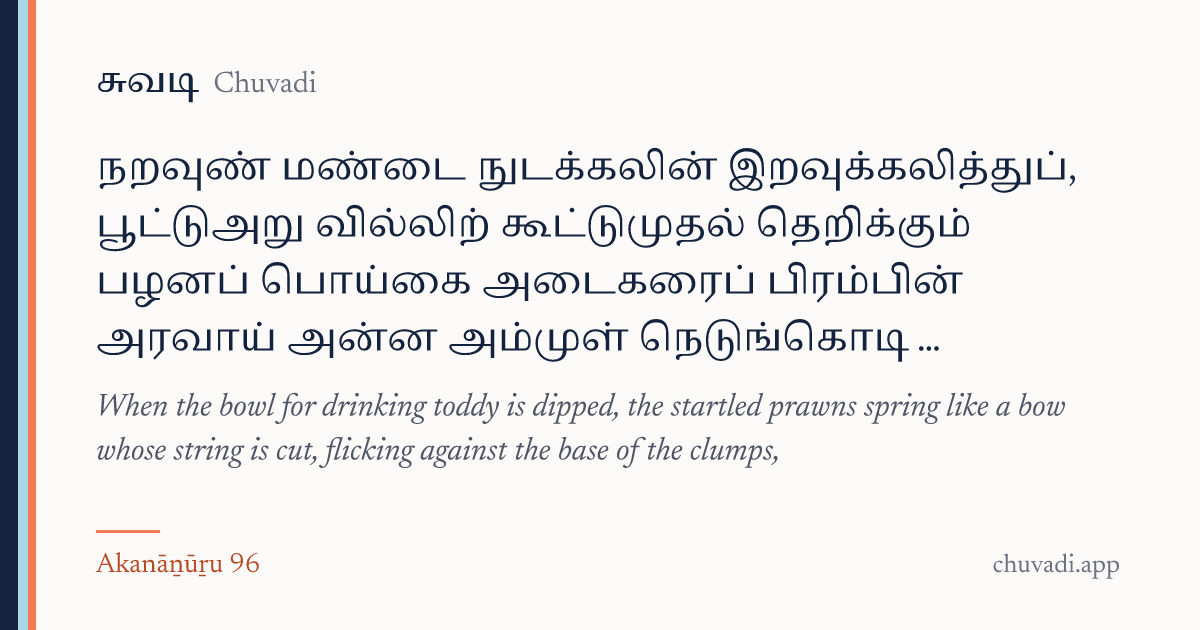
- When the bowl for drinking toddy is dipped, the startled prawns
- spring like a bow whose string is cut, flicking against the base of the clumps,
- and on the near bank of the field-side pond, the cane,
- its long creeper with lovely thorns like a snake's teeth,
- catches the broad leaf of the āmpal in the running water,
- and as the swaying north wind lifts it, like the hide of a blowing forge
- pulled hard, it swells and then slackens —
- lord of the town of kāñci trees and field gardens!
- 'Among her bright-bangled companions you desired
- and took one young girl,' they say; that —
- Aḵtai of red-gold anklets, of close thighs,
- of lovely gleaming dark skin — Aḵtai's father,
- the Cōḻar of noble elephants and deadly war,
- at the battlefield of Paruvūr among the white-paddy settlements,
- when both the great kings fell, fighting on the field,
- on the day he won the good battle of shining swords,
- like the clamour as the elephants were seized,
- has turned to gossip, passing through many mouths!
What the poem says
The speaker addresses the hero as 'lord of the town of kāñci trees', the usual marutam address for an unfaithful husband. The edition names no speaker; it is most likely the heroine or her friend. Word has spread that he has taken up with a young girl from among a group of companions, and the speaker throws the gossip back at him.
The opening is an extended uḷḷuṟai. In the pond, prawns startled by a toddy bowl dipped into the water spring like a bow whose string has snapped. A thorny cane creeper catches hold of a broad āmpal leaf, and the north wind makes it puff up and fall slack like the leather bellows of a forge. The image of something clinging that swells and collapses suggests the hero's passing affair: showy, noisy, and empty.
The comparison at the end is grand and ironic. The gossip is as loud as the uproar when the Cōḻa king, father of Aḵtai, won the battle of Paruvūr, where 'both great kings' fell and their elephants were captured. The poem gives Aḵtai beautiful gold anklets and dark gleaming skin, but says nothing else about her; who the two defeated kings were is not stated, and nothing should be added.
The opening lines are hard. 'Naṟavuṇ maṇṭai' may be a bowl for toddy or something else in the pond, and the exact sense of line 2 is uncertain; the rendering here is tentative.