



கம்பராமாயணம் Invocation · அயோத்தியா 0.1
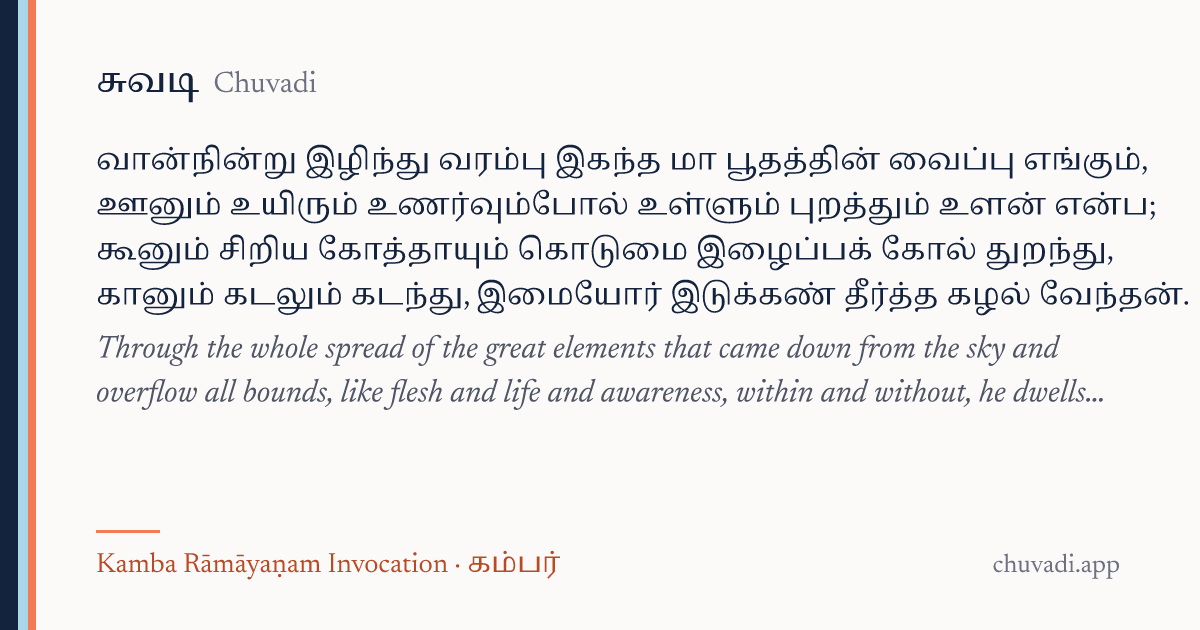
பாடல் · The poem
Tap a word to see its gloss in the commentary and where else it occurs.
பாட வேறுபாடு · Project Madurai reads
பொருள் · Meaning in Tamil
கூனும் - கூனியாகிய மந்தரையும்; சிறிய கோ தாயும் - இளைய பட்டத்து அரசியும் தாயுமாகிய கைகேயியும்; கொடுமை இழைப்ப - தனக்குப் பொல்லாங்கு செய்ய; கோல் துறந்து - அரசாட்சியை நீத்து; கானும்கடலும் கடந்து - காட்டையும் கடலையும் தாண்டிச் சென்று; இமையோர் இடுக்கண்தீர்த்த - (இராவணனைக் கொன்று) தேவர்களின் துன்பத்தை கிழங்கெடுத்த; கழல்வேந்தன் - வீரக்கழலை அணிந்த இராமபிரானே; வரம்பு இகந்த - எல்லைகடந்து பரந்த; மா பூதத்தின் வைப்பு எங்கும் - பெரிய பூதங்கள் ஐந்தினால் ஆகிய உலகத்தில் உள்ள பொருள்கள் எல்லாவற்றிலும்; ஊனும் உயிரும் உணர்வும் போல் - உடலும் உயிரும் போலவும் உடலும் உணர்வும் போலவும்; உள்ளும் புறத்தும் உளன்என்ப - அகத்தேயும் புறத்தேயும் நிறைந்திருக்கின்றான் என்று ஞானிகள் கூறுவர்.
இப்பாட்டு இராமாயணச் சுருக்காய் இருப்பது. மூலப் பகுதியிலிருந்தும் தோன்றிய உலகத்தில் உள்ள பொருள்களின் உள்ளேயும் வெளியேயும் நிறைந்திருக்கும் பரம்பொருளே இராமனாக அவதரித்தான் என்பது கருத்து. இழிந்து என்னும் வினையெச்சம் இகந்த என்னும் பெயரெச்சவினைகொண்டு முடிந்தது. “வானின்று இழிந்து வரம்பு இகந்த வைப்பு” என்றும், “மாபூதத்தின் வைப்பு” என்றும் இயைத்துப் பொருள் கொள்க. வானிலிருந்து காற்றும், காற்றிலிருந்து நெருப்பும், நெருப்பிலிருந்து நீரும், நீரிலிருந்து நிலமும் தோன்றியது என்னும் மறை முடிபினையொட்டி “வானின்றிழிந்து...... வைப்பு” என்றார். உணர்வு -
ஆங்கிலம் · English translationAI
Translation
- Through the whole spread of the great elements that came down from the sky and overflow all bounds,
- like flesh and life and awareness, within and without, he dwells, they say:
- the king of the warrior's anklet who, when the hunchback and the younger queen-mother wronged him, gave up the sceptre,
- crossed forest and sea, and ended the sufferings of the gods.
What the poem says
This invocation opens the Ayōttiyā Kāṇṭam, the book of Ayōttī; the edition prints it among the additional verses. In four lines it sums up the whole story: Irāmaṉ, wronged by the hunchbacked maid Mantharai and by Kaikēyi, the younger queen, gave up the throne, crossed the forest and the sea, and freed the gods from Irāvaṇaṉ.
That king, the poet says, is the Supreme Being who pervades everything made of the five elements, inside and out, as life and awareness pervade the body. The first line follows the Vedic account in which the elements arise one from another, starting from space.