



கம்பராமாயணம் 1387 · பால 22.50
பாடல் · The poem
Tap a word to see its gloss in the commentary and where else it occurs.
பாட வேறுபாடு · Project Madurai reads
பொருள் · Meaning in Tamil
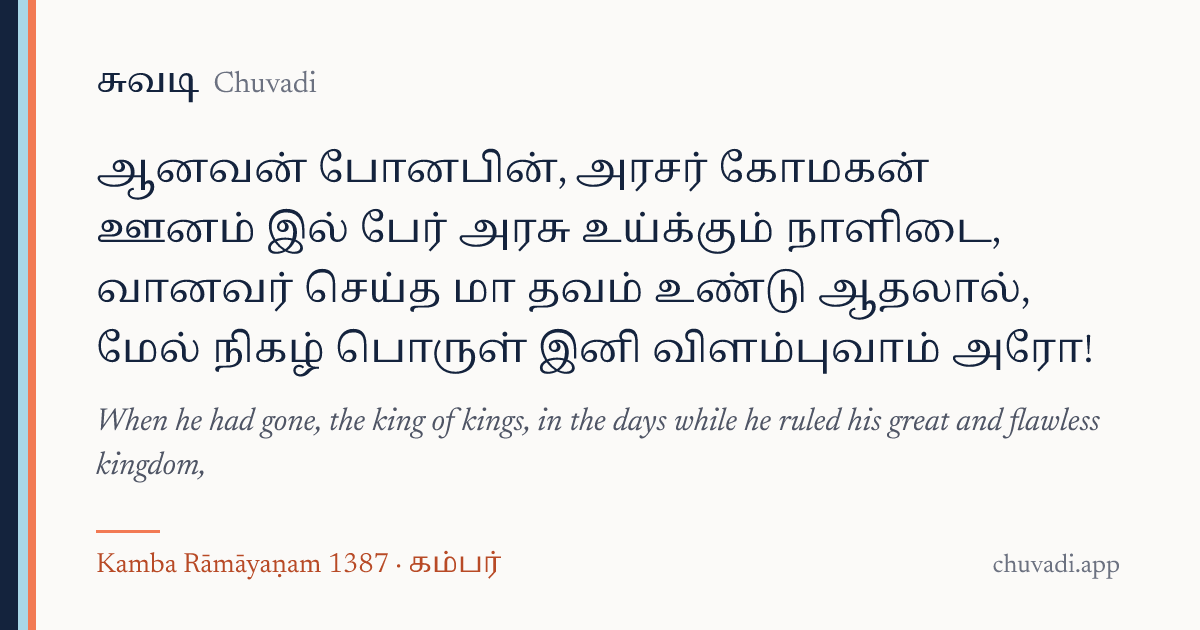
ஆனவன் போனபின் - அந்தப் பரதன் கேகய நாடு சென்ற பின்பு; அரசர் கோமகன் - அரசர்க்கு அரசனான தயரதன்; ஊனம் இல் பேரரசு - குற்றமற்ற பேரரசாட்சியை; உய்க்கும் நாளிடை - செலுத்தி வரும் நாட்களில்; வானவர் செய்த - தேவர்கள் புரிந்த; மா தவம் உண்டு ஆதலால் - (இராவணன் சங்காரம் குறித்த) பெரிய தவம் உள்ளதாதலால்; மேல் நிகழ் பொருள் - மேலே நிகழவுள்ள செயல்களை; இனி விளம்புவாம் - இனிமேல் (வரும் காண்டங்களில்) கூற உள்ளோம்.
ஒரு பேரரசைக் குற்றமேதும் இன்றிச் செலுத்துதல் அரியதாதலின், “ஊனமில் பேரரசு உய்க்கும் நாளிடை” என்று சிறப்பித்தார். இனிமேல் கைகேயி, கூனி வடிவில் ஊனங்கள் நுழையவுள்ளதையும் குறிப்பால் உணர்த்தினார். இனிமேல் நிகழ்வனவெல்லாம் வானவர் செய்த மாதவத்தால் நிகழ்வனவாம். “அரக்கர் பாவமும் அல்லவர் செய்திட்ட அறமும் துரக்க நல்லருள் துறந்தனள் தூமொழி மடமான்” (கம்ப. 1484) என்பது காண்க. “தேவர் செய் தவத்தினால் செம்மல் ஏகினான்” (கம்ப. 3337) என்பதும் அது.
ஆங்கிலம் · English translationAI
Translation
- When he had gone, the king of kings,
- in the days while he ruled his great and flawless kingdom,
- because of the great penance the gods had performed,
- what happened next we shall now tell.
What the poem says
This verse closes the Pāla Kāṇṭam, the book of Irāmaṉ's youth. With Paratan away in Kēkayam, Tacarataṉ rules in peace, and the poet promises to tell what came next.
What follows happens because of the gods' penance, their long prayers for the destruction of Irāvaṇaṉ. The commentary hears a hint in "flawless": flaws are about to enter the kingdom through Kaikēyi and the hunchbacked maid Kūṉi, setting the forest exile in motion.