



கம்பராமாயணம் Invocation · ஆரணிய 0.1
பாடல் · The poem
Tap a word to see its gloss in the commentary and where else it occurs.
பாட வேறுபாடு · Project Madurai reads
பொருள் · Meaning in Tamil
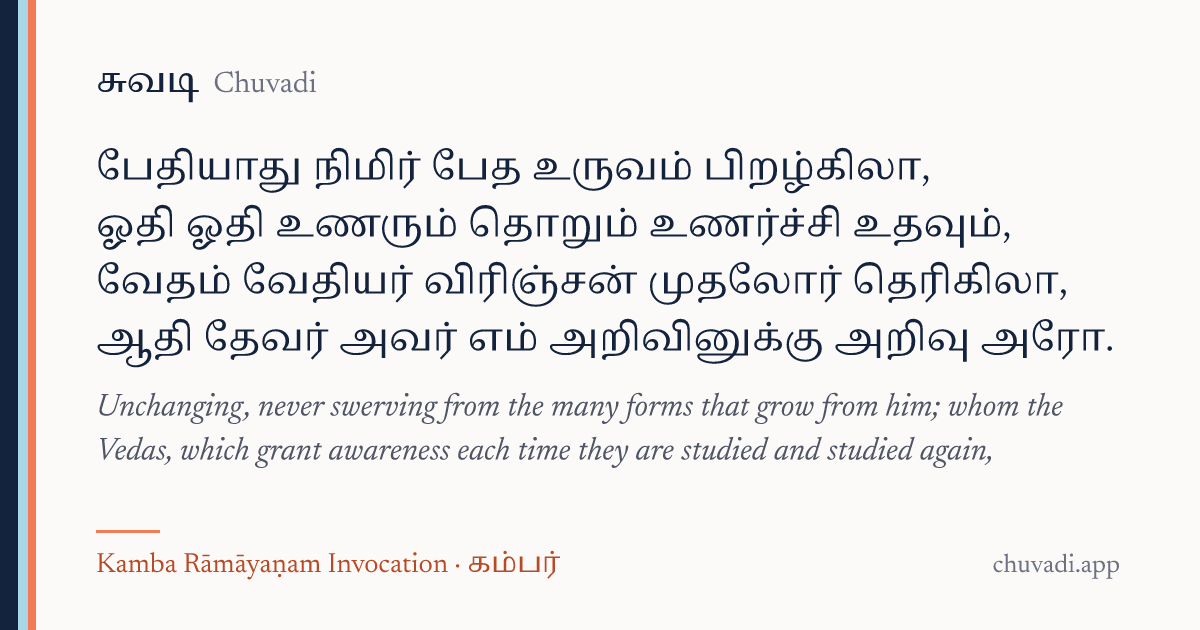
பேதியாது - தன் உயர்நிலையில்தான் வேறுபடாமல்; நிமிர் பேத உருவம் - தன்னிடம் தோன்றி வளரும் பலவகை வடிவங்களிலிருந்தும்; பிறழ்கிலா - தான் வேறுபடாதும்; ஓதி ஓதி உணரும் தொறும் - பலமுறை கற்று ஆராயும் பொழுதும், உணர்ச்சி உதவும் - மெய்யுணர்வை அருளும், வேதம் - நான்கு வேதங்களும், வேதியர் - அவற்றை ஓதும் அந்தணர்களும், விரிஞ்சன் முதலோர் - பிரமன் முதலிய தேவர்களும், தெரிகிலா - ஆராய்ந்தறிய முடியாத, ஆதி தேவர் - முதல் கடவுள்; அவர் எம் அறிவினுக்கு அறிவு அரோ - அவரே எம் சிற்றறிவுக்கு அறியும் பொருள்.
ஆதிதேவனை வணங்குவோம் என்பது குறிப்பு. பேத உருவம் என்பது தேவர், விலங்கு, ஊர்வன முதலிய சராசர வடிவங்கள். உருவம் பிறழ்கிலாமை என்பது உடல் மாறினும் அவ்வுடலுள் உயிர் போல் உயிருள் உயிராய் இருப்பது. உயிர்தனைப் படைப்பவனும் வேதியருட் சிறந்தவனுமான பிரமனை முதலாகக் கூறினார். மூலப் பரம்பொருள் நுட்பமாகவும் அதிநுட்பமாகவும் ஆதிதேவர் எனச்சுட்டப்பட்டது. அறிவு - ஆகுபெயர். அரோ - அசை. அறிவரோ எனக் கொண்டு அறியும் பொருள் ஆவரோ; ஆகார் எனவும் பொருள் கொள்வர். நெடிலடி நான்கு கொண்ட கலித்துறை. சிலர் அளவடி நான்கு கொண்ட கலிவிருத்தம் எனவும் கொள்வர்.
ஆங்கிலம் · English translationAI
Translation
- Unchanging, never swerving from the many forms that grow from him;
- whom the Vedas, which grant awareness each time they are studied and studied again,
- the Vedic sages, and Viriñcaṉ and the others cannot discern:
- that First God is what our minds come to know.
What the poem says
This is the invocation that opens the Āraṇiya Kāṇṭam, the Book of the Forest. The poet salutes the First God, the Supreme Being who stays unchanged in himself and is not lost in the countless forms, gods, animals and creeping things, that arise from him, but dwells in each as the life within its life.
Not even the Vedas, which yield fresh insight every time they are studied, nor the priests who recite them, nor Viriñcaṉ, the creator Piramaṉ, can fully know him. Yet he is the one our minds reach toward. The last phrase can also be read as a question: can he be known by our minds at all?