



கம்பராமாயணம் 2592 · ஆரணிய 1.1
பாடல் · The poem
Tap a word to see its gloss in the commentary and where else it occurs.
பாட வேறுபாடு · Project Madurai reads
பொருள் · Meaning in Tamil
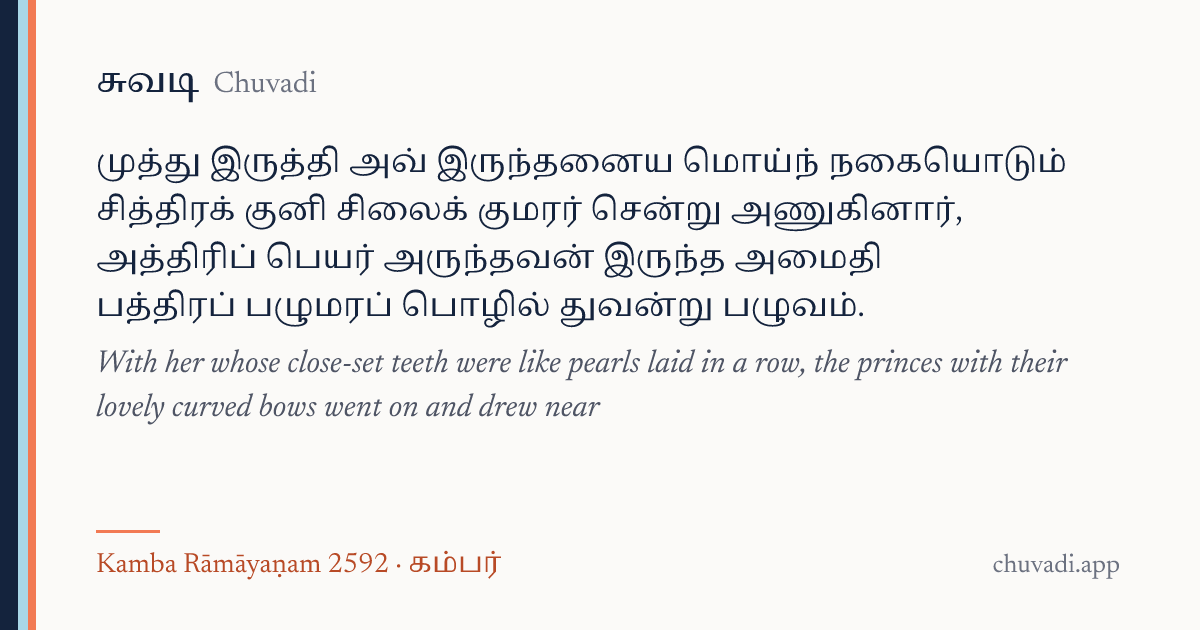
சித்திரக் குனிசிலைக் குமரர் - அழகிய, வளைந்த வில்லேந்திய இராமலக்குவர்; முத்து இருத்தி அவ் இருந்து அனைய - முத்துக்களைப் பதித்து அவை ஒருசேர இருந்தாற் போன்ற; மொய்ந்நகை யொடும் - நெருங்கிய பற்கள் கொண்ட சீதையுடன்; அத்திரிப் பெயர் அருந்தவன் - அத்திரி என்னும் பெயருடைய செயற்கரிய தவம் செய்த பெருமுனிவன்; இருந்த - தங்கியிருந்த; அமைதி - இடமாகிய, பத்திரப்பழுமரம் பொழில் - இலையும் பழமும் நிறைந்த மரங்கள் உள்ள சோலைகள்; துவன்று - நெருங்கி விளங்கும்; பழுவம் - வனத்தை; சென்று அணுகினார் - போய் அடைந்தனர்.
அத்திரி என்னும் முனிவர் பிரமகுமரர்களுள் ஒருவர்; ஏழு முனிவர்களுள் முன்வைக்கப்படுபவரும் ஆவர். இவரை இராமன் சந்தித்தது வான்மீகத்தில் அயோத்தியா காண்ட முடிவில் உளது. வில்லுக்குச் சித்திரமாவது இராமலக்குவர் கையில் ஏந்தியிருத்தல். பழுமரம் ஆலமரமுமாம். பழுவம் உறையுளுமாம்.
ஆங்கிலம் · English translationAI
Translation
- With her whose close-set teeth were like pearls laid in a row,
- the princes with their lovely curved bows went on and drew near
- to the place where the great ascetic named Attiri dwelt,
- a forest crowded with groves of trees heavy with leaf and fruit.
What the poem says
The Book of the Forest begins with its first chapter, on the slaying of the demon Virātaṉ. Travelling south from Cittirakūṭam, Irāmaṉ, Ilakkuvaṉ and Cītai, whose teeth are like a row of pearls, reach the hermitage of the sage Attiri in a forest thick with leafy, fruit-laden trees.
Attiri is one of the sons of Piramaṉ and is usually named first among the seven great sages. In Vālmīki's Rāmāyaṇa this visit comes at the end of the Ayodhyā book. The bows are called lovely because they are carried by these two princes.