



கம்பராமாயணம் 10 · பால 1.10
பாடல் · The poem
Tap a word to see its gloss in the commentary and where else it occurs.
பொருள் · Meaning in Tamil
தீம்புனல் - இனிய நீர்ப்பெருக்கு; ஈக்கள் வண்டொடு மொய்ப்ப - ஈக்கள் வண்டுகளோடு சேர்ந்து மொய்த்திட; வரம்பு இகந்து - அணை கடந்து ஒழுகலாற்று எல்லையை மீறி; ஊக்கம் மிகுந்து - எழுச்சி பெருகி (உற்சாகம் மிகுந்து) உள் தெளிவு இன்றியே - உள்ளிடத்து (உள்ளத்திலே) தெளிவே இல்லாமல்; தேக்கு எறிந்து வருதலின் - தேக்கு மரங்களை மோதி இழுத்து வருதலால் / ஏப்பமிட்டு வருவதால்; தேன் நுகர் மாக்களை மானும்.
ஈக்களும் வண்டுகளும் மொய்ப்பது குடிகாரரிடத்து எழும் கள் நாற்றம் காரணமாக. ஆற்று வெள்ளம் கரை கடப்பதையும், குடிகாரர் ஒழுக்க எல்லையைக் கடப்பதையும் 'வரம்பு இகந்து' என்ற தொடர் சுட்டிற்று. ஊக்கம்: வெள்ளத்துக்கு வேகமும் குடியருக்கு எழுச்சியையும் குறித்தது. உள் தெளிவு இன்மை; வெள்ளத்தின் உட்புறம் கலங்கியிருப்பது; மனத்திலும் அறிவிலும் தெளிவின்மை குடியரிடம் இருப்பது. தேக்கு மரங்களை வீழ்த்தி இழுத்துவருவது வெள்ளம்; ஏப்பமிட்டுக் கொண்டு வருவது, தேக்கெறிதல். தேன் - கள். வாக்கு தேன் - வினைத்தொகை.
'மஞ்சுலாம் சோலை' என்று தொடங்கும் பெரிய திருமொழிப் பாசுரத்தின் வியாக்கியானத்தில் இப்பாடலின் முதலடி பெரியவாச்சான்பிள்ளையால் எடுத்தாளப்பட்டது.
ஆங்கிலம் · English translationAI
Translation
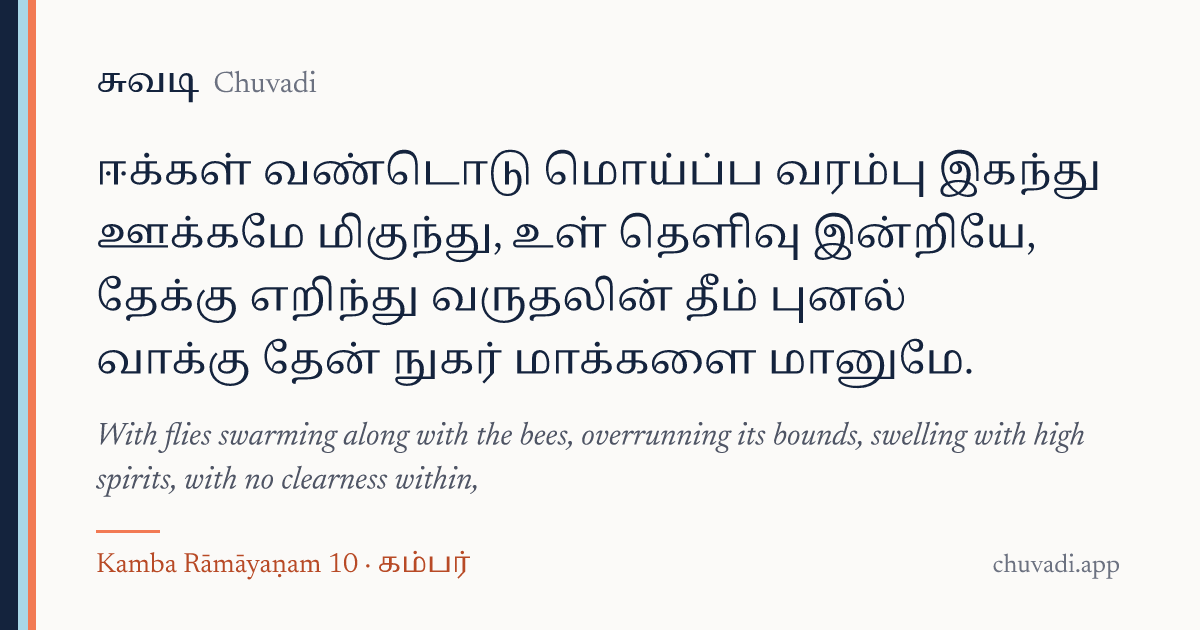
- With flies swarming along with the bees, overrunning its bounds,
- swelling with high spirits, with no clearness within,
- coming on as it hurls teak trees along, the sweet water
- was like people who drink poured-out liquor.
What the poem says
Now the flood is likened to drunkards, through a string of double meanings. Flies and bees swarm round both, drawn by the honey in the water and the smell of toddy on the drinker. The flood breaks its banks as the drunkard breaks the bounds of good conduct. It surges with force as he swells with excitement, and its waters are muddy as his mind is clouded.
The phrase about teak can also mean "belching", so the flood dragging teak trees along matches the drinker's belches. The first line of this verse is quoted in a classic Vaishnava commentary by Periyavāccāṉ Piḷḷai.