



கம்பராமாயணம் 10000 · யுத்த 36.239
பாடல் · The poem
Tap a word to see its gloss in the commentary and where else it occurs.
பாட வேறுபாடு · Project Madurai reads
பொருள் · Meaning in Tamil
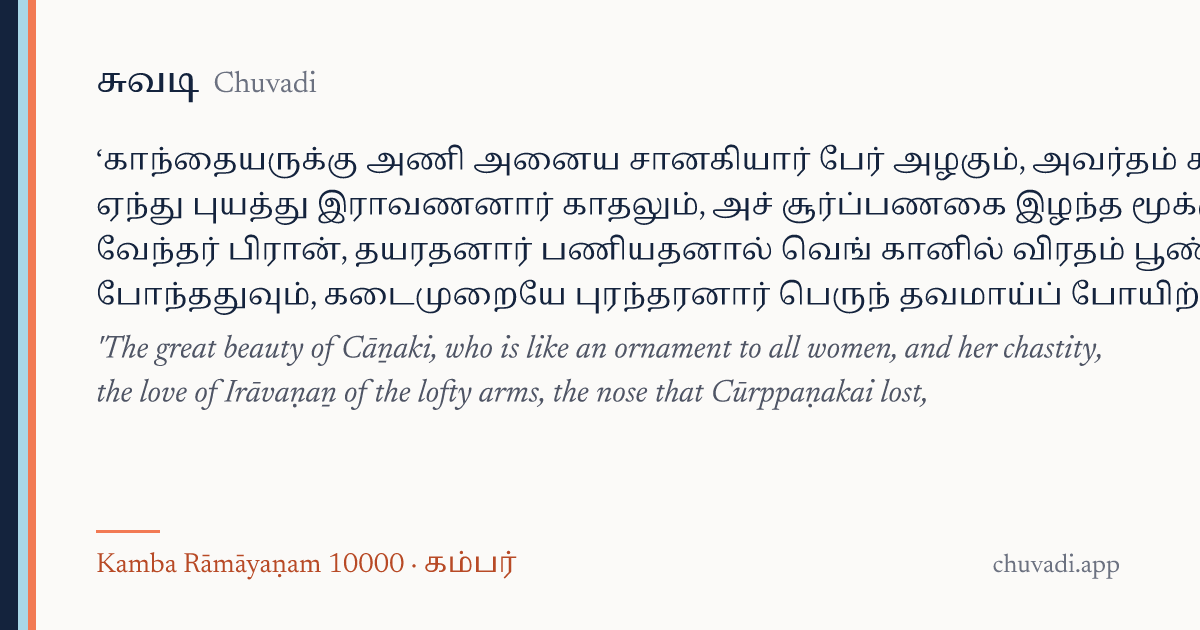
காந்தையருக்கு அணி அனைய - மகளிர்க்கெல்லாம் அணி போன்ற; சானகியார் பேர் அழகும் - சீதா தேவியின் பெருமைக்குரிய அழகும்; அவர்தம் கற்பும் - அவர் (பூண்டிருந்த) கற்பும்; ஏந்து புயத்து இராவணனார் காதலும் - ஓங்கிய புயங்களையுடைய இராவணனார் (சீதைமேல் கொண்ட தகாத) காதலும், அச்சூர்ப்பணகை இழந்த மூக்கும் - அந்தச் சூர்ப்பணகை (இதனால்) இழந்து போன மூக்கும்; வேந்தர் பிரான் தயரதனார் பணியதனால் - மன்னர்க்கு மன்னனான தயரதன் ஏவலினால் வெங்கானில் விரதம் பூண்டு போந்ததுவும் - கொடிய கானகத்தே விரத வேடம் பூண்டு (இராமன்) வந்ததுவும்; கடைமுறையே - கடைசியில்; புரந்தரனார் பெருந்தவமாய்ப் போயிற்று - இந்திரனார் செய்த பெருந்தவத்தின் பலனாக முடிந்துவிட்டன.
மேற்பாடலில் "ஓர் அம்போ இராவணனார் உயிர் பருகிற்று?" என்ற வியப்புக்கு விடையாக, "சானகியார் பேரழகும்.... விரதம் பூண்டு போந்ததுவும்" ஆக எல்லாம் இணைத்து இராவணனார் உயிர் பருகின என்றவாறாம். காந்தையருக்கு அணி - "மடந்தைமார்களில் திலகமே" (கம்ப. 2072) "பெண் அருங்கலமே" (கம்ப. 2077) "தெரிவைமார்க்கு ஒரு கட்டளை எனச் செய்த திருவே" (கம்ப.2078). இந்திரன் முதலிய தேவர்கள் வேண்டலால், இராமாவதாரம் நிகழ்ந்ததும், அங்கு தயரதன் கட்டளை நிறைவேற்றம் காரணமாக இராமன் வனவாசம் நேர்ந்ததும், அங்கு சூர்ப்பணகையின் காம வெறியால், அவளுக்குப் அங்கபங்கம் நிகழ்ந்ததும், அவள் தூண்டலால் இராவணன் சீதா தேவியின் மேற்கொண்ட தகாத காதலும், அது காரணமாக இராவண வதமும், காரண காரியத் தொடர்ச்சியாக நிகழ்ந்துள்ளமையால் "கடைமுறையே புரந்தரனார் பெருந்தவமாய்ப் போயிற்று" என்றாள்.
ஆங்கிலம் · English translationAI
Translation
- 'The great beauty of Cāṉaki, who is like an ornament to all women, and her chastity,
- the love of Irāvaṇaṉ of the lofty arms, the nose that Cūrppaṇakai lost,
- and his coming into the cruel forest, vowed to austerity, at the command of Tacarataṉ, lord of kings —
- in the end, all of it has turned out to be the fruit of Purantaraṉ's great penance. Alas!'
What the poem says
Vaṇṭōtari answers her own question. It was not one arrow that killed Irāvaṇaṉ but a whole chain of causes: Cītai's beauty and chastity, Irāvaṇaṉ's lust for her, the mutilation of Cūrppaṇakai's nose, and Irāmaṉ's exile to the forest at King Tacarataṉ's command.
All of it, she sees, was the working-out of the penance of Purantaraṉ (Indra) and the gods, who begged Viṣṇu to be born as Irāmaṉ and rid them of Irāvaṇaṉ.