



கம்பராமாயணம் 10001 · யுத்த 36.240
பாடல் · The poem
Tap a word to see its gloss in the commentary and where else it occurs.
பொருள் · Meaning in Tamil
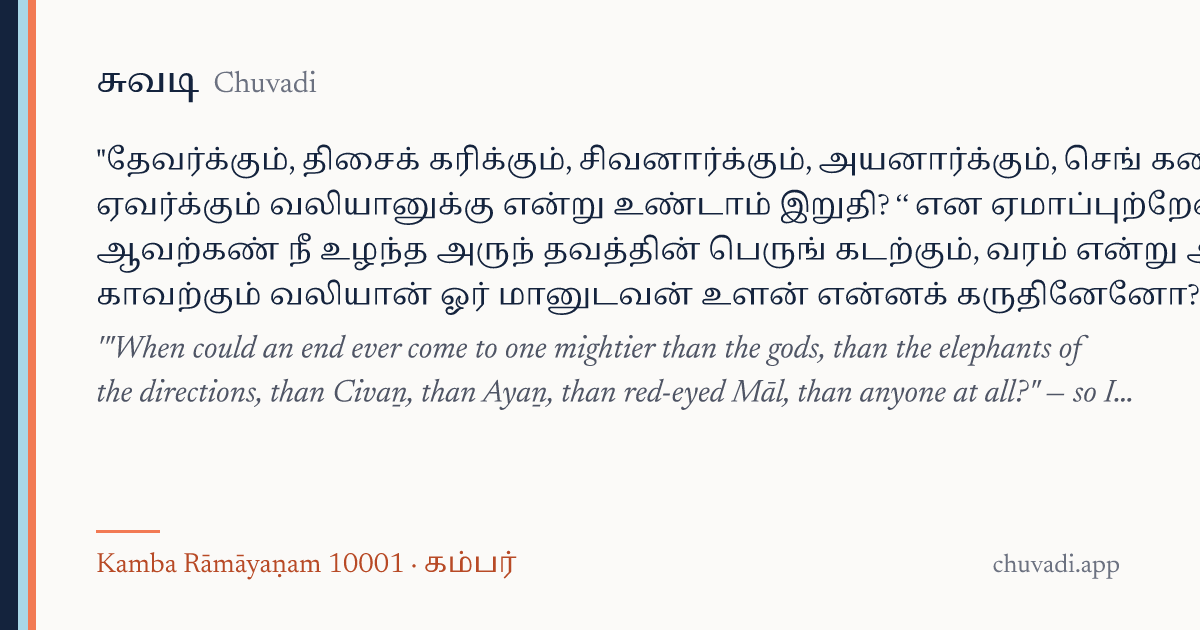
தேவர்க்கும் - வானவர்க்கும்; திசைக்கரிக்கும் - திசை யானைகட்கும்; சிவனார்க்கும் அயனார்க்கும், செங்கண்மாற்கும் - மும்மூர்த்திகட்கும்; ஏவர்க்கும் - மற்றும் உள்ள யாவரைக் காட்டிலும்; வலியானுக்கு - வலியவனான உனக்கு; என்று இறுதி உண்டாம்? - என்றைக்கு முடிவு வரப்போகிறது? என்று ஏமாப்பு உற்றேன் - பெருமிதம் உற்றிருந்தேன்; நீ ஆவல்கண் - நீ ஆர்வத்தோடு; உழன்ற - வருந்திச் செய்த; அரும் தவத்தின் பெரும் கடற்கும் - அரிய பெரிய கடல் போன்ற தவத்திற்கும்; வரம் என்று ஆன்ற காவற்கும் - வரம் என்று சொல்லப்பெற்ற காவலாகிய பேற்றுக்கும்; ஓர் வலியான் ஓர் மானுடவன் - (அழிவை விளைக்கவல்ல ஒப்பற்ற வலிமையையுடைய மானிடன்; உளன் என்னக் கருதினேனோ? - இருக்கின்றான் என நான் நினைக்கவில்லையே!
மும்மூர்த்திகள் மூவரும் இராவணனுக்குத் தோற்றமை இராவணன் மந்திரப் படலம் (கம்ப. 6182-80) பாடல்களாலும், உத்தர காண்டத்திற்கு விசயம் படலப் பாடல்களிலும் உணர்க.
ஆங்கிலம் · English translationAI
Translation
- '"When could an end ever come to one mightier than the gods, than the elephants of the directions, than Civaṉ, than Ayaṉ, than red-eyed Māl,
- than anyone at all?" — so I thought, and I was proud and secure.
- Did I ever imagine there was a man, a mere human, mightier than the vast ocean of hard penance
- you laboured at so eagerly, and than the great protection called your boons?'
What the poem says
Vaṇṭōtari recalls her pride and confidence: her husband was stronger than the gods, the elephants of the directions, and even the three great gods Śiva, Brahmā and Viṣṇu, all of whom, the commentary notes, he had once defeated. How could he ever die? She never dreamed that a mere human being could overcome the ocean of his penance and the shield of his boons.