



கம்பராமாயணம் 10065 · யுத்த 37.53
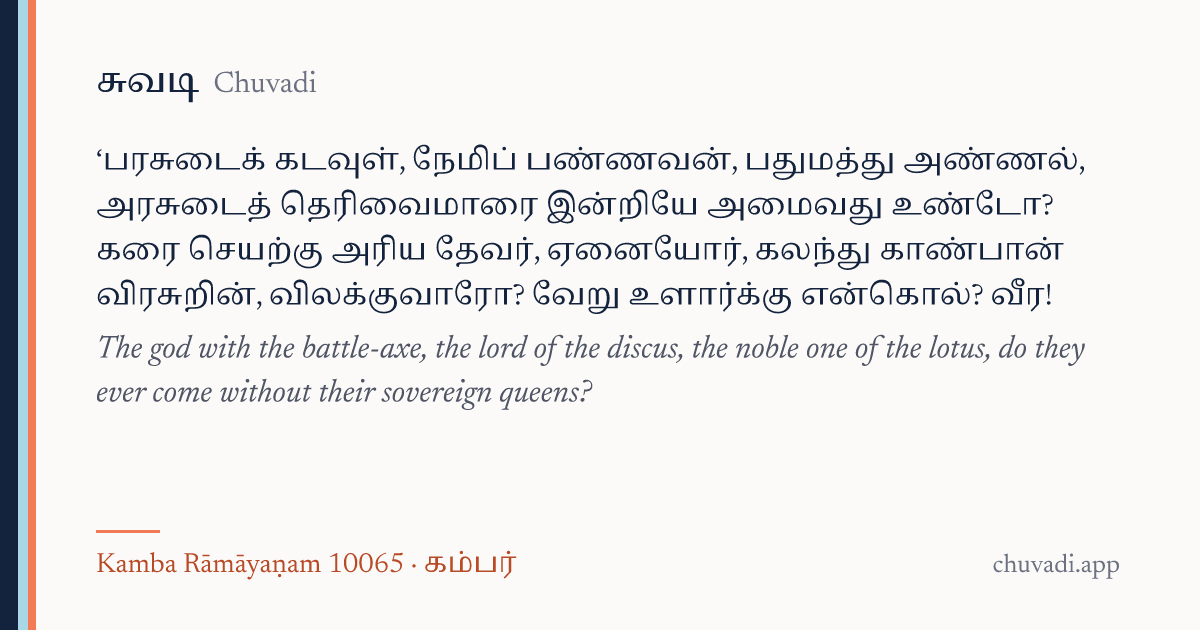
பாடல் · The poem
Tap a word to see its gloss in the commentary and where else it occurs.
பொருள் · Meaning in Tamil
வீர - வீடணனே!; பரசு உடைக் கடவுள் - பரசு என்னும் மழு ஆயுதத்தை உடைய கடவுளாகிய சிவபெருமான்; நேமிப் பண்ணவன் - சக்கராயுதத்தை ஏந்திய பரமனாகிய திருமால்; பதுமத்து அண்ணல் - தாமரை மலரில் வீற்றிருக்கின்ற பிரமதேவன் ஆகிய முப்பெருங்கடவுளரும்; அரசுடைத் தெரிவை மாரை இன்றியே அமைவது உண்டோ? - தலைமைத் தன்மையுடைய பட்டத்தரசிகளாகிய தம் மனைவியரை இல்லாமல் வருவது உண்டா?; கரை செயற்கு அரிய தேவர் ஏனையோர் கலந்து காண்பான் விரசுறின் - கணக்கிட முடியாத தேவர்களும் மற்றவர்களும் தத்தம் மனைவியருடன் கலந்து போர்க்களக் காட்சியையும் பிராட்டியையும் காண்பதற்காக நெருங்கி வந்தால்; விலக்குவாரோ - தள்ளி அகற்றுவார்களா?; வேறுளார்க்கு என்கொல் - இத்தகைய மேலோர்களுக்கே கூட்டத்தில் தள்ளப்படும் நிலை இருக்குமானால் மற்ற சாதாரணமானவர்கள் கதி என்ன ஆகும்?
ஆங்கிலம் · English translationAI
Translation
- The god with the battle-axe, the lord of the discus, the noble one of the lotus,
- do they ever come without their sovereign queens?
- If countless gods and others crowd together to see,
- would one push them away? And what then of the rest, O hero?
What the poem says
Irāmaṉ points out that even the great gods, Civaṉ with his axe, Tirumāl with his discus and Piramaṉ on his lotus, never appear without their consorts. If innumerable gods come with their wives to see the battlefield and Cītai, should they be shoved aside? And if even such exalted beings are pushed about, what becomes of ordinary people?