



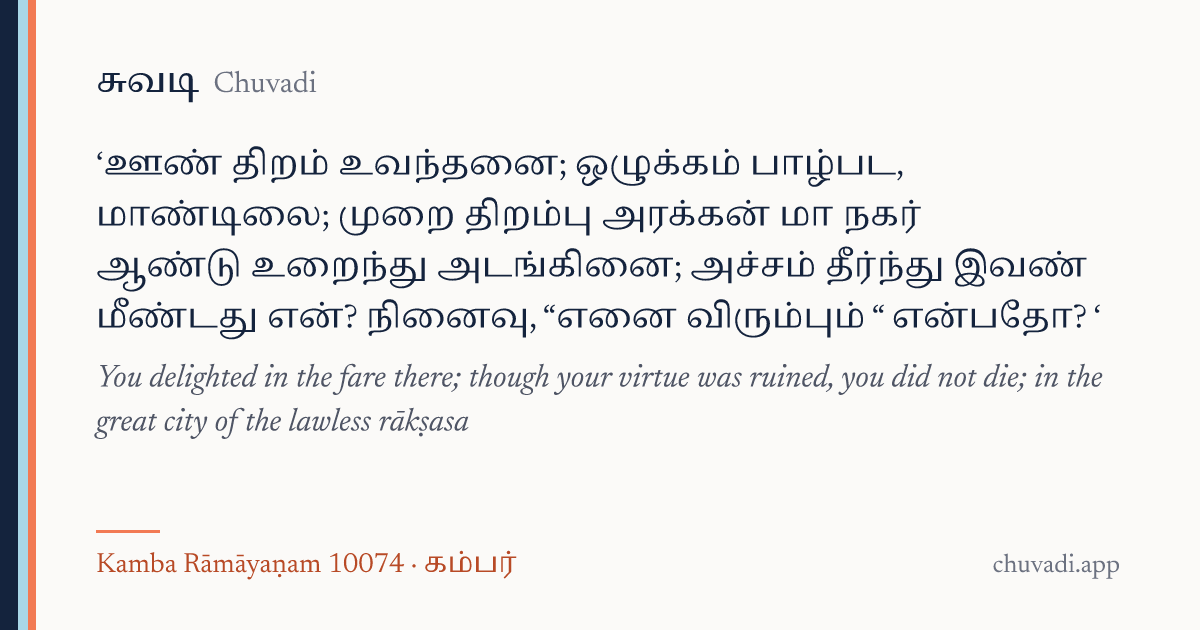
கம்பராமாயணம் 10074 · யுத்த 37.62
பாடல் · The poem
Tap a word to see its gloss in the commentary and where else it occurs.
பொருள் · Meaning in Tamil
ஊண் திறம் உவந்தனை - அரக்கர் ஊரில் உணவு வகைகளை உண்ண விரும்பி நெடுநாள் இருந்தாய்; ஒழுக்கம் பாழ்பட மாண்டிலை - ஒழுக்கம் அழிந்து போகும்படி சாகாமல் உயிருடன் இருந்தாய்; முறை திறம்பு அரக்கன் மாநகர் ஆண்டு உறைந்து அடங்கினை - நீதிநெறியும் அறமுறையும் திறம்பிய அரக்கனது இலங்கை நகரில் நெடுநாள் தங்கி அவனுக்கு அடங்கியிருந்தாய்; அச்சம் தீர்ந்து இவண் மீண்டது என் நினைவு? - பயம் இல்லாமல் இவ்விடத்துக்கு இப்பொழுது திரும்பி வந்தது எது கருதி?; 'எனை விரும்பும்' என்பதோ? - 'என்னை இராமன் விரும்புவான் என்பது உன் நினைவா?
சுந்தர காண்டத்தில் அநுமன் சீதை பற்றிச் சொல்லிய வார்த்தைகளாக "சோகத்தாள் ஆய நங்கை” "கண்ணின் நீர்க் கடலில் கண்டேன்” "நங்கை ஆர் உயிர் துறப்பதாக எண்ணினன்" என்பனவற்றை இராமன் கேட்டிருப்பவும் (கம்ப. 6040, 6041, 6045) அவற்றுக்கு மாறாக இங்கு பேசியது வலிந்து செய்ததாகும் என உணரப் போதியதாகும்.
ஆங்கிலம் · English translationAI
Translation
- You delighted in the fare there; though your virtue was ruined,
- you did not die; in the great city of the lawless rākṣasa
- you dwelt and submitted; why have you come back here
- free of fear? Is it your thought that I will still desire you?
What the poem says
Irāmaṉ's harsh accusation begins. He charges Cītai with enjoying the food of the rākṣasas, failing to die rather than lose her virtue, living submissively in Irāvaṇaṉ's city, and returning without shame in the belief that he will still want her. Irāmaṉ had heard from Aṉumaṉ how Cītai wasted away in grief and resolved to die, so these words are deliberately forced, spoken against what he knows.