



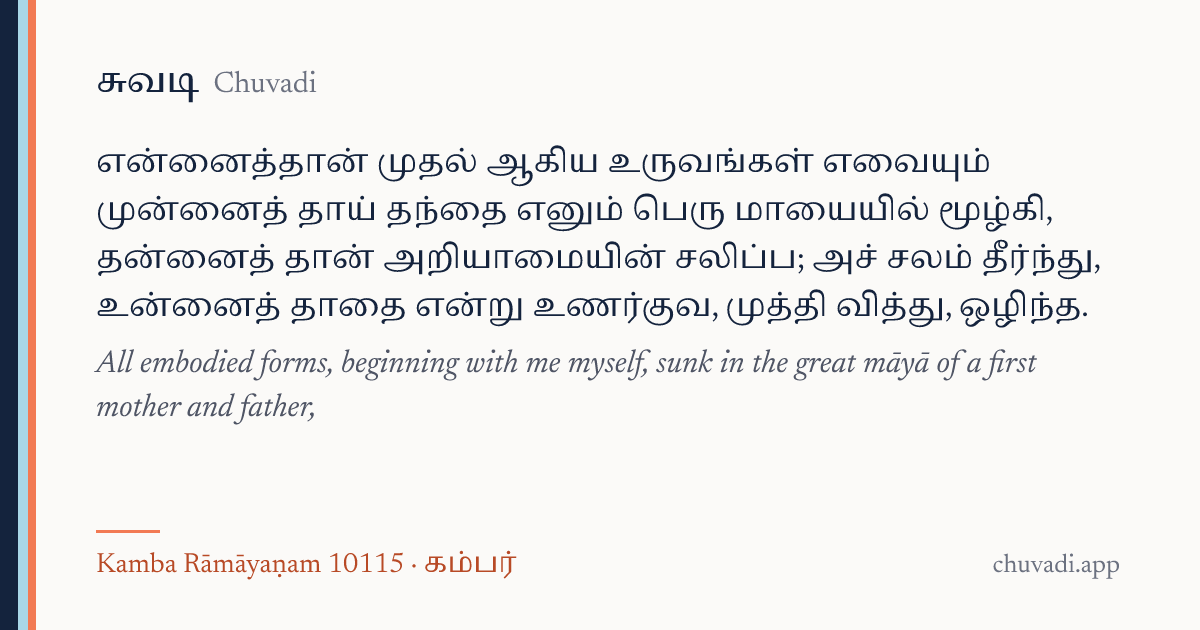
கம்பராமாயணம் 10115 · யுத்த 37.102
பாடல் · The poem
Tap a word to see its gloss in the commentary and where else it occurs.
பொருள் · Meaning in Tamil
என்னைத் தான் முதலாகிய உருவங்கள் எவையும் - உற்பத்திக்குக் காரணமான என்னை முதலாக உடைய உயிர் வருக்கங்கள் எல்லாம்; முன்னை தாய் தந்தை எனும் பெரு மாயையில் மூழ்கி - பிறப்புக்கு முதலான தாய் தந்தை எனும் சுற்றமாகிய உலக மாயையில் அழுந்தியிருக்கும் உண்மை மறந்து; தன்னைத் தான் அறியாமையில் சலிப்ப - தம்முடைய ஆத்ம வடிவத்தையும் அது நீயாயிருத்தலையும் தம்மால் அறிய முடியாமல் தளர்ச்சியடைந்து துன்பம் அடைவனவாம்; அச்சலம் தீர்ந்து ஒழிந்த உன்னைத் தாதை என்று உணர்குவ முத்திவித்து - அந்த பொய்மை நீங்கி விலகியவாகிய சீவன்கள் உன்னையே எல்லாவற்றுக்கும் முதலாகிய தந்தை என்று அறிவனவாம்; அவையே வீட்டுலகத்தில் விளையும் வித்தாவனவாம்.
உயிர்க்குப் பிறவி தரும் தாய் தந்தையரை அறிதலும் வினையையும், பிறவியையும் கூட்டுவிக்கும் அதிகாரி முதல்வனாகிய பிரமனை அறிதலும், அதற்கும் மேலாக தன் சங்கற்பத்தால் அனைத்தையும் நடத்துகின்ற பரம்பொருளாகிய முதல்வனே தந்தை என அறிதலும் ஆகிய மூன்று நிலைகளுள் இரண்டு பிறவிக்கு வித்து, இறுதி ஒன்று வீட்டுக்கு வித்து என்றார்.
ஆங்கிலம் · English translationAI
Translation
- All embodied forms, beginning with me myself,
- sunk in the great māyā of a first mother and father,
- waver for not knowing their own selves; those that are rid of that falsehood
- and know you as their father are the seed of liberation; the rest are not.
What the poem says
All embodied beings, starting with Piramaṉ himself, are sunk in the illusion that their parents, or Piramaṉ as creator, are their origin, and so they struggle without knowing their true selves. Those who shed that error and recognise Irāmaṉ as the true father of all become seeds that sprout into liberation. Of the three ways of knowing one's father, two lead to rebirth and only the last to release.