



கம்பராமாயணம் 10134 · யுத்த 37.121
பாடல் · The poem
Tap a word to see its gloss in the commentary and where else it occurs.
பொருள் · Meaning in Tamil
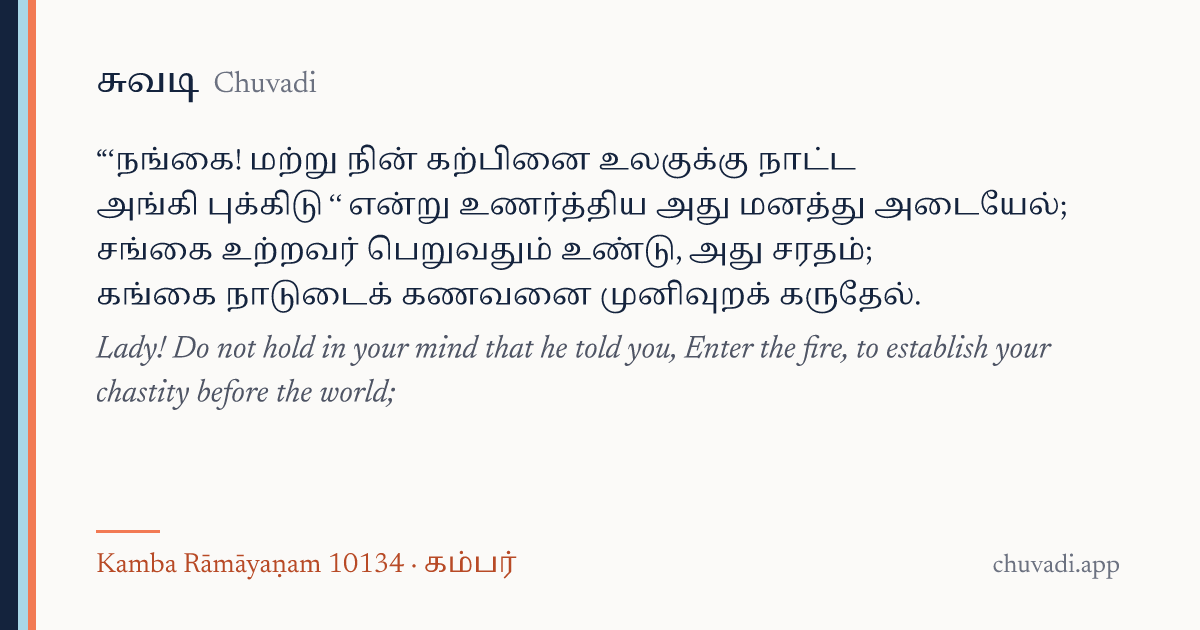
நங்கை! - சீதையே; நின் கற்பினை உலகுக்கு நாட்ட அங்கிபுக்கிடு என்று உணர்த்திய அது மனத்து அடையேல் - உனது கற்பின் சிறப்பை உலகின் கண் நிலை நிறுத்த வேண்டி 'நெருப்பின் கண் புகும்படியாக' இராமன் கூறிய அதனை மனத்துக் கொள்ளாதே; சங்கை உற்றவர் பெறுவதும் உண்டு, அது சரதம் - உலகில் சந்தேகம் உற்றவர்கள் இவ்வாறு நெருப்பின் மூலமாகவும் பிறவற்றின் மூலமாகவும் மெய்ப்பிக்கச் செய்து அதனால் ஐயம் நீங்குதல் கண்கூடு; உலகில் இயல்பாக நடைபெறுவதே; கங்கை நாடு உடைக் கணவனை முனிவுறக் கருதேல் - (அவ்வாறு சாதிக்கச் செய்ததுபற்றி) கோசல நாட்டிற்கு அரசனான உன் கணவனை வெறுக்கக் கருதாதே.
உலகின்கண் உள்ளார் எவரேனும் உன் கற்பில் ஐயம் கொள்வராயின் அது நீங்கி அவர் தெளிய வேண்டி 'அங்கி புக்கிடு' என்றானே அன்றி, அவனுக்குச் சந்தேகம் என்பது அந்நிகழ்ச்சிக்குப் பொருளாகாது என்று தயரதன் மகன் செயலுக்குக் காரணம் கூறி மருகியைத் தேற்றினான். இக் காரணத்தை இராமன் கூறியதாகக் கூறாமல் தயரதன் மூலமாகக் கூறியதாக அமைத்தது கவியின் சாதுர்யத்தை எடுத்துக்காட்டும் என்பர் மகாவித்துவான், மயிலம், வே. சிவசுப்பிரமணியன் அவர்கள்.
ஆங்கிலம் · English translationAI
Translation
- Lady! Do not hold in your mind that he told you,
- Enter the fire, to establish your chastity before the world;
- those in doubt do find their proof in this way, that is certain;
- do not think in anger of your husband, lord of the land of the Gaṅgai.
What the poem says
Tacarataṉ consoles his daughter-in-law. She should not take to heart that Irāmaṉ ordered her into the fire: he did it to establish her chastity before the world, since doubters are in fact convinced by such proofs. It does not mean he himself doubted her, and she should not resent her husband, lord of the Gaṅgai country. Scholars admire the poet's skill in giving this explanation to Tacarataṉ rather than to Irāmaṉ.