



கம்பராமாயணம் 10142 · யுத்த 37.129
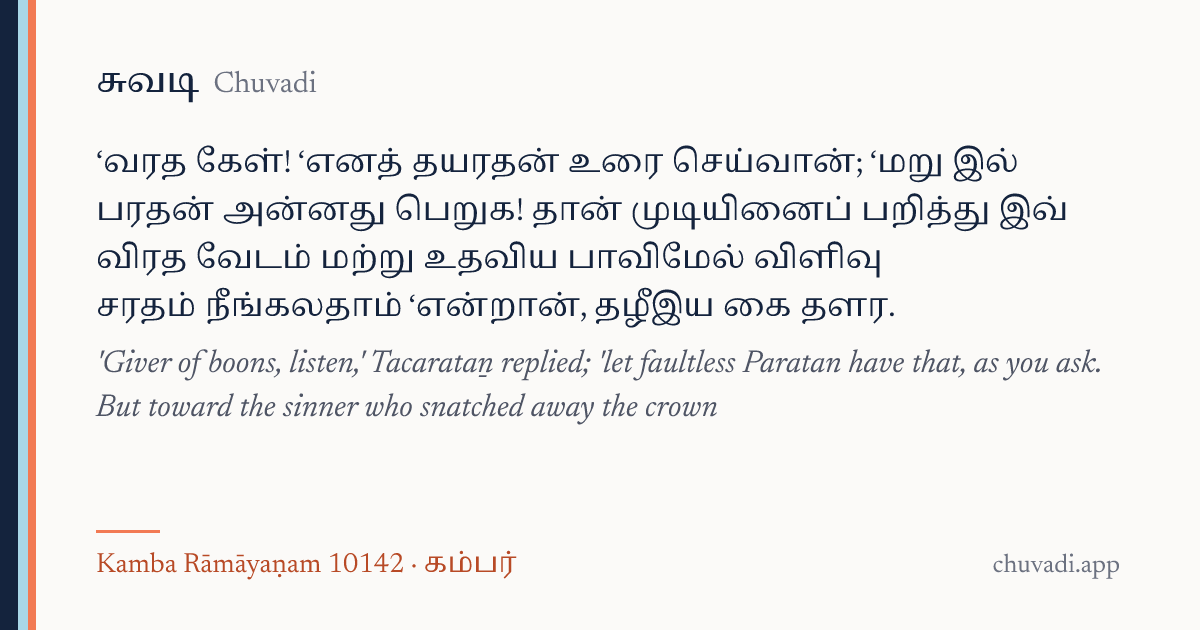
பாடல் · The poem
Tap a word to see its gloss in the commentary and where else it occurs.
பொருள் · Meaning in Tamil
வரத - இராமனே!; கேள் என - கேட்பாயாக என்று; தயரதன் உரை செய்வான் - தயரதசக்கரவர்த்தி அவனுக்குப் பதில்கூறுவான்; மறுஇல் பரதன் அன்னது பெறுக - குற்றமற்ற பரதன் (நீ கேட்ட வண்ணம்) என் மகனாகி உனக்குத் தம்பியாம் உரிமை பெறுக, தான் முடியினைப் பறித்து - உனக்கு அளிக்க இருந்த முடியினைத் தானே கூடாது என்று பிடுங்கி; இவ்விரத வேடம் மற்று உதவிய பாவிமேல் - இம் மரவுரிக் கோலத்தை வேறாக உனக்குத் தந்த பாவியாகிய கைகேயிபால்; விளிவு சரதம் நீங்கலதாம் என்றான் தழீஇய கை தளர - கோபமானது உறுதியாக என்னைவிட்டு நீங்கவில்லை என்று இராமனைத் தழுவிக் கொண்டிருந்த கைகள் தழுவுதல் விட்டுத் தளரக் கூறினான்.
கைகேயிபால் கோபம் நீங்காத தயரதன் அவளை மனைவியாக ஏற்றுக் கொள்ளாதவரை பரதன் மகனாவது எங்ஙனம்? அடிமரத்தை வெட்டிவிட்டு நுனிமரம் தழைக்க வேண்டும் என்று கூறுவது போல் இஃது அமையும் ஆதலின், மீண்டும் கைகேயியைப் பற்றி இராமன் தயரதனிடம் கேட்பான் ஆயினன்.
ஆங்கிலம் · English translationAI
Translation
- 'Giver of boons, listen,' Tacarataṉ replied; 'let faultless
- Paratan have that, as you ask. But toward the sinner who snatched away the crown
- and handed you instead this garb of austerity, my anger
- truly does not leave me,' he said, as his embracing arms grew slack.
What the poem says
Irāmaṉ has asked his dead father Tacarataṉ, who has appeared from heaven after Cītai's ordeal by fire, to take back Kaikēyi and Paratan whom he had disowned. Tacarataṉ readily accepts the blameless Paratan as his son, but he cannot forgive Kaikēyi, who took the crown from Irāmaṉ and sent him into the forest in bark clothing.
As he speaks of her his arms, which were embracing Irāmaṉ, loosen. The commentary notes that Paratan cannot truly be restored as a son while his mother remains rejected, so Irāmaṉ presses the point again.