



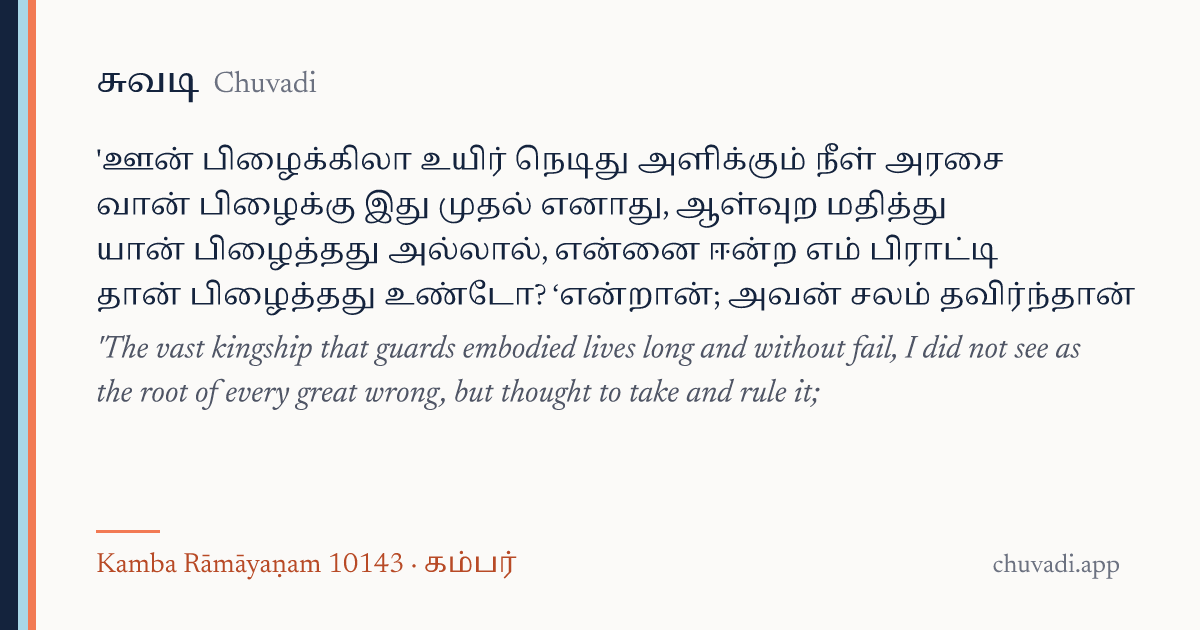
கம்பராமாயணம் 10143 · யுத்த 37.130
பாடல் · The poem
Tap a word to see its gloss in the commentary and where else it occurs.
பாட வேறுபாடு · Project Madurai reads
பொருள் · Meaning in Tamil
(இராமன்) ஊன் பிழைக்கிலா உயிர் நெடிது அளிக்கும் நீள் அரசை - உடலோடு கூடிய சீவாத்மாக்களைச் சிறிதும் தவறு வராமல் பாதுகாக்கும் பெரிய அரசுரிமையை; வான் பிழைக்கு இது முதல் எனாது - பெருங்குற்றத்திற்கெல்லாம் இது அடிப்படையான காரணம் ஆகும் என்று கருதாமல்; ஆள்வுற மதித்து - ஏற்று ஆளக் கருதி; யான் பிழைத்தது அல்லால் - நான் தவறு செய்தேனே அல்லாமல்; என்னை ஈன்ற எம்பிராட்டி - என்னைப் பெற்ற மாதாவாகிய கைகேயி அன்னையான; தான் பிழைத்தது உண்டோ? என்றான் - அவள் தவறு செய்தது உண்டோ என்று கேட்டான்; அவன் சலம் தவிர்ந்தான் - தயரதன் இராமன் புகழ் பெறுதற்கும், தான் மகனால் பெருமை அடைதற்கும் கைகேயி கேட்ட வரமே காரணம் என்பதுணர்ந்து அவள்பாற் கொண்ட கோபம் நீங்கினான்; அவளை மனைவியாக அங்கீகரித்தான் என்பதாம்.
'பின்குற்றம் மன்னும் பயக்கும் அரசு என்றல் பேணேன்; மன்னன் 'முடிகொள்க, எனக் கொண்டது என் குற்றம் அன்றோ' என்பதை (கம்ப. 1733) இங்குக் கருதுக.
இப்படலத்து தயரதன் இராமனால் பெற்ற பெருஞ் சிறப்புகளாக 1/8, //9 ஆம் பாடல்களில் (கம்ப. 10069, 70) குறிப்பிடப்பட்டவைகள் இராமனது வனவாசத்தால் அன்றோ கிடைத்தன என்பதை உணர்ந்து 'கைகேயி கேட்டவரத்தால் இராமன் புகழ் உயர்ந்தது; இராமனால் நான் பெருமை அடைந்தேன் என்று கைகேயிபால் கோபம் நீங்கப் பெற்றான் தயரதன் என்க.
ஆங்கிலம் · English translationAI
Translation
- 'The vast kingship that guards embodied lives long and without fail,
- I did not see as the root of every great wrong, but thought to take and rule it;
- the fault was mine alone. The lady, our mother who bore me,
- what fault did she commit?' he said; and Tacarataṉ's anger left him.
What the poem says
Irāmaṉ answers his father by taking the blame on himself: it was he who agreed to accept the crown without seeing that kingship breeds great wrongs, and Kaikēyi, whom he calls the mother who bore him, did nothing wrong.
This echoes Irāmaṉ's words earlier in the epic, when he first heard of his exile. Tacarataṉ realises that the glory Irāmaṉ won in the forest, and the honour that came to himself through such a son, flowed from Kaikēyi's boons, and his anger toward her ends; he accepts her again as his wife.