



கம்பராமாயணம் 10163 · யுத்த 37.150
பாடல் · The poem
Tap a word to see its gloss in the commentary and where else it occurs.
பாட வேறுபாடு · Project Madurai reads
பொருள் · Meaning in Tamil
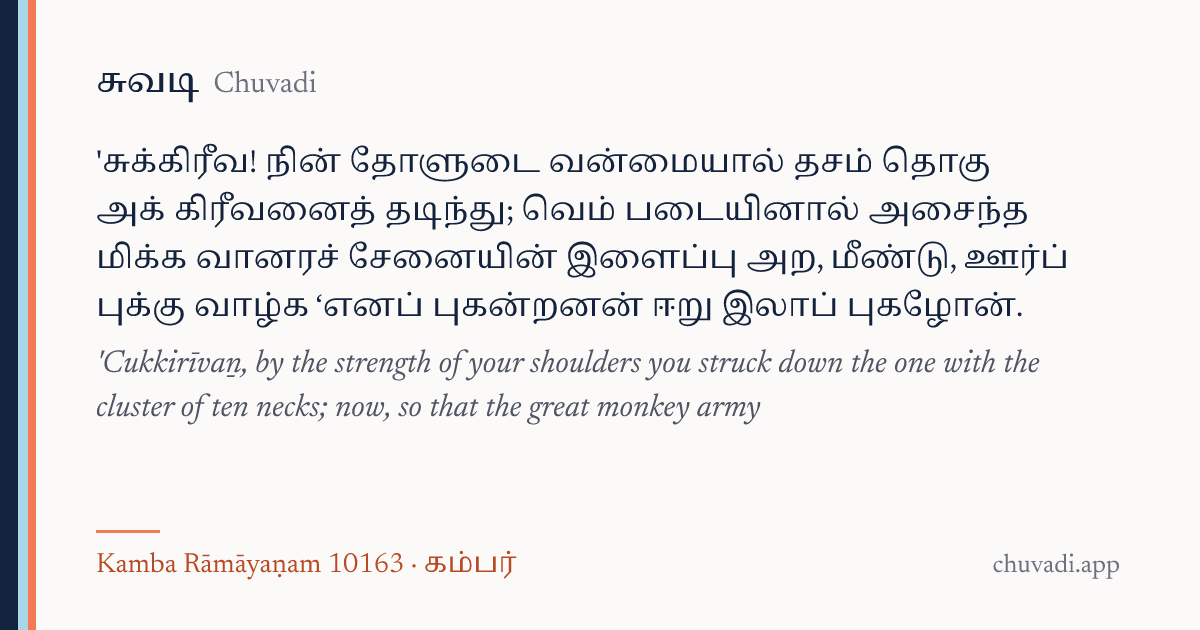
ஈறு இலாப் புகழோன் - முடிவில்லாத புகழை உடைய இராமன்; 'சுக்கிரீவ!, நின் தோள் உடை வன்மையால் தசம் தொகு அக்கிரீவனைத் தடிந்து - உன்னுடைய தோள் பலத்தால் பத்து என்று தொக்க அம் முடிகளை உடைய இராவணனைக் கொன்று; வெம்படையினால் அசைந்த - கொடிய போர் ஆயுதங்களால் தளர்ந்த; மிக்க வானரச் சேனையின் இளைப்பு அற மீண்டு - அளவுகடந்த குரங்குச் சேனையின் களைப்பு நீங்கும் படி திரும்பி; ஊர் புக்கு வாழ்க!' - கிட்கிந்தை புகுந்து வாழ்வாயாக; எனப் புகன்றனன் - என்று கூறினான்.
ஆங்கிலம் · English translationAI
Translation
- 'Cukkirīvaṉ, by the strength of your shoulders you struck down
- the one with the cluster of ten necks; now, so that the great monkey army
- worn by cruel weapons may lose its weariness, return,
- enter your city and prosper,' said he whose fame has no end.
What the poem says
Irāmaṉ now bids farewell to Cukkirīvaṉ, the monkey king, generously crediting him with the slaying of ten-headed Irāvaṇaṉ. He tells him to take the exhausted monkey army home to Kiṭkintai to rest and live in peace.
The poet calls Irāmaṉ the one whose fame is endless.