



கம்பராமாயணம் 10177 · யுத்த 37.164
பாடல் · The poem
Tap a word to see its gloss in the commentary and where else it occurs.
பாட வேறுபாடு · Project Madurai reads
பொருள் · Meaning in Tamil
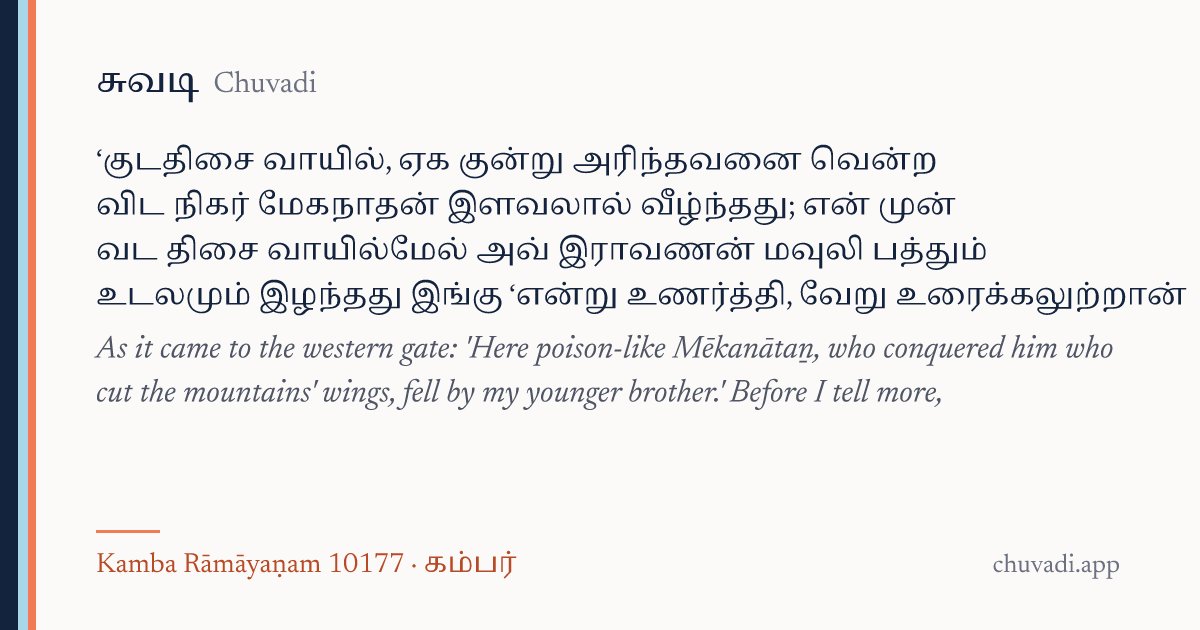
குடதிசை வாயில் ஏக - விமானம் மேற்குத் திசை வாசலை அடைய; குன்று அரிந்தவனை வென்ற விடநிகர் மேகநாதன் இளவலால் வீழ்ந்தது' என்முன் - மலையின் சிறகுகளை அரிந்த இந்திரனை வென்ற கொடுவிடத்தை ஒத்த இந்திரசித்து இலக்குவனால் இறந்தது (இங்கே) என்று சொல்வதற்கு முன்; வடதிசை வாயில் மேவ - இலங்கையின் வடக்கு வாசலை விமானம் அடைய; இராவணன் மவுலி பத்தும் உடலமும் இழந்தது இங்கு' என்று உணர்த்தி - இராவணன் கிரீடத்தலை பத்தும் தன் பேருடலமும் இழந்தது இங்கேதான் என்று சீதைக்கு அறியச் சொல்லி; வேறு உரைக்கலுற்றான் - வேறு செய்திகள் சொல்லத் தொடங்கினான்.
விமானம் இலங்கையின் கிழக்கு, தெற்கு, மேற்கு, வடக்கு வாயில்களாக முறையே வருதல் வலம் வந்ததாக ஆதல் காண்க. இராமன் மனதில் நினைத்ததை அறிந்து ஏவ வேண்டாது செய்யும் ஆற்றல் உடையது புட்பகம் என்றவாறாம்.
ஆங்கிலம் · English translationAI
Translation
- As it came to the western gate: 'Here poison-like Mēkanātaṉ, who conquered him
- who cut the mountains' wings, fell by my younger brother.' Before I tell more,
- as it neared the northern gate: 'Here that Irāvaṇaṉ lost
- all ten crowned heads and his body,' he made known, and began to say more.
What the poem says
At the western gate Irāmaṉ points out where Ilakkuvaṉ killed Mēkanātaṉ, Intiracittu, who had once defeated Indra, the god who cut off the wings of the flying mountains. At the northern gate he shows where Irāvaṇaṉ himself fell, losing his ten crowned heads and his body.
The car has passed the east, south, west and north gates in order, completing a clockwise circuit, all without being told.