



கம்பராமாயணம் 10190 · யுத்த 37.177
பாடல் · The poem
Tap a word to see its gloss in the commentary and where else it occurs.
பொருள் · Meaning in Tamil
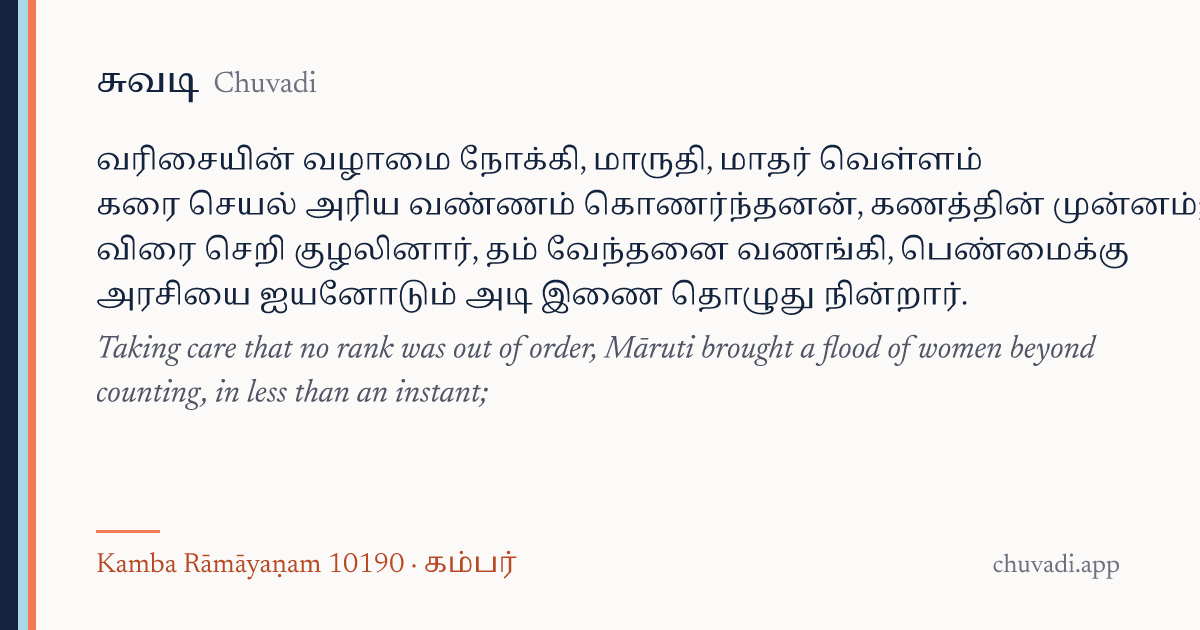
மாருதி - அனுமன்; கரைசெயல் அரிய வண்ணம் மாதர் வெள்ளம் - வரம்பிடமுடியாத தன்மை உடைய மகளிர் கூட்டத்தை; வரிசையின் வழாஅமை நோக்கி - அவரவர்கட்குரிய தகுதியிற் சிறிதும் பிறழாதபடி பார்த்து; கணத்தின் முன்னம் கொணர்ந்தனன் - ஒரு கணப்பொழுதில் அழைத்துக் கொண்டு வந்தான்; விரைசெறி குழலினார் தம் வேந்தனை வணங்கி - மணம் நிறைந்த கூந்தலை உடைய அம்மகளிர் தம்முடைய அரசனாய சுக்கிரீவனை முதலில் தொழுது; பெண்மைக் கரசியை ஐயனோடும் அடியிணை தொழுது நின்றார் - பெண்மைக் குணங்களுக்குத் தலைமையானவளை இராமனோடும் திருவடி இணைகளைக் கும்பிட்டு நின்றார்கள்.
கிட்கிந்தை மகளிர் ஆதலின் இராமனை முதற்கண் வணங்காது தம் அரசனை முதற்கண் வணங்கினர் என்பது பண்புடைமையைக் காட்டி நிற்கும். இராமனை வணங்கும் போதும் பெண்டிர் என்பதற்கேற்ப சீதையை முன்னிட்டே வணங்கினர் என்பது உயரிய பண்பாடாதல் வெள்ளிடை.
ஆங்கிலம் · English translationAI
Translation
- Taking care that no rank was out of order, Māruti
- brought a flood of women beyond counting, in less than an instant;
- those with fragrant hair bowed to their own king, and then
- to the queen of womanhood together with the lord they bowed at the feet and stood.
What the poem says
Aṉumaṉ brings a countless crowd of women in a moment, arranged properly by rank. The women first bow to their own king Cukkirīvaṉ, then to Irāmaṉ and Cītai.
The commentary admires their good manners: as subjects of Kiṭkintai they honour their own king first, and as women they place Cītai, the queen of womanly virtue, first when they worship the royal couple.