



கம்பராமாயணம் 10191 · யுத்த 37.178
பாடல் · The poem
Tap a word to see its gloss in the commentary and where else it occurs.
பாட வேறுபாடு · Project Madurai reads
பொருள் · Meaning in Tamil
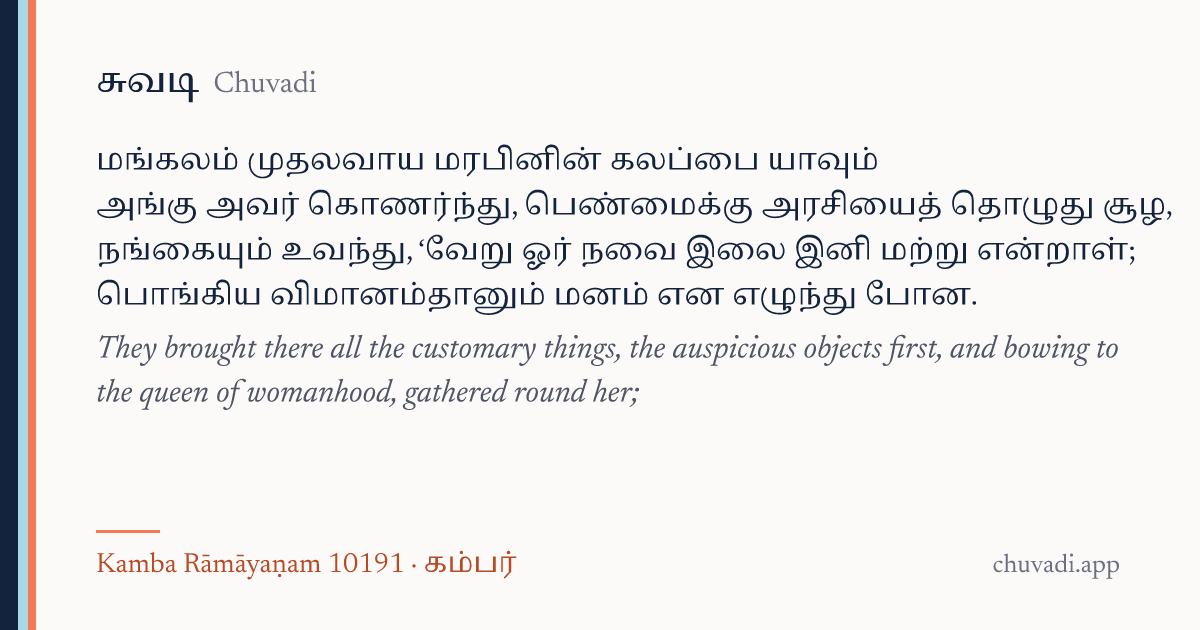
மங்கலம் முதலவாய மரபினின் கலப்பையாவும் - அட்டமங்கலம் முதலாகச் சொல்லப்படும் அடிப்பட வந்த தொன்று தொடு வழக்கமாய பொருள்கள் எல்லாவற்றையும்; அவர் அங்கு கொணர்ந்து - அம்மகளிர் விமானத்தின்கண் கொண்டு வந்து; பெண்மைக்கு அரசியைத் தொழுது சூழ - தோபிராட்டியை வணங்கிச் சுற்றியிருப்ப; நங்கையும் உவந்து - சீதையும் மகிழ்ச்சி அடைந்து; 'மற்றுவேறு, ஓர் நவை இனி இலை என்றாள் - வேறொரு துன்பமும் இனி இல்லை என்று சொன்னாள்; பொங்கிய விமானந்தானும் மனம் என எழுந்து போன - உயர்ந்த புட்பகமும் மனத்தின் வேகம் போல புறப்பட்டுச் சென்றது. அட்டமங்கலம் - பெரியோர்க்குச் செய்யும் உபசாரப்பொருள்கள் எட்டாம். அவை, சாமரை, தீபம், பூர்ணகும்பம், இரட்டைக் கயல், கண்ணாடி, தோட்டி, கொடி, முரசு என்பனவாகும். விமானம் எழுந்து போனது கூறுதலால் முன்பு தரையிறங்கி நின்றது அறிக. விமானம் ஒன்றாக இருக்கவும் 'போன' என்று பன்மையாகக் கூறியது பேரளவினதாதல் பற்றி; ஒருமை பன்மை மயக்கம்.
ஆங்கிலம் · English translationAI
Translation
- They brought there all the customary things, the auspicious objects first,
- and bowing to the queen of womanhood, gathered round her;
- the lady too rejoiced and said, 'There is no other trouble now';
- and the soaring car rose up and sped like the mind.
What the poem says
The women of Kiṭkintai bring the traditional auspicious objects used to honour great persons: the eight auspicious things, such as a whisk, a lamp, a full pot, a pair of fish, a mirror, a goad, a banner and a drum.
Cītai is happy and says she now has no further worry. The Puṣpaka, which had landed to take them on, rises again and flies on as fast as thought.