



கம்பராமாயணம் 10235 · யுத்த 37.222
பாடல் · The poem
Tap a word to see its gloss in the commentary and where else it occurs.
பாட வேறுபாடு · Project Madurai reads
பொருள் · Meaning in Tamil
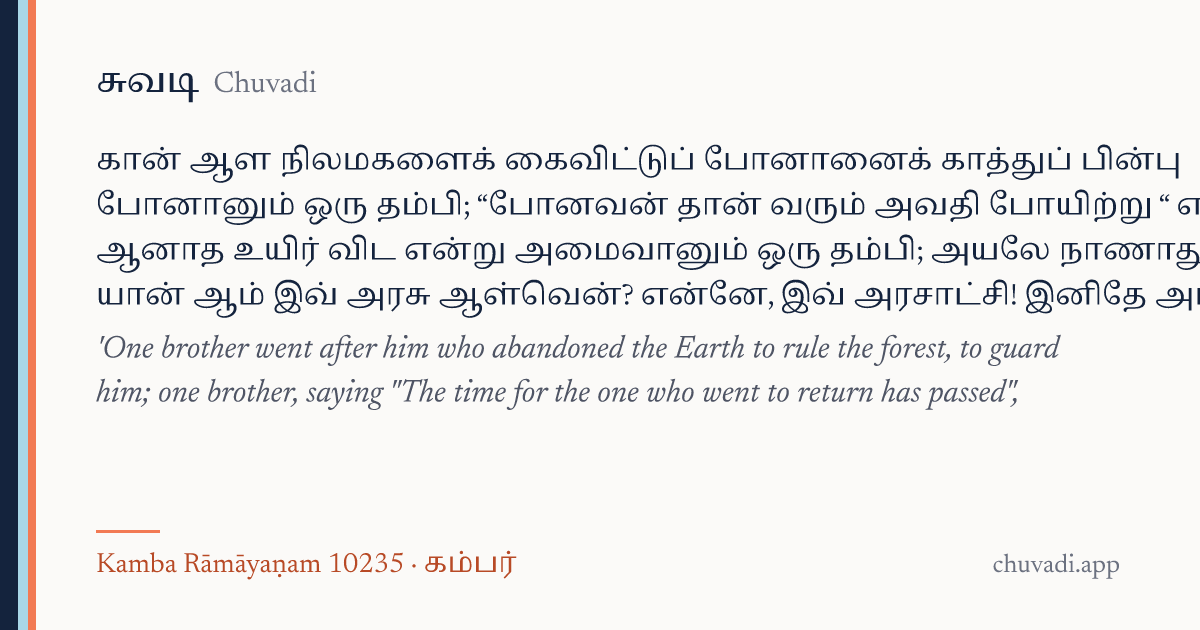
கான் ஆள - காட்டில் வாழ; நில மகளைக் கைவிட்டுப் போனானைக் காத்து, பின்பு போனானும் ஒரு தம்பி - பூதேவியை வேண்டாம் என்று உதறிச் சென்ற இராமனைக் காப்பாற்றி அநுமன் பின்னே போனவனும் ஒரு தம்பியாகிய இலக்குவன்; போனவன்தான் வரும் அவதி போயிற்று என்னா - காடு போன இராமன் தான் திரும்ப வரக் குறித்த காலம் கடந்தது என்று சொல்லி; ஆனாத உயிர் விட என்று அமைவானும் ஒரு தம்பி - அமைந்திராத ஆற்றாமை உடைய உயிரை விட்டுவிட என்று முயல்கின்றவனும் ஒரு தம்பியாகிய பரதன்; அயலே நாணாது யான் ஆம் இவ் அரசு ஆள்வென்- (இவர்களுடனேயே பிறந்து) மற்றொருவனாகிய யான் இந்த நாணமில்லாமல் அரசை ஆளுவேனாம்; இந்த அரசாட்சி என்னே - இந்த அரசாட்சி யாதாக உள்ளது; இனிதே - மிக இனிதே.
அம்மா வியப்பிடைச் சொல் - என்னே; இனிதே இகழ்ச்சிக் குறிப்பு. இராமன் பின் பிறந்தாரோடு தன்னை ஒப்பிட்டுப் பார்த்து வருந்தும் சத்துருக்கன் கூற்று நெஞ்சைப் பிழியும் தன்மையது. ஒவ்வொருவரும் துன்பத்தில் பங்குபெற தான் மட்டும் அரசாட்சியில் பங்கு பெற்றவனாகக் குறிப்பிடப்பட்டது அவனைத் துடிக்க வைத்தது.
ஆங்கிலம் · English translationAI
Translation
- 'One brother went after him who abandoned the Earth to rule the forest,
- to guard him; one brother, saying "The time for the one who went to return has passed",
- sets out to give up his unquenched life; and I, an outsider, without shame,
- am I the one to rule this kingdom? What a kingship! How very fine, alas!'
What the poem says
Catturukkaṉ contrasts himself with his brothers. Ilakkuvaṉ followed Irāmaṉ into the forest to protect him; Paratan is ready to die because Irāmaṉ has not returned. Is he alone to sit shamelessly on the throne?
The final 'how very fine' is bitter irony. The commentary calls this lament heart-wrenching: each brother has a share in suffering, while Catturukkaṉ is offered only a share in kingship.